
Unbiased headlines. Facts, not spin.
Unbiased Headlines is an independently owned news organization. We bring you the facts, not opinions, written fresh from 110+ named sources. Sources linked so you can verify it yourself.
 health
Major Story (7/10)
health
Major Story (7/10)
Congo Ebola Death Toll Hits 2,011 as Outbreak Adds 1,000 Deaths in Three Weeks
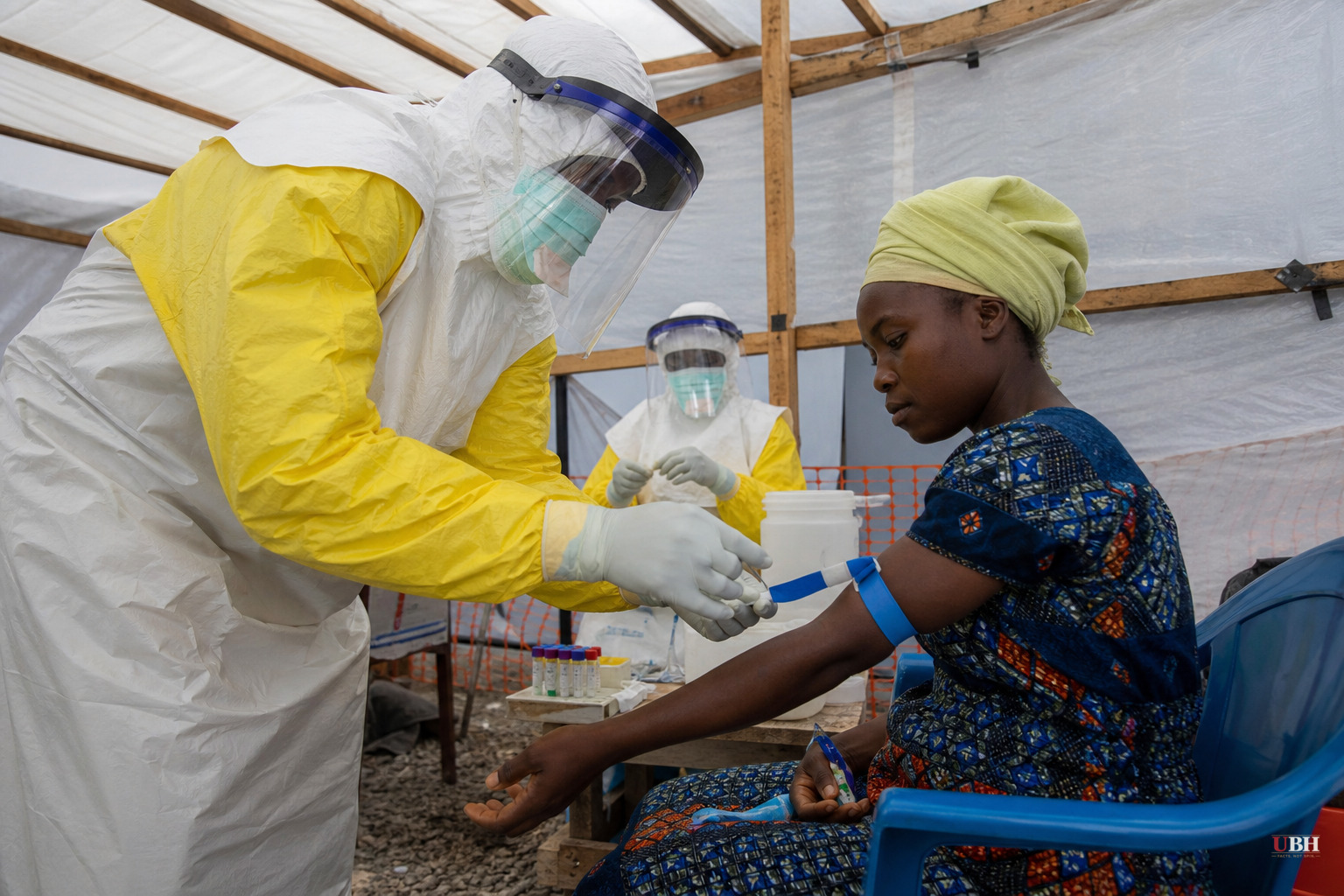
Congo's Ebola outbreak has now killed at least 2,011 people among 4,381 confirmed cases, according to government data released overnight into Tuesday, August 11. That makes it the fastest-spreading Ebola outbreak on record and the second-largest in history, trailing only the 2014-2016 West Africa epidemic that killed more than 11,000 people, according to CBS News and the Associated Press.
It took roughly nine weeks after the May 15 declaration for the death toll to hit 1,000. The next 1,000 deaths arrived in about three weeks. That acceleration is why WHO Africa regional director Dr. Mohamed Yakub Janabi told reporters, "We are chasing the virus, the virus is ahead of us," a line both CBS News and The Independent quoted directly.
The World Health Organization said Monday, August 10, that the virus likely started circulating in Congo back in February, three months before anyone declared an outbreak. Early cases got misdiagnosed as malaria or typhoid, and testing initially focused on the more common Ebola strain rather than the rare Bundibugyo variant actually responsible, per the WHO's own account relayed by CBS, The Independent and Al Jazeera. There is no approved vaccine or treatment for Bundibugyo Ebola. Clinical trials for candidate therapies have started in Ituri province, the epicenter, but WHO has said results are likely months away, according to Al Jazeera.
Why containment is failing
The response is being outrun on multiple fronts at once. Health workers across the five affected provinces have been on strike since May over unpaid wages, according to CBS News, AP and Al Jazeera. Rebel conflict and poor roads are slowing delivery of aid to remote localities. And most new infections are turning up outside the contact-tracing networks meant to catch them early.
Reporting drawing on Africa CDC Director-General Dr. Jean Kaseya's August 6 press briefing put numbers on that failure: the response is tracking roughly 10 contacts for every confirmed case, compared with more than 40 contacts per case in Uganda before it closed its own outbreak on July 28, and 57 per case during the 2018-2020 Kivu epidemic. Kaseya reportedly said the contact lists "don't mean anything because it is not accurate."
Doctors Without Borders (MSF) reported on August 5 that 90 percent of patients admitted to its Bunia treatment center weren't on any contact list at all, and that more than 70 percent of new cases and two-thirds of deaths are now surfacing from the general community rather than from anyone under observation. Treatment centers in North Kivu are reportedly running at 139 percent capacity while facilities in Ituri, the epicenter, sit at 57 percent, an imbalance that points to a resource-distribution problem as much as a raw shortage.
Al Jazeera also reported that cultural practices, including intimate family burials of Ebola victims, are compounding transmission risk, alongside misinformation about the virus circulating in affected communities. That is a legitimate public-health concern distinct from the funding and logistics failures, and one that international responders have historically struggled to address without alienating local communities.
Al Jazeera additionally reported that Israel's Ministry of Health said Tuesday it is investigating a possible Ebola case in an Israeli citizen who recently returned from Congo. Test results were expected within 24 hours as of that report, and the individual remains in isolation. No case has been confirmed, and this should be treated as a monitoring situation, not a diagnosis.
The unpaid-workers problem is not new, and it's not fixed
Strikes by health workers demanding back pay have been reported since at least early July, meaning the government has now gone roughly five weeks or more without resolving the wage dispute driving frontline staff off the job in the middle of the deadliest phase of the outbreak. Neither CBS, AP, nor Al Jazeera report any specific resolution or payment plan from Congo's government as of this week.
WHO Director-General Tedros Adhanom Ghebreyesus traveled to Kinshasa the week of August 4 to meet with health officials, according to The Independent, but no source reports new funding commitments or a fixed timeline for paying strikers.
The gap between the WHO's official contact-tracing metrics and what's actually happening on the ground reflects a broader problem. WHO's follow-up rate stood at 75 percent against a 95 percent target as of early August, but that number only measures how well the response is tracking people it has already identified. It says nothing about the two-thirds of deaths and more than 70 percent of new cases that MSF says are turning up outside any monitoring system in the first place. That's a system-design gap, not a data-entry error, and it means official case counts are very likely undercounting real-time spread rather than overstating it.
What happens next depends on two things neither WHO nor Congo's government has resolved: whether health workers get paid and return to their posts, and whether vaccine and treatment trials now underway in Ituri produce results before the outbreak spreads further into neighboring countries. Uganda has already seen cases and closed its own linked outbreak on July 28. Whether that containment holds, or whether the Bundibugyo strain crosses more borders before trials report back, is still an open question.
Sources used for this briefing
5 links from 5 independent newsrooms (syndicated copies of the same report count once)
These are the sources it draws on, linked so you can verify.


