
Unbiased headlines. Facts, not spin.
Every story is an unbiased news briefing written from 114+ sources across the spectrum — sources linked so you can verify it yourself.
 health
Notable (6/10)
Event date: October 2, 2026
health
Notable (6/10)
Event date: October 2, 2026
Compounded GLP-1 Drugs Still Undercut Wegovy and Zepbound by Hundreds a Month, Even as FDA Tightens Marketing Rules
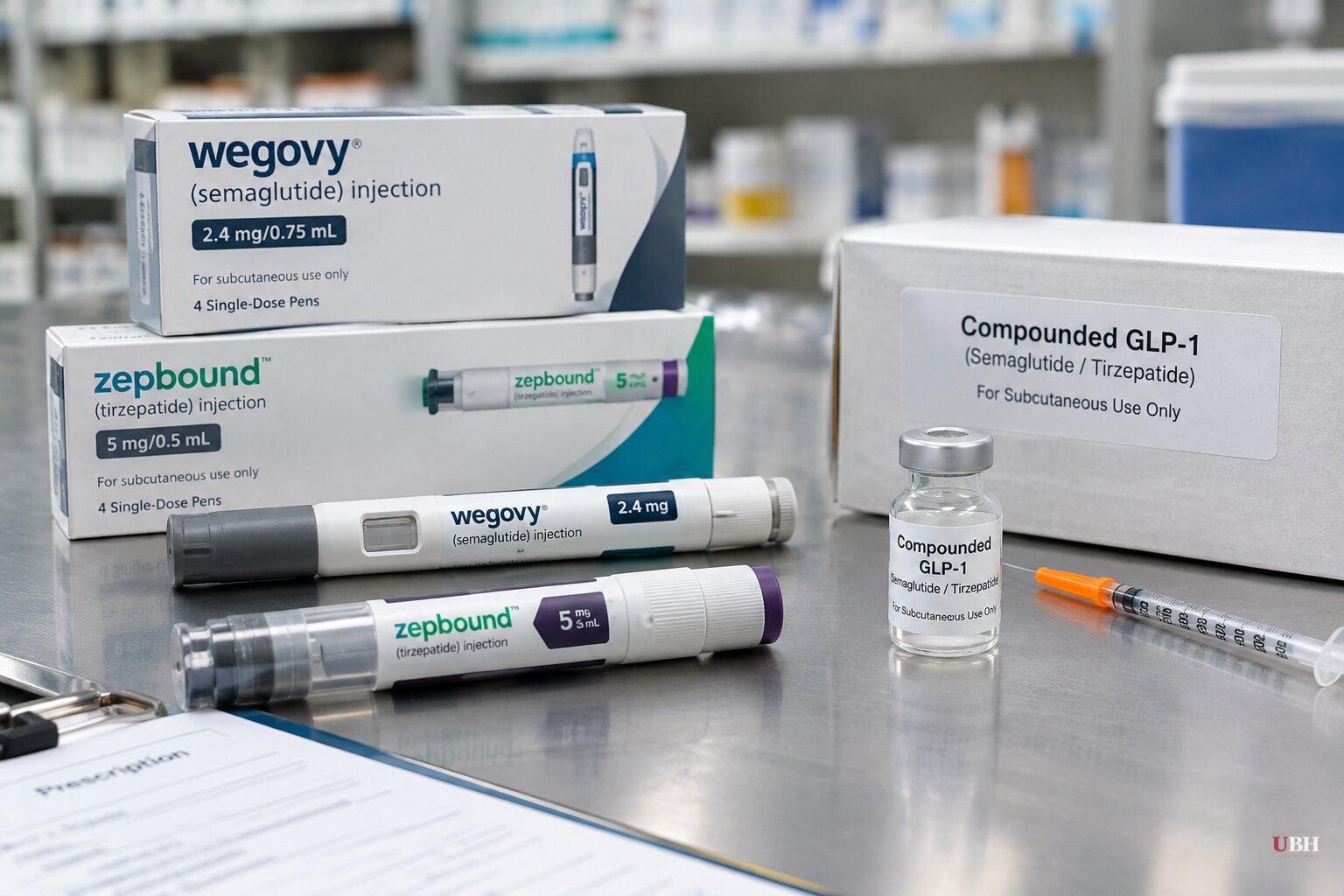
Since Novo Nordisk launched Wegovy in 2021 at $1,349 a month, cash prices for brand-name GLP-1 weight-loss drugs have fallen roughly 75 percent, according to The Daily Economy. That price collapse hasn't solved the affordability problem. Millions of Americans are still priced out, and a growing number are turning to cheaper, unregulated compounded versions instead.
The Gap Between List Price and Reality
Robin Washington, a 67-year-old Maryland grandmother, told PBS NewsHour's Stephanie Sy that her doctor offered her a prescription for a brand-name GLP-1, but her insurance app flagged it as "not covered" for every option. When she asked what it would cost out of pocket, her doctor quoted her $1,000 to $1,500 a month. That ended the conversation.
List prices and what real patients face remain far apart even as manufacturers have cut prices repeatedly. Wegovy's self-pay offer currently runs $199 for the first two months, then jumps to $349 a month for standard doses, according to Vice. Eli Lilly's Zepbound starts at $299 a month through LillyDirect, with higher doses running $399 to $449.
Why Compounded Versions Cost a Fraction
That price gap is exactly why companies like Arbor are selling compounded semaglutide starting at $89 a month and compounded tirzepatide at $119, Vice reported. These aren't generic versions of Wegovy or Zepbound. They're compounded medications, meaning a licensed pharmacist mixes the active ingredients outside the FDA's standard approval and review process. The FDA does not review compounded drugs before they reach patients, though licensed providers oversee prescribing and dispensing.
This pathway opened when Wegovy landed on the FDA's drug-shortage list amid overwhelming demand, which created a legal opening for pharmacies to compound alternatives, according to The Daily Economy. Even after the shortage was declared resolved in April 2025, telehealth compounding didn't disappear. NetChoice cites Forbes Health data showing the median compounded GLP-1 costs about $175 a month through telehealth, saving patients roughly $14,000 a year compared to brand-name list prices.
The Adherence Cliff at $75 a Month
A University of Georgia study published in JAMA Health Forum, led by assistant professor Eunhae Shin, tracked 8,914 insured patients over 18 months and found cost drives whether people actually keep taking these drugs. Discontinuation was already high at every price level, with three out of four patients stopping within a year even at the lowest cost tier.
But Shin's team found a sharp tipping point: once monthly out-of-pocket costs exceeded $75, nonadherence jumped above 80 percent. Patients paying $168 or more a month had the worst adherence of all, just 17 percent staying on the medication, and those patients were disproportionately in Southern states with high-deductible plans.
Medicare has capped out-of-pocket GLP-1 costs at $50 for eligible patients, Shin noted, but commercial insurers haven't followed suit. That leaves most working-age Americans with employer coverage facing the same financial cliff the study identified. Shin argues policymakers and insurers should reconsider how these costs are structured if the goal is getting more patients the medically proven benefit.
A First Amendment Fight Over FDA Marketing Rules
In June 2026, the FDA issued new guidance on how telehealth companies can describe compounded GLP-1 products. Most of it is uncontroversial. The guidance bars companies from claiming a compounded drug is FDA-approved when it isn't, or clinically proven when no trials exist, protections squarely inside the FDA's authority to police false claims.
But NetChoice flags one provision as constitutionally shaky: a rule barring branding that "falsely or misleadingly implies" a telehealth company is its own compounder. NetChoice argues the FDA offered no evidence that consumers actually draw that inference, and that many telehealth platforms accurately describe real partnerships with affiliated or white-label compounding pharmacies. Under Supreme Court precedent in In re R.M.J., the government can regulate speech that is actually misleading, but generally not speech that is merely potentially misleading to some unspecified subset of consumers. NetChoice's position deserves a fair hearing: regulating an inference nobody has shown consumers actually make is a different legal animal than banning an outright lie, and vague compliance standards can chill accurate marketing just as effectively as a ban.
At the same time, the FDA has a legitimate public health interest here. Compounded drugs skip the agency's standard safety and efficacy review, and patients deserve to know plainly whether they're buying an FDA-approved product or something made outside that process. NetChoice itself concedes the bulk of the June guidance, the parts banning false approval claims and fake clinical proof, falls squarely within the FDA's job of policing deception.
No lawsuit challenging the FDA's guidance has been filed as of October 7, 2026, according to available reporting. Whether commercial insurers follow Medicare's $50 out-of-pocket cap, and whether the FDA's "implies" standard survives a First Amendment challenge if one comes, remain open questions with real consequences for the roughly 11 percent of U.S. adults Gallup says are now taking a GLP-1 for weight loss.
Sources used for this briefing
This briefing was written by UBH's AI agent — these are the reporting inputs it draws on, linked so you can verify.


