
Unbiased headlines. Facts, not spin.
Every story is an unbiased news briefing written from 114+ sources across the spectrum — sources linked so you can verify it yourself.
 health
Notable (5/10)
Event date: October 2, 2026
health
Notable (5/10)
Event date: October 2, 2026
Study Finds Wall Squats Three Times a Week Lower Blood Pressure, Even Fewer Sessions Still Help
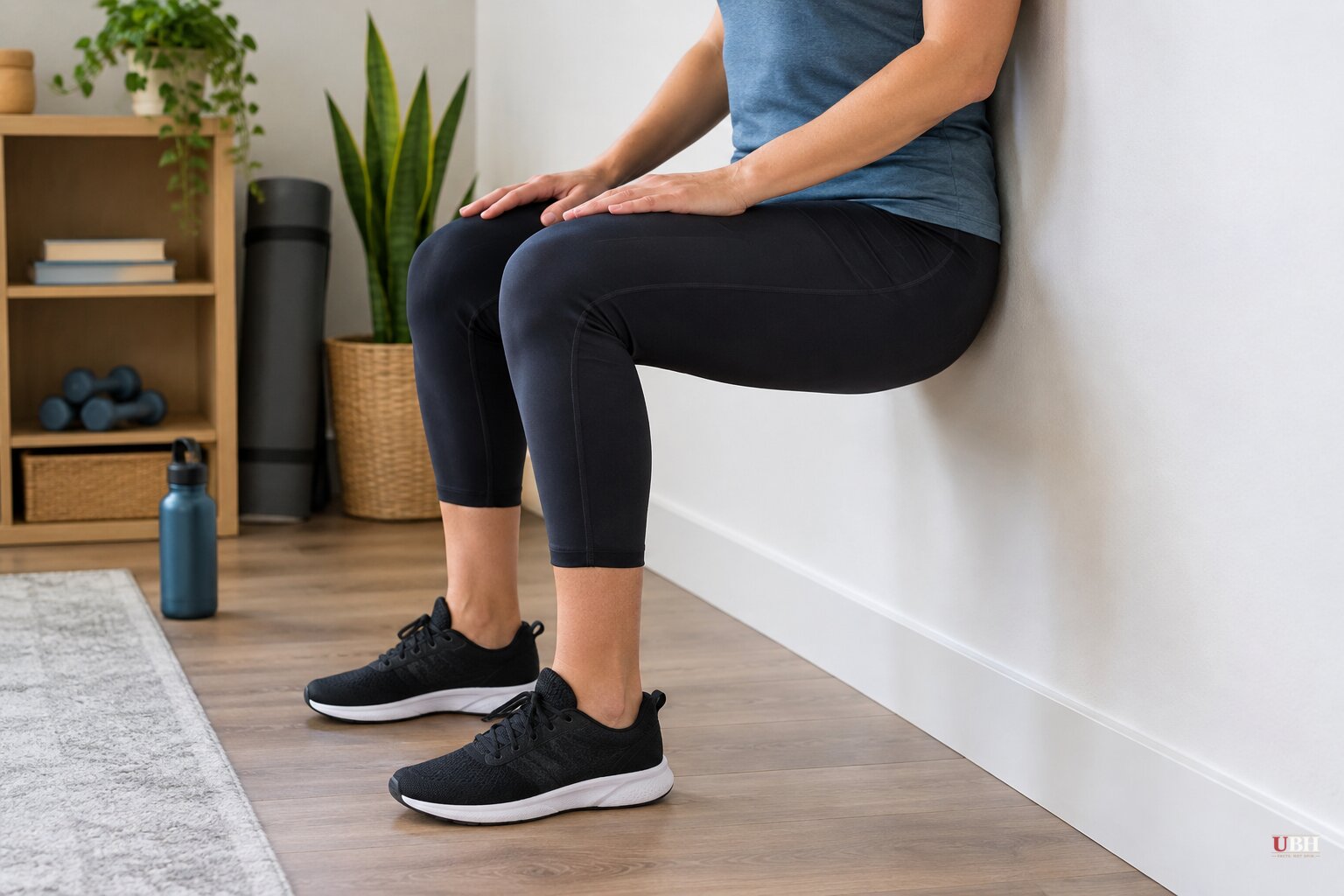
A team led by researchers at Canterbury Christ Church University in the UK published a study on September 29 in BMJ Open Sport & Exercise Medicine showing that holding a simple wall squat three times a week measurably lowers blood pressure, and that even one session a week keeps some of the benefit.
The CDC estimates nearly half of American adults, about 120 million people, have hypertension. That's a condition tied directly to heart disease and stroke. A free, equipment-free fix that takes a few minutes a week matters for public health.
What They Actually Did
Researchers recruited 100 adults with an average age of 37. None were meeting minimum exercise guidelines, and all had systolic blood pressure in the normal-to-high-normal range of 120 to 140 mm Hg.
For four weeks, 80 participants did wall squats three times a week, four squats per session, while 20 served as a control group doing nothing differently. After four weeks, the exercising group's systolic pressure had dropped an average of 9.45 mm Hg compared to the control group, according to the study as reported by ScienceAlert.
Then came the real test. For the next four weeks, exercisers were split into groups that kept the three-times-a-week routine, dropped to two sessions, dropped to one, or stopped altogether.
The results, by week eight: those who stuck with three sessions a week saw their average drop grow to 13.73 mm Hg. Those who cut back to one or two sessions still averaged a 6.5 to 7 mm Hg drop. Those who quit entirely were back to their starting blood pressure within four weeks, according to Healthline's coverage of the findings.
What the Researchers Concluded
The study authors wrote that "lower-frequency IET can help maintain short-term blood pressure reductions, providing a pragmatic option for individuals with limited time or adherence challenges," per Healthline. They also stated that for the broadest physiological benefit, three sessions a week "may be recommended."
Outside experts who reviewed the findings, but weren't involved in the research, backed up the practical takeaway. Michael Fredericson, a professor of orthopaedic surgery at Stanford Health Care, said "the main takeaway is that you don't need to exercise every day, or even several times a week, to experience significant blood pressure benefits from isometric exercise."
Amanda Paluch, an associate professor of kinesiology at the University of Massachusetts Amherst and chair of the American Heart Association's Physical Activity Committee, said the study builds on prior research showing isometric training lowers blood pressure in just a few weeks, and adds new information on how much is needed to keep the gains.
Jennifer Wong, a cardiologist and medical director of non-invasive cardiology at MemorialCare Heart and Vascular Institute in California, called the results encouraging, noting that "even small, consistent efforts can make a meaningful difference."
What's Being Measured
The wall squat in this study is an isometric hold. You drop into position and stay there, no reps, no movement. That's different from the dynamic bodyweight squat covered separately by Epoch Times, which involves repeated hip and knee flexion to build quad and glute strength and has been linked in other research to reduced fall risk and better mobility in older adults. Both exercises engage similar muscles, but they're not interchangeable, and the blood-pressure benefit documented here is specific to the isometric hold, not to doing squat reps at the gym.
What's Still Unanswered
The sample size was modest, 100 people, average age 37, over an eight-week window. That's not enough to say how this plays out for people in their 60s and 70s, people already on blood pressure medication, or people with more severe hypertension.
The study also measured blood pressure numbers, not downstream outcomes like actual heart attacks or strokes prevented. No one has run a long-term trial connecting this specific routine to reduced cardiovascular events.
Still, the appeal is obvious: no equipment, no cost, no commute to a gym. For the roughly 120 million Americans with high blood pressure, according to CDC figures, a four-minute weekly habit that doesn't require a prescription is a low-risk thing to try while bigger, longer trials catch up.
Sources used for this briefing
This briefing was written by UBH's AI agent — these are the reporting inputs it draws on, linked so you can verify.


