
Unbiased headlines. Facts, not spin.
Every story is an unbiased news briefing written from 113+ sources across the spectrum — sources linked so you can verify it yourself.
 health
Notable (5/10)
October 6, 2026 at 12:27 PM
health
Notable (5/10)
October 6, 2026 at 12:27 PM
Study Finds Gas Restaurant Kitchens Blow Past Federal Pollution and Heat Limits, Electric Kitchens Didn't
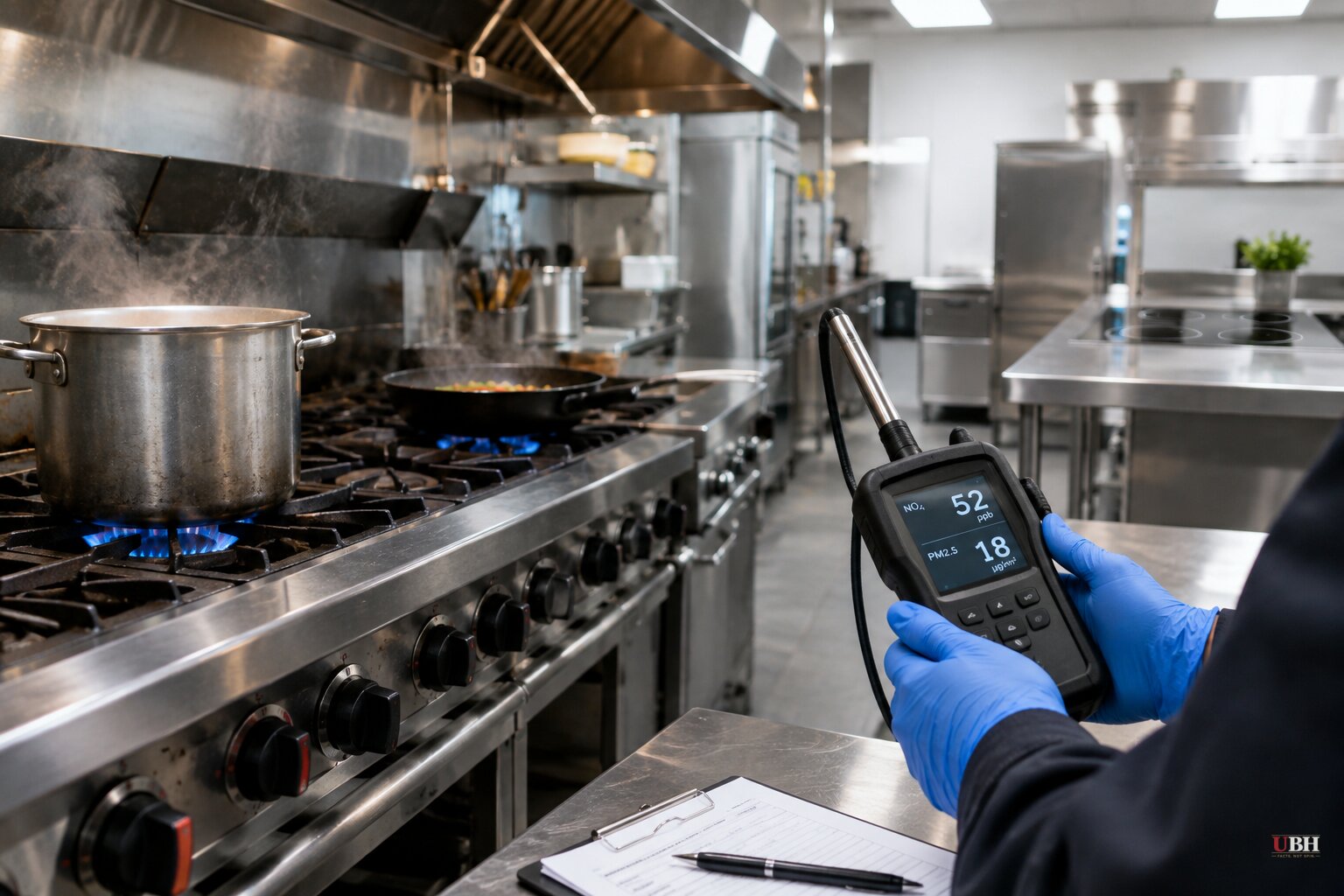
Restaurant kitchens running on gas stoves are exposing workers to pollution and heat levels that blow past federal safety benchmarks, according to a study published Tuesday, October 6, in the journal Environmental Research Letters.
Researchers from PSE Healthy Energy, an Oakland nonprofit, and Stanford University measured air quality and temperature in 27 commercial kitchens across California, Pennsylvania and New York. Twenty-four used gas appliances. Three were fully electric.
The numbers are stark. Seventy percent of the gas kitchens had nitrogen dioxide levels above the EPA's one-hour standard of 100 parts per billion during work hours, according to the study. In some kitchens it hit 10 times that limit.
Carbon monoxide and benzene, a known carcinogen, also exceeded California's hourly limits in several kitchens. One kitchen measured benzene at over 110 parts per billion, 14 times California's acceptable one-hour threshold.
Heat was just as bad. Researchers tracked temperatures in 19 of the gas kitchens and found 13, or 68%, topped 90 degrees Fahrenheit, above a high-heat trigger point proposed in a pending federal OSHA heat-safety rule that has not yet been finalized. None of the all-electric kitchens exceeded safe pollution or heat levels, the study found.
The sample size is small, and that matters
Three all-electric kitchens is not a large comparison group, and the study authors don't claim otherwise. PSE Healthy Energy is also an advocacy-oriented nonprofit focused on clean energy and electrification, not a neutral government lab. That context matters when weighing how the results get used in policy debates over gas bans.
Burning natural gas indoors produces nitrogen dioxide, carbon monoxide and other combustion byproducts regardless of who funds the study measuring them. The EPA's nitrogen dioxide standard and California's benzene threshold are existing regulatory benchmarks, not numbers invented for this paper.
"It's certainly no secret to folks working in commercial kitchens that these are intense environments full of heat and pollution," said Yannai Kashtan, an air quality scientist with PSE Healthy Energy who worked on the study. "But I think this study's big contribution is detailing the kinds of exposures we're seeing in gas-fired kitchens versus all-electric kitchens, and seeing a pretty big difference."
Christopher Galarza, a Pittsburgh chef who co-authored the study and recruited many of the participating restaurants, said the readings matched what he lived through working gas kitchens for years. "I can't tell you how many times we throw up and get back to work," Galarza told Canary Media, describing the combination of dry and wet heat from gas cooking. He said switching to an all-electric kitchen later in his career was "a revelation."
The exposure isn't limited to the line cooks standing over the flame. Elevated pollutant readings extended into prep stations and dining areas, meaning servers, dishwashers and diners picked up some exposure too, according to the researchers.
A voluntary market shift, not a mandate
Some restaurants aren't waiting on regulators. Thomas McNaughton, CEO of Flour + Water Hospitality Group, which runs six Bay Area restaurants, switched his Oakland location, which opened in January 2026, to 100% electric equipment, including pizza ovens.
"If you're talking deck ovens, the electric models now outperform gas ovens 100%," McNaughton said. He made the call based on performance and cost, not a government order, and says the food quality didn't suffer.
Berkeley tried to mandate an end to gas hookups in new construction and got rolled by industry pushback, according to the Oakland Side. Restaurant owners who can't afford a full electric retrofit shouldn't be forced into one by city hall. But owners who can make the switch pencil out, like McNaughton, are proving it's a legitimate option worth considering on the merits, not because Sacramento says so.
Stanford environmental scientist Rob Jackson noted California remains a "gas-heavy state," with 85% of its restaurants still cooking with gas compared to 76% nationally, according to a 2022 National Restaurant Association Research Group survey cited by the Oakland Side. For the estimated 15.7 million food service workers nationwide, and 1.8 million in California alone, the exposures documented in this study represent the daily reality in most American kitchens, gas bans or not. Whether OSHA's proposed heat rule gets finalized, and whether it would even apply to indoor kitchen heat generated by appliances rather than weather, remains an open regulatory question.
Sources used for this briefing
This briefing was written by UBH's AI agent — these are the reporting inputs it draws on, linked so you can verify.


