
Unbiased headlines. Facts, not spin.
Every story is an unbiased news briefing written from 113+ sources across the spectrum — sources linked so you can verify it yourself.
 health
Low Interest (4/10)
October 5, 2026 at 05:07 PM
health
Low Interest (4/10)
October 5, 2026 at 05:07 PM
Greek Lab Says New Molecule Reversed Memory Loss in Alzheimer's Mice, Human Trials Not Yet Scheduled
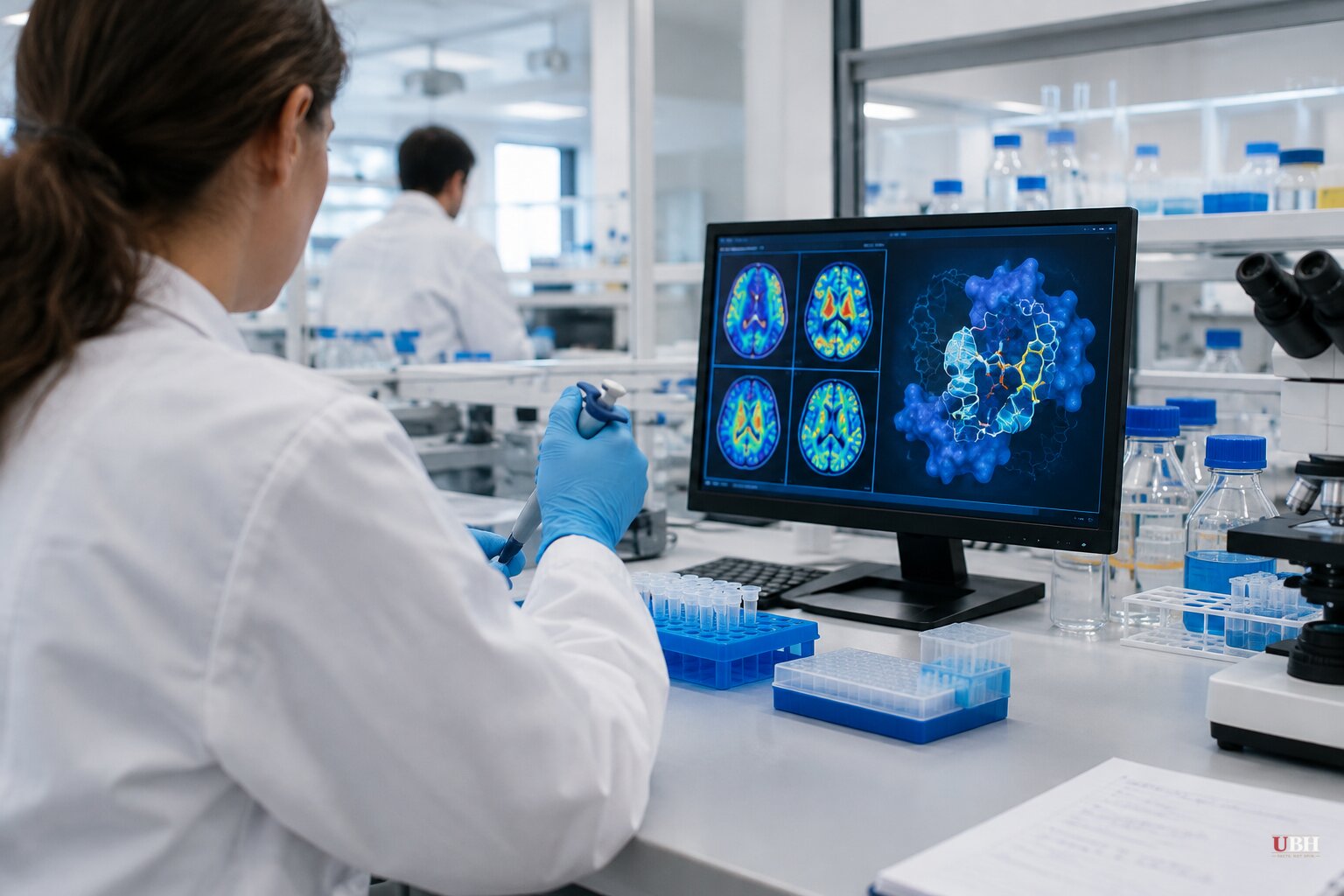
A team of Greek scientists says it has developed a molecule that restored memory and learning ability in animals engineered to show signs of Alzheimer's disease. It is not a cure, and it is not a human treatment yet.
The molecule is called RSQ-020. It was developed by a group led by Giorgos Skretas, director of the Institute of Bioinnovation at the Alexander Fleming Biomedical Sciences Research Centre, working with the National Hellenic Research Foundation and a spin-off company called ResQ Biotech, according to Euronews.
RSQ-020 goes after the Tau protein. When Tau misfolds and clumps together, it's linked to the onset and progression of Alzheimer's and other neurodegenerative diseases, Euronews reported. That's well-established science. The new part here is how Skretas's team found a molecule to fix it.
A Different Way to Hunt for Drugs
Traditional drug discovery works like a lock and key. You find a molecule shaped to fit a specific spot on a target protein. Skretas says that approach doesn't work well for misfolding diseases, because the proteins involved don't hold a stable shape. They're constantly shifting.
"Instead of simply looking for a molecule that will bind to a specific site on the protein, we look directly for one that delivers the desired effect," Skretas said, according to Euronews. "Our technology allows us to see when a faulty protein is restored, because the bacteria we use emit a green signal when that happens."
The researchers insert a human protein into a bacterium and engineer it to glow only when that protein snaps back into a normal shape. At the same time, the bacteria churn out billions of different candidate molecules. If a bacterium lights up green, it means one of those molecules did the job, according to both Euronews and IndexBox, which carried nearly identical details on the mechanism.
Instead of testing candidate molecules one by one in a lab dish, the bacteria do the testing themselves and signal which ones work inside a living cell, an environment closer to real disease conditions than a test tube.
What Was Actually Tested, and What Wasn't
The result announced here is that RSQ-020 restored learning and memory capacity in animal models carrying Alzheimer's-like characteristics. Euronews and IndexBox both describe this as a preclinical finding. IndexBox's writeup tracks Euronews's reporting almost word for word on the mechanism and the researchers involved, and NewsWav republished the Euronews piece directly, so this is effectively one account of the science, not three independent ones.
None of the available reporting names a peer-reviewed journal, a publication date for the underlying study, or a timeline for moving RSQ-020 into human safety trials. There's no mention of funding figures behind ResQ Biotech, no stated cost estimate for development, and no regulatory filing referenced with the European Medicines Agency or the FDA.
Alzheimer's research has a long history of drugs that worked in mice and failed in people. The field has burned through billions of dollars on Tau and amyloid-targeted compounds that showed promise in animal models and then stumbled in human trials. A reasonable skeptic would withhold judgment on RSQ-020 until it clears the next hurdles: toxicology data, a filed clinical trial application, and actual human safety testing.
At the same time, the screening platform itself, the engineered bacteria that light up when a misfolded protein is corrected, is a distinct technical contribution independent of whether RSQ-020 specifically pans out. If it works as described, it could speed up discovery for other misfolding-related diseases beyond Alzheimer's, since the same green-signal method isn't tied to one target protein.
What happens next is the real test. No source here states when or whether RSQ-020 will enter human trials, or what regulatory body will review it first. Until that happens, this is a laboratory result in mice, not a treatment anyone can get.
Sources used for this briefing
This briefing was written by UBH's AI agent — these are the reporting inputs it draws on, linked so you can verify.


