
Unbiased headlines. Facts, not spin.
Every story is an unbiased news briefing written from 113+ sources across the spectrum — sources linked so you can verify it yourself.
 health
Notable (5/10)
October 5, 2026 at 03:32 AM
health
Notable (5/10)
October 5, 2026 at 03:32 AM
Nobel Medicine Prize Set for Monday Announcement, With GLP-1 Weight-Loss Research the Top Pick
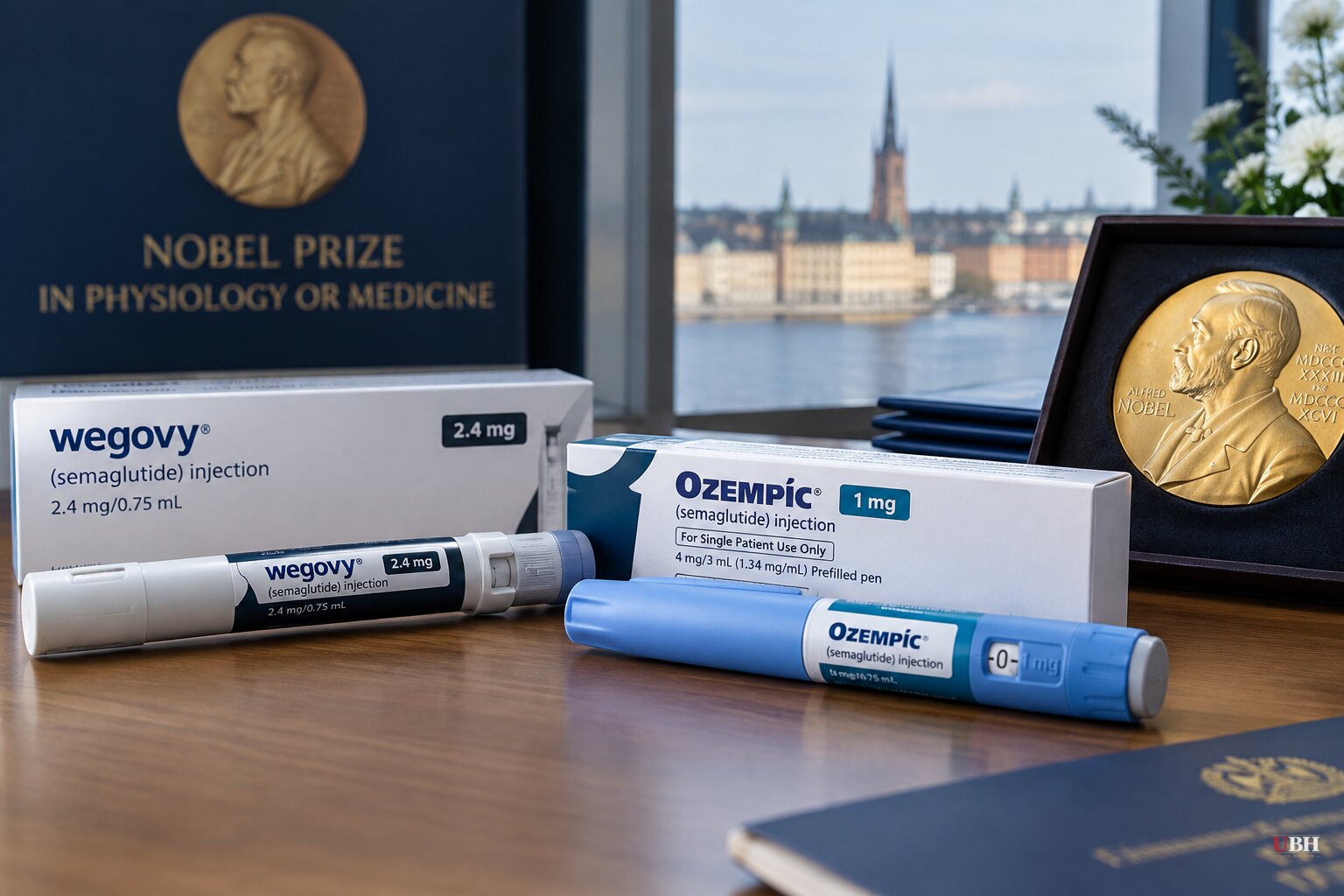
Nobel Prize week opens Monday, October 5, with the Physiology or Medicine announcement scheduled for 11:30 a.m. in Stockholm, roughly 5:30 a.m. Eastern time. Nobel watchers consulted by AFP say GLP-1 researchers—the scientists behind gut hormone research that led to Ozempic, Wegovy, and Mounjaro—are the leading candidates.
The GLP-1 favorites
David Pendlebury, who heads research analysis at data analytics firm Clarivate, told AFP he'd put GLP-1 research at the top of the list because of its enormous worldwide clinical impact. Clarivate tracks citation counts to forecast likely laureates.
Three names keep coming up: Canadian endocrinologist Daniel Drucker, Danish physician Jens Juul Holst, and Yugoslav-born American chemist Svetlana Mojsov. Business Today also flagged endocrinologist John Eng and Novo Nordisk researcher Lotte Bjerre Knudsen as contributors to the broader GLP-1 story.
Drucker spent the 1980s at Harvard helping establish that GLP-1, a gut hormone, triggers insulin release and regulates blood sugar, according to a profile published by Be Giant. The problem: natural GLP-1 vanishes from the body within minutes, too fast to work as a drug.
The fix came from a Gila monster. John Eng, an endocrinologist at the VA Medical Center in the Bronx, isolated a venom molecule called exendin-4 in 1990 that mimicked GLP-1 but resisted the enzymes that break it down. Drucker had a live Gila monster flown from Utah to his Toronto lab in a metal cage in 1995, extracted DNA from its salivary gland, and cloned the gene. That work became the basis for exenatide, the first approved GLP-1 diabetes drug, and set the stage for semaglutide, the compound in Ozempic and Wegovy.
Several alternatives are also in play, according to AFP: stem cell research into skin regeneration, led by American cell biologist Elaine Fuchs and British researcher Fiona Watt; optical coherence tomography, a non-invasive retinal imaging technique; and immune cell "adhesion receptors" identified by U.S. immunologist Timothy Springer. Business Today also named immunologist Carl June, whose CAR-T cell therapy work reprograms a patient's own T cells to attack cancer, as a standout contender.
The full week runs physics on Tuesday, chemistry on Wednesday, literature on Thursday, the Peace Prize on Friday, Oct. 9, and economics closing things out on Oct. 12.
Carney's long-shot Peace Prize odds
The Nobel Peace Prize, to be announced Friday, Oct. 9, by the Norwegian Nobel Committee in Oslo, has drawn attention in Canada because Prime Minister Mark Carney's name has surfaced as a possible candidate, according to CBC News. Of 287 nominees for 2026, the committee doesn't release names, so speculation runs on media guesswork.
Traders on the U.S. prediction market Kalshi put Carney's odds at 14% earlier in the week, CBC reported, though his odds have since fallen. That's a betting market reading sentiment, not a formal poll or any signal from the Nobel committee itself.
Haakon Gjerløw, acting director of the Peace Research Institute Oslo, told CBC he doesn't rate Carney's chances highly. University of Toronto professor emeritus Nelson Wiseman told the Associated Press that a Carney win would make U.S.-Canada relations "rockier than they are," given President Trump's frequently stated desire to win the prize himself.
Trump has repeatedly claimed credit for ending eight wars, a case his supporters cite as a legitimate argument for Nobel consideration. But CBC reports that experts don't see him as a likely pick this year, pointing to the U.S. strike on Iran and a U.S. attack on Venezuela as complicating factors for a peace-focused panel. Those are characterizations from unnamed experts cited by CBC, not a Nobel committee statement, and the committee does not explain its reasoning in advance.
Last year's Peace Prize went to Venezuelan opposition leader María Corina Machado, who presented Trump with her medal at the White House in January; the Nobel Committee said at the time the prize itself remained hers despite Trump accepting the physical medal.
This year's prize carries a purse of 12 million Swedish kronor, about $1.2 million, whether it goes to an individual or a shared group of laureates. The deadline for 2026 nominations closed Jan. 31, and the Oslo committee has been voting on the shortlist through October. No announcement has been made as of this writing. Monday's medicine prize is the first test of whether the citation-based predictions hold up, or whether the committee again surprises the forecasters, as Nobel panels frequently do.
Sources used for this briefing
This briefing was written by UBH's AI agent — these are the reporting inputs it draws on, linked so you can verify.


