
Unbiased headlines. Facts, not spin.
Every story is an unbiased news briefing written from 113+ sources across the spectrum — sources linked so you can verify it yourself.
 health
Major Story (7/10)
October 4, 2026 at 04:33 PM
health
Major Story (7/10)
October 4, 2026 at 04:33 PM
Merck Exits Market for a Multidrug-Resistant Infection Drug as a Fully Resistant Fungus Turns Up in Kenya
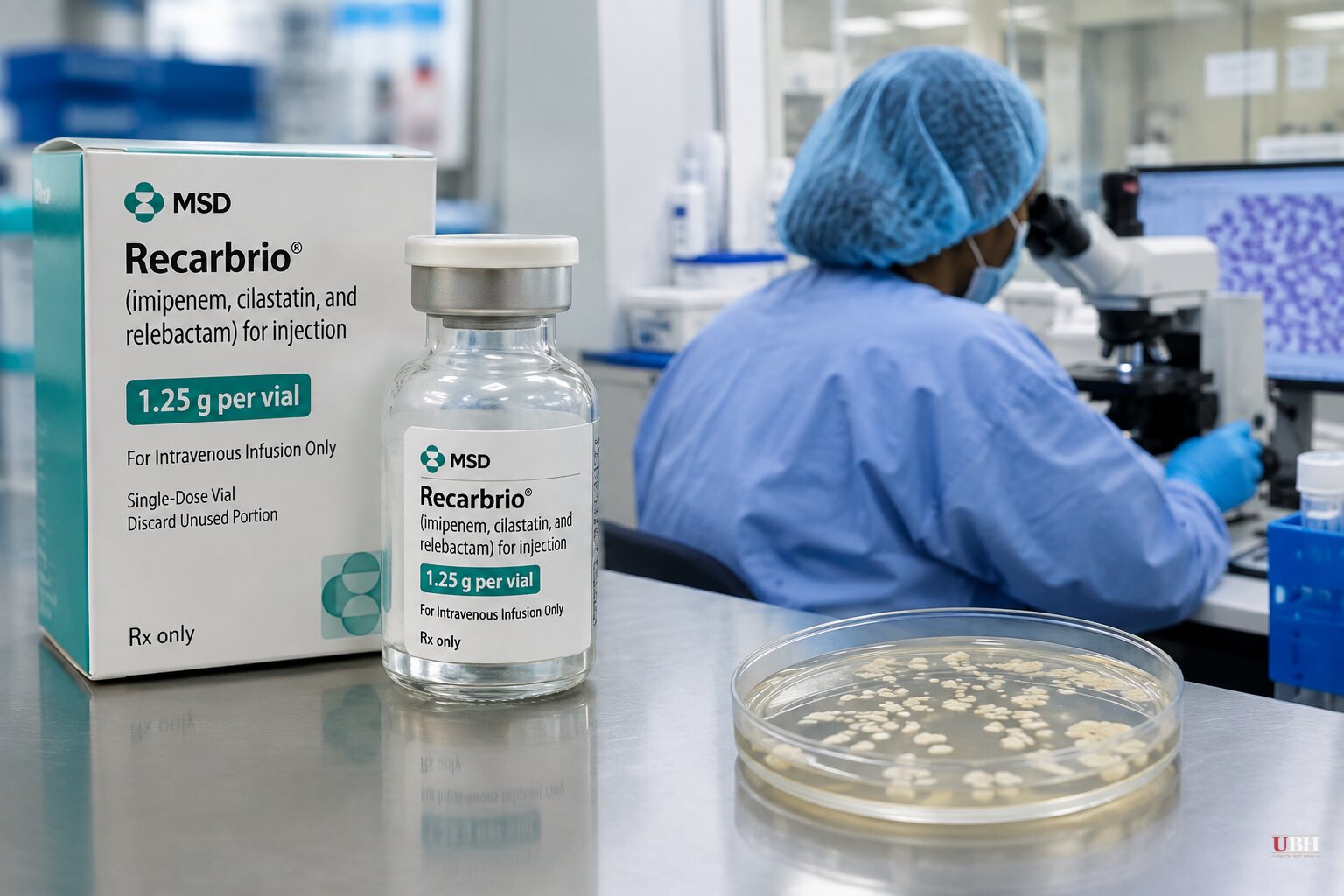
Merck told CIDRAP News it will stop manufacturing and marketing Recarbrio in the United States. The drug, a combination of imipenem-cilastatin and the beta-lactamase inhibitor relebactam, was approved by the FDA in 2019 for complicated urinary tract and intra-abdominal infections with no other treatment options, then expanded to hospital-acquired pneumonia in 2020 and pediatric use in 2025.
Merck says the withdrawal is a routine portfolio decision, not a safety issue. Amesh Adalja, an infectious disease physician with the Johns Hopkins University Center for Health Security, told CIDRAP the resulting clinical gap is "immediate but narrow." For KPC-producing carbapenem-resistant infections, doctors still have ceftazidime-avibactam, meropenem-vaborbactam, and cefiderocol, Adalja said. The real loss, he said, will be felt treating Pseudomonas aeruginosa, where imipenem-relebactam was one of a short list of preferred options.
The withdrawal lands in the same news cycle as a report from Nairobi, Kenya, where researchers identified a pan-drug-resistant strain of the fungus Candidozyma auris, formerly known as Candida auris, according to ScienceAlert. The isolate came from a 28-year-old woman who developed a surgical-site infection after an elective procedure. Lab testing found it resistant to all four major classes of antifungal drugs: fluconazole, caspofungin, micafungin, amphotericin B, and flucytosine.
Only one other fully pan-drug-resistant C. auris case has been documented anywhere. That case was reported in New York in 2022. The Kenya case is the first in Africa. Genomic sequencing found mutations in genes tied to each drug class, including ERG11, CDR1, FKS1, and FUR1. Researchers said the mutation pattern differs from the New York case, raising the possibility the resistance evolved independently rather than spreading from the US, though they could not rule that out. The World Health Organization designated C. auris a critical-priority fungal pathogen in 2022. Mortality in reported outbreaks has run 30 to 50 percent.
Where the resistance actually comes from
A MedPage Today analysis highlights a point doctors don't raise often enough with patients: most antibiotic resistance isn't generated in hospitals. About 70 percent of antibiotics critical to human medicine sold in the US go to food animals, and most of that isn't treating sick livestock. It's routine, preventive dosing that lets producers pack animals into crowded confinement operations and still get most of them to slaughter. Projections cited by MedPage show livestock antibiotic use, already the largest single category worldwide, is on pace to climb nearly a third by 2040. Drug-resistant infections already kill an estimated 35,000 Americans a year, and a Lancet forecast projects roughly 39 million deaths globally from resistant infections between now and 2050.
A livestock producer would fairly point out that sick animals need treatment, and that tighter antibiotic rules raise costs and complicate herd management, especially in cramped confinement systems where disease spreads fast. That's a legitimate operational concern, not a dodge. But the WHO's actual ask isn't to ban veterinary antibiotics. It's to stop routine dosing of healthy animals. China tested that exact policy, banning colistin as a livestock feed additive in 2017 after a transferable resistance gene, mcr-1, emerged on Chinese pig farms and spread to patient isolates on multiple continents within a couple of years. After the ban, colistin resistance measurably declined in both animals and people, according to MedPage Today. That argument points toward targeted restriction over either extreme of total deregulation or blanket bans on veterinary medicine.
The science racing to catch up
Research is also probing why some drugs fail even without classic resistance. A review in Genome Biology by Carolin Kobras of the University of Birmingham and Oxford, covered by BioEngineer.org, argues that antibiotic tolerance—bacteria surviving a drug without growing—has its own genetic basis that genome-wide screening and lab evolution experiments can now map, separate from the resistance mutations doctors already track.
On the drug-discovery side, researchers at the University of Oregon resurrected a 160-million-year-old version of lactoferrin, an immune protein, using ancestral sequence reconstruction, and found its antimicrobial peptide fragment outperformed the modern human version against drug-resistant bacteria. Findings were published in PLOS Biology on August 25 and reported by the Times of India. Separately, a team led by Freya Harrison at the University of Warwick found that a reconstructed 10th-century remedy called Bald's eyesalve, brewed from garlic, onion, bovine bile, and wine, damaged bacterial membranes, blocked biofilm formation, and drove slower resistance development in lab tests than single-molecule antibiotics, according to Science News, which reported the findings September 29 based on a study published in mSphere.
None of that changes the near-term math. Adalja's "immediate but narrow" gap from the Recarbrio withdrawal still has to be filled by clinicians case by case, and the Kenya fungal case still leaves doctors there with essentially no drug option if the infection spreads systemically. Whether Candidozyma auris's pan-resistant mutation profile shows up again, independently or through transmission, is an open question the Kenyan research team says its genomic data cannot yet answer.
Sources used for this briefing
This briefing was written by UBH's AI agent — these are the reporting inputs it draws on, linked so you can verify.


