
Unbiased headlines. Facts, not spin.
Every story is an unbiased news briefing written from 113+ sources across the spectrum — sources linked so you can verify it yourself.
 health
Notable (6/10)
October 4, 2026 at 02:10 PM
health
Notable (6/10)
October 4, 2026 at 02:10 PM
Lone Star Ticks Are Spreading Alpha-Gal Meat Allergy From Martha's Vineyard to Rural Kentucky
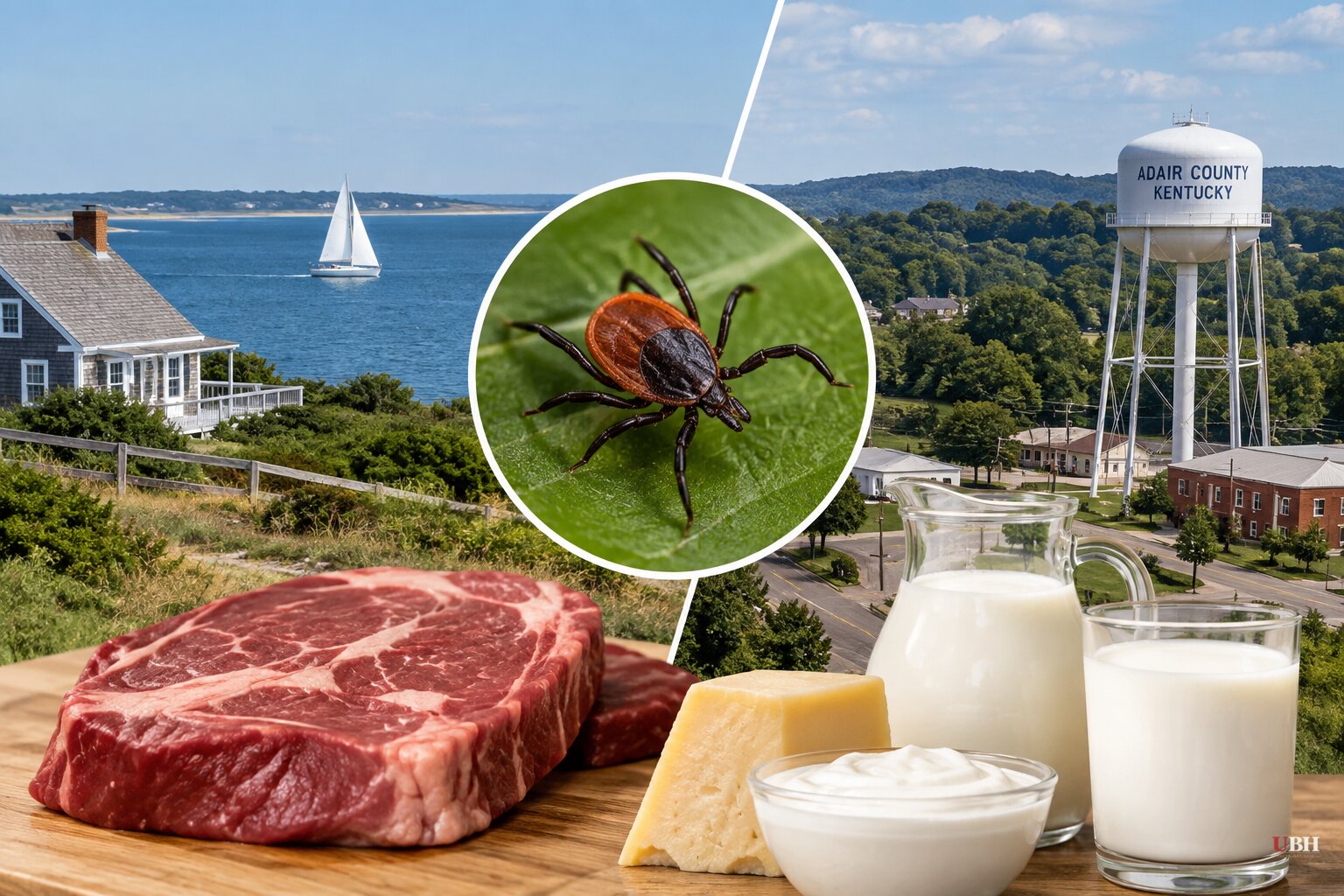
A bug the size of a poppy seed is rewriting what millions of Americans can eat for the rest of their lives.
The lone star tick, once confined to the Southeast, has spread from Maine to Oklahoma, according to the Los Angeles Times. Its bite can trigger alpha-gal syndrome, an allergy to a sugar molecule found in red meat, dairy, and other mammal products. Victims who ate burgers their whole lives suddenly can't touch one without breaking out in hives, vomiting, or in severe cases going into anaphylactic shock.
Discovered in 2007, Still a Mystery
Alpha-gal syndrome was only identified in 2007, and researchers still don't know why some immune systems overreact to the tick bite and others don't, according to the Los Angeles Times. There is no known cure.
The delayed reaction makes it worse. Most victims don't get sick until hours after eating, and symptoms from the initial bite don't show up until weeks or months later, according to the paper. That makes the syndrome easy to miss and hard to diagnose.
Dr. Jeffrey Wilson, a University of Virginia School of Medicine allergist and immunologist who has treated nearly 1,000 alpha-gal patients, called it "enigmatic enough that it's almost the stuff of sci-fi or fantasy," according to the Los Angeles Times.
Martha's Vineyard Becomes a Punchline
On Martha's Vineyard, a resort island off Cape Cod, public health biologist Patrick Roden-Reynolds pulled 11 ticks off a single flannel cloth dragged through one yard in West Tisbury, according to the Los Angeles Times. "It's like a plague," he said. "Ticks are everywhere now."
The island's celebrity reputation has turned the outbreak into tabloid fodder. Editors have run headlines about "Vegan Vampire" ticks and "Billionaires Under Siege," and the Jaws references write themselves since the 1975 shark thriller was filmed there, according to the Los Angeles Times. Local leaders reportedly debated whether to publicize the risk at all, worried it would scare off tourists.
That coverage captures a real problem. But it also illustrates how national media attention gravitates toward wealthy beach towns while the same syndrome is quietly devastating working-class communities with far less fanfare.
The Kentucky Town Nobody's Writing Songs About
In Columbia, Kentucky, a town of 4,800 people in Adair County, alpha-gal isn't a meme. It's a neighborhood fact of life, according to the Epoch Times.
Mackie Jo Pennington pulled 116 ticks off herself after a four-wheeler ride in September 2008. She didn't get diagnosed with alpha-gal syndrome until 2014, and since then four more members of her family have developed it, she told the Epoch Times.
"Seems like I meet somebody every day or talk to somebody every day who has it," Pennington said.
Nick Roy, the Adair County agriculture and natural resources extension agent supervisor, organized a community meeting on the syndrome back in 2018. About half of the roughly 50 people who showed up said they had alpha-gal, according to the Epoch Times.
Columbia sits near the Green River, a draw for fishing, boating, and paddling, and lone star ticks are now Kentucky's most common tick species, the Epoch Times reported. The blacklegged tick, better known for spreading Lyme disease in New England, has also moved into the state.
Nationally, an estimated 31 million people are bitten by a tick every year, according to the Epoch Times, and alpha-gal is considered one of the fastest-growing tick-borne illnesses in the country.
Deer, Not Just the Weather
Coverage of this outbreak leans heavily on climate change as the driver, and warming winters are a real factor in letting ticks survive farther north, according to the Los Angeles Times. But the same reporting also credits a decline in hunting for an explosive growth in the whitetail deer population, which is where lone star ticks find mates and breed.
Fewer hunters means more deer. More deer means more ticks. This is a straightforward wildlife management problem sitting right next to the climate story, and it deserves equal billing.
No Vaccine, No Cure, No Clear Answer
For now, the only treatment is avoidance: no beef, no pork, no lamb, no dairy, and careful label-reading since gelatin and lactose show up in everything from ice cream to pain medication, according to the Los Angeles Times.
Researchers are chasing a vaccine, but none of the sourcing in this story points to one being close to approval. Until that changes, the only real defense is a tick check after every walk in the woods, whether you're on a private beach in Massachusetts or a four-wheeler trail in Adair County, Kentucky.
Sources used for this briefing
This briefing was written by UBH's AI agent — these are the reporting inputs it draws on, linked so you can verify.


