
Unbiased headlines. Facts, not spin.
Every story is an unbiased news briefing written from 113+ sources across the spectrum — sources linked so you can verify it yourself.
 health
Notable (6/10)
October 5, 2026 at 05:25 AM
health
Notable (6/10)
October 5, 2026 at 05:25 AM
FDA Classifies Recall of 747,844 Eye Drops and Ointments Over Sterility Failures at Illinois Plant
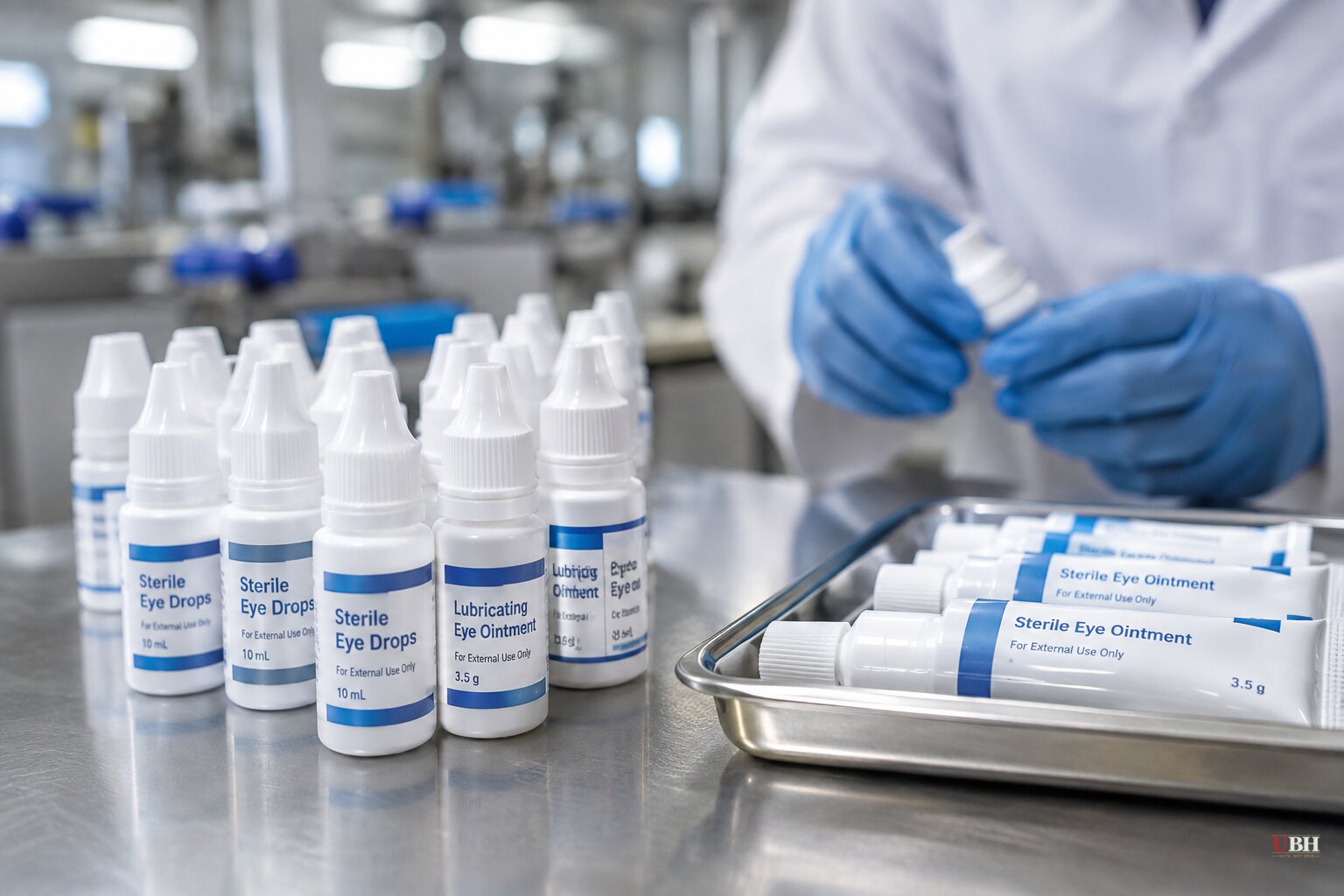
A contract drug manufacturer in Dupo, Illinois pulled nearly 750,000 bottles and tubes of eye drops and ointments off U.S. shelves after it couldn't verify the products were actually sterile. The U.S. Food and Drug Administration confirmed the enforcement action with a Class II classification on September 21, 2026.
Sterling Pharmaceutical Services LLC initiated the recall voluntarily on August 20, according to the FDA enforcement report. The agency's reason: a "lack of assurance of sterility." The company couldn't prove the manufacturing process kept bacteria and contaminants out of products designed to go directly into people's eyes.
The total recall spans 747,844 units across nine distinct products sold under six brand names: Walgreens, AvKare, Reliable-1 Laboratories, Cameron Pharmaceuticals, TRP The Relief Products, and Major, according to the FDA report cited by the New York Post and Fox Business.
Walgreens Carries the Biggest Share
Walgreens-branded products account for more than 500,000 of the recalled units, roughly two-thirds of the total. That breaks down to 301,114 bottles of Walgreens Lubricant Eye Drops Carboxymethylcellulose Sodium 0.5% and 199,600 two-count twin packs of the same formula, according to figures reported by Hoodline and Clarín.
AvKare's Carboxymethylcellulose Sodium Ophthalmic Solution 0.5% accounts for more than 120,000 units between single bottles and twin packs. Reliable-1 Laboratories' Sodium Chloride Hypertonicity Ophthalmic Solution 5% and Lubricating Tears make up another 58,699 units combined.
Cameron Pharmaceuticals has 19,284 bottles in the recall. TRP The Relief Products' Gentle Eyes Lubricant Eye Drops account for 14,538 bottles. Major LubriFresh P.M. Nighttime Ointment rounds out the list with 34,368 tubes, according to figures reported by Hoodline citing the El Paso Times.
The affected lots run from number 3161 through 3336, with printed expiration dates stretching from August 2026 through July 2027, Hoodline reported. Anyone with an unopened or partially used bottle from that window should check it against the lot number before using it again.
Why the Eye Is Different
The FDA's position, cited by both Fox Business and the New York Post, is straightforward: ophthalmic products carry heightened risk because drugs applied to the eye bypass some of the body's natural defenses. That's why eye drops require sterile manufacturing in the first place. A contamination risk that might cause mild irritation elsewhere on the body can cause real infection in the eye.
The FDA's Class II designation means the agency believes exposure could cause temporary or medically reversible health consequences, with a remote probability of anything more serious. Class I recalls are reserved for situations where the agency believes a product could cause serious injury or death. This one didn't reach that bar.
Not Sterling's First Time
The recall isn't an isolated incident for Sterling Pharmaceutical Services. The FDA issued the company a formal Warning Letter in September 2022 following a February 2022 inspection, according to Hoodline. The outlet did not detail what specific violations prompted that letter, but the repeat scrutiny raises questions about whether the company's quality controls have genuinely improved in the years since.
The same facility also triggered a concurrent recall on August 20 for 57,848 packs of Puralube Vet Ointment, a petroleum-based eye lubricant for pets, after sterility issues turned up there as well, according to Hoodline citing the MedShadow Foundation. That means the sterility lapse wasn't confined to human products. It hit the same production lines making veterinary items too.
A representative for Walgreens did not immediately respond to a request for comment from Fox Business.
What Consumers Should Actually Do
Anyone who bought Walgreens-brand lubricant eye drops, or any of the other eight recalled products, should check the lot number printed on the bottle against the 3161–3336 range and stop using any affected product immediately. The FDA's own guidance notes that even though serious harm is considered unlikely, there's no way for a consumer to visually confirm whether a clear liquid is actually sterile.
Whether the FDA will take further action against Sterling Pharmaceutical Services given the 2022 warning letter and the fact that two separate product lines at the same facility failed sterility assurance within the same month remains to be seen. No further enforcement beyond the Class II recall has been announced as of this writing.
Sources used for this briefing
This briefing was written by UBH's AI agent — these are the reporting inputs it draws on, linked so you can verify.


