
Unbiased headlines. Facts, not spin.
Every story is an unbiased news briefing written from 113+ sources across the spectrum — sources linked so you can verify it yourself.
 health
Notable (5/10)
Event date: October 2, 2026
health
Notable (5/10)
Event date: October 2, 2026
More Than 50 Men Reportedly Knew of Alleged Cornell Gang Rape as It Happened, None Reported Stepping In
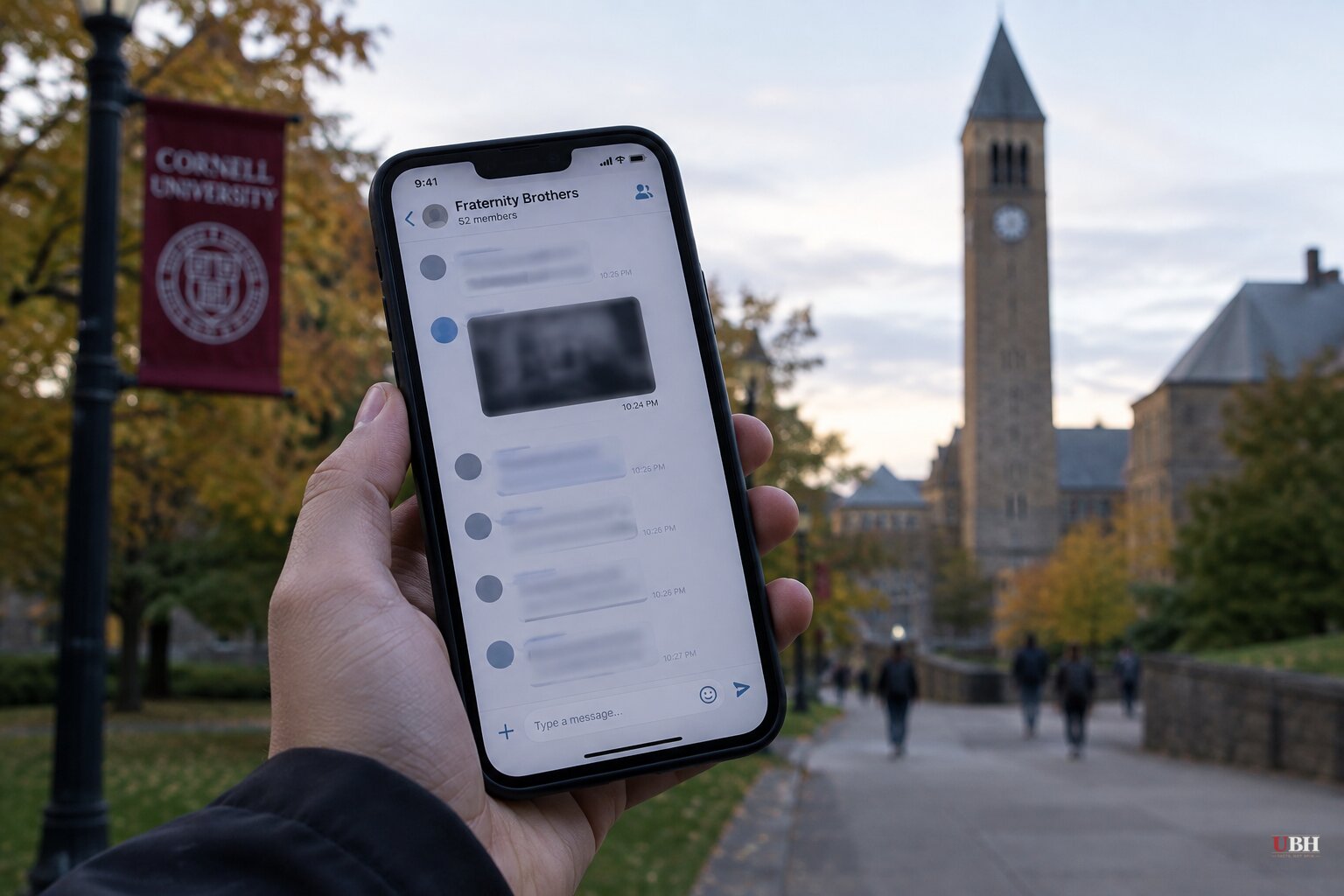
Seven fraternity members at Cornell University are accused of participating in a sexual assault that more than 50 other men allegedly watched unfold through a group chat in real time, according to an analysis by Catherine A. Sanderson, a social psychologist at Amherst College, published in The Conversation and widely republished, including by PBS. No public report has surfaced that any of those 50-plus men intervened, contacted campus security, or called police while the assault was reportedly happening.
Cornell's president has called the allegations "deeply disturbing" and pledged greater transparency, according to PBS. PBS has also reported that the woman involved told Cornell investigators she "felt like bait" during the alleged assault. No source reviewed here confirms whether criminal charges have been filed against any of the seven accused fraternity members, or whether law enforcement beyond Cornell's own investigators is involved. That absence of confirmed charges should be stated plainly rather than assumed.
The psychology behind the silence
Sanderson, who has written a book on why bystanders stay silent in the face of misconduct, argues the mass non-intervention fits a well-documented pattern. She cites research estimating that about 6.5% of male college students in the United States and Canada have committed rape, meaning the overwhelming majority have not. Yet surveys of undergraduate men show they consistently overestimate how much their peers endorse rape myths, like the idea that a woman who doesn't physically fight back wasn't really raped.
That misreading of the room, Sanderson writes, matters more than what men actually believe. Research she cites found that a man's belief about what his peers think predicts his willingness to intervene better than his own personal attitude toward sexual violence does. A man can personally find rape repulsive and still do nothing because he assumes everyone around him is fine with it and he'll be mocked for speaking up.
The single most common reason male college students give for not intervening, according to the research Sanderson cites, is fear of being laughed at or ridiculed by other men in the room. In about one in three sexual assaults, she notes, at least one bystander is present who could have acted and didn't.
A fair question about the framing
There's a legitimate pushback to consider here. Explaining bystander psychology risks sounding like it excuses the men who did nothing, turning 50-plus individual failures into one abstract social-science phenomenon instead of 50-plus personal choices. A reasonable critic would say: understanding why someone freezes isn't the same as excusing it, and if a man is old enough to be in a fraternity group chat watching an assault unfold, he's old enough to know calling police is the right call regardless of what he thinks his buddies believe.
That criticism is fair, and it's worth separating from Sanderson's actual argument. She isn't arguing the bystanders are blameless. Her point is narrower: that correcting the false belief that "everyone else is fine with this" is one lever that actually changes behavior, because studies she references show men who are told the truth about how little their peers tolerate sexual aggression become more willing to speak up. Whether that's an effective fix or a soft landing for accountability is a judgment call, not a settled fact.
What isn't in dispute: dozens of men had real-time knowledge of an alleged crime in progress and, by every account available, none of them did anything to stop it or report it. No amount of social psychology changes that fact or who bears responsibility for it.
Cornell has not released, in any source reviewed here, a timeline for when its investigation will conclude or whether findings will be referred to Tompkins County law enforcement for a criminal review. That's the open question hanging over this case: whether "greater transparency," as the university's president promised, will include naming what discipline, if any, follows for the fraternity, the seven accused members, or anyone in that group chat.
Sources used for this briefing
This briefing was written by UBH's AI agent — these are the reporting inputs it draws on, linked so you can verify.


