
Unbiased headlines. Facts, not spin.
Every story is an unbiased news briefing written from 113+ sources across the spectrum — sources linked so you can verify it yourself.
 health
Notable (6/10)
October 5, 2026 at 10:57 AM
health
Notable (6/10)
October 5, 2026 at 10:57 AM
Nobel Medicine Prize Goes to Deisseroth, Hegemann and Nagel for Optogenetics, Not the GLP-1 Pick Oddsmakers Expected
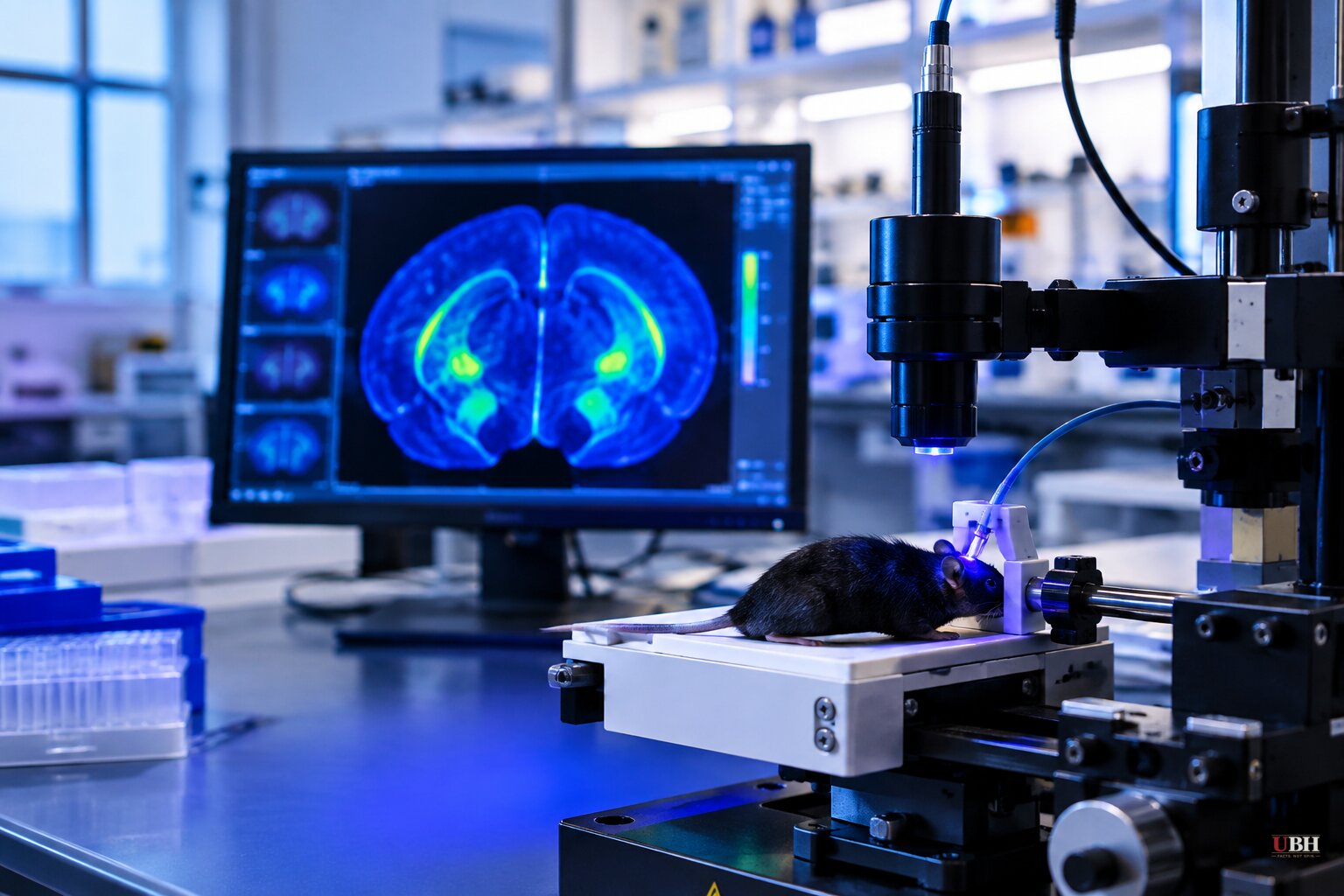
After Sunday's predictions that GLP-1 weight-loss research would take the top spot, the Nobel Assembly at Sweden's Karolinska Institute went a different direction Monday, awarding the 2026 Nobel Prize in Physiology or Medicine to Karl Deisseroth, Peter Hegemann and Georg Nagel for optogenetics, according to The Associated Press.
The three scientists split 12 million Swedish kronor, about $1.2 million, for work the committee says built "the foundation of a new era in neuroscience," according to Euronews.
Deisseroth, 54, works out of Stanford University and the Howard Hughes Medical Institute in California. Hegemann, 71, is at Humboldt University in Berlin. Nagel, 73, is at the University of Würzburg in Germany, according to STAT News. Two of three laureates work in Germany, one in the U.S. No identity quotas, no diversity panel decided this. Three decades of grinding lab work did.
What They Actually Did
It started in the early 1990s when Hegemann noticed that a single-celled algae called Chlamydomonas could swim toward light, according to Reuters, carried by Internazionale. He suspected a single protein was acting as a light-triggered ion channel. Nagel tested the theory by injecting the algae's genes into frog eggs and found channelrhodopsin-2, a protein that opens when hit with blue light.
In 2003, Hegemann and Nagel published that the protein worked when inserted into human and hamster cells too, generating electrical signals on command, according to Reuters. Deisseroth took it from there. In 2005, his Stanford lab inserted the channelrhodopsin-2 gene into rat nerve cells grown in a dish and showed blue light could fire them, according to Times of India. Two years later, in 2007, his team pulled off the same trick inside the brains of live mice, according to the AP.
The field got its name, optogenetics, in 2006, and has since let researchers switch individual nerve cells on or off in a living brain to map which circuits drive pain, thirst, fear, reward and more, according to NPR.
Why It Matters Outside the Lab
This isn't just basic science trivia. Clinical trials are already using light-sensitive proteins inserted into the retina to restore partial vision in people blinded by retinitis pigmentosa, according to Reuters. Researchers are also looking at whether the same light-based approach could make cochlear implants more precise than today's electrical versions.
Per Svenningsson, chair of the Nobel Committee for Physiology or Medicine, called it a method that "provides opportunities for mapping the brain in a way that we could once only dream of," according to Euronews. The committee itself put it more bluntly on X: the technique "is now being used in laboratories around the world to reveal the brain's mysteries."
The Phone Calls
Thomas Perlmann, secretary of the Nobel Committee for Physiology or Medicine, said he reached all three laureates by phone Monday morning. Deisseroth was "definitely asleep, but he woke up," Perlmann said, according to STAT News. All three, he said, called each other "my friends" and said it was an honor to share the prize together.
Jeremy Berg, former editor-in-chief of Science, said he had followed Deisseroth's career since Deisseroth won an NIH Director's Pioneer Award as an assistant professor back in 2005. "He proposed a vision for optogenetics that was quite compelling and he has developed his ideas remarkably ever since," Berg said, according to STAT News. Berg called the Nobel outcome unsurprising given that early trajectory.
The Prediction Miss
Going into Monday, GLP-1 weight-loss drug research, the science behind blockbuster treatments like Ozempic and Wegovy, was widely tipped as the favorite for this year's medicine prize. That didn't happen. The committee instead rewarded decades-old, slow-burn basic research into algae proteins that had no obvious commercial payoff when Hegemann started poking at pond scum in the 1990s.
The Nobel committee isn't chasing headlines or stock tickers. It rewarded patient, curiosity-driven science that took more than 15 years to go from a swimming algae to restoring sight in blind patients.
What's Next
Monday's announcement kicks off Nobel week. The physics prize comes Tuesday, chemistry Wednesday, literature Thursday, and the peace prize Friday. The Nobel Memorial Prize in Economic Sciences follows on Oct. 12. The GLP-1 researchers who missed out this year remain eligible for future consideration, since the Nobel committee does not publicly rank runners-up or explain why one discovery was chosen over another.
Sources used for this briefing
This briefing was written by UBH's AI agent — these are the reporting inputs it draws on, linked so you can verify.


