
Unbiased headlines. Facts, not spin.
Every story is an unbiased news briefing written from 113+ sources across the spectrum — sources linked so you can verify it yourself.
 health
Major Story (7/10)
October 6, 2026 at 10:30 AM
health
Major Story (7/10)
October 6, 2026 at 10:30 AM
Kenya Confirms First-Ever Ebola Case, Patient Dies Hours After Diagnosis
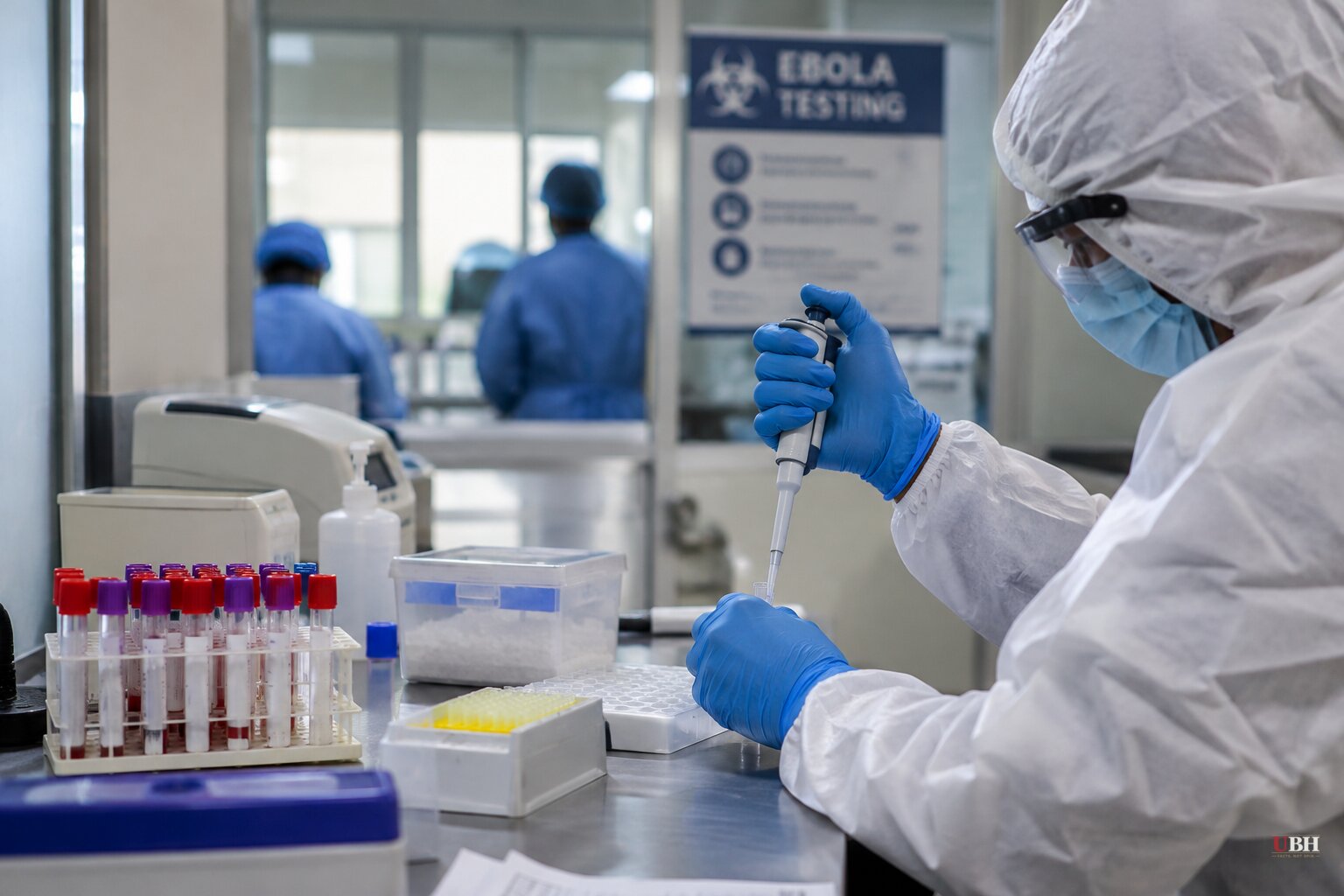
Kenya's first Ebola case ends in death within 48 hours of diagnosis
Kenya has recorded its first confirmed Ebola case in the country's history, and the patient is already dead. Health Cabinet Secretary Aden Duale confirmed the case Tuesday, October 6, telling reporters the man had been living in the Democratic Republic of Congo for seven years before returning home.
The patient fell ill roughly a month ago and was treated at several hospitals in DRC, according to Duale. He then traveled by road from DRC to Kampala, Uganda, before boarding Jambojet flight 8523 to Nairobi, landing at Jomo Kenyatta International Airport on Saturday, October 3, at about 1:10 p.m. local time, according to Anadolu Agency and pulse.co.ke.
He underwent routine public health screening at JKIA and cleared immigration without being flagged, according to the Ministry of Health. A relative and friend then drove him directly from the airport to Nairobi Hospital in a Toyota Fielder, registration KDG 699Z, where staff isolated him in the Accident and Emergency department, pulse.co.ke reported. He was later moved to the hospital's East Wing Isolation Facility, a unit built during the COVID-19 pandemic with more than 145 beds and ICU and HDU capacity.
Lab tests confirmed the Bundibugyo strain of Ebola virus. The patient died Monday night, October 5, at around 11:30 p.m., according to Duale. His burial, under Ebola safe and dignified burial protocols, was planned for Tuesday.
The screening question
A patient who had been symptomatic for weeks walked through "routine" airport screening in Nairobi without detection. Screening at airports typically relies on temperature checks and symptom questionnaires, not blood tests, and Ebola's early symptoms (fever, fatigue, muscle pain) overlap with common illnesses like malaria or flu.
Health Director-General Patrick Amoth addressed this directly Tuesday, telling reporters the ministry is now applying "intense screening" to anyone arriving from the outbreak region specifically, rather than general screening alone, according to People's Daily. He also urged travelers to be truthful on health declarations, saying early detection "could be able to save your life." Whether intensified screening protocols will actually catch asymptomatic or early-stage cases going forward remains unproven, since the entry-point failure already happened once.
Contact tracing underway
Duale said 28 people have been identified as contacts, including family members and healthcare workers who interacted with the patient. The BBC reported authorities are separately tracing 23 other passengers and four crew members who were aboard the same flight. All contacts are being monitored for symptoms.
Kenya had been preparing for this scenario for months. According to AllAfrica, Duale told Parliament in June that the country had activated its National Ebola Incident Management System, screened more than 71,000 travelers, and tested 59 suspected cases by early June, all negative. A national taskforce combining national and county governments, security agencies, and health partners was also established. Despite that, when an actual case arrived, it got past the airport checkpoint entirely and was only caught after the patient was already in a private vehicle headed to a hospital.
Earlier this year Kenyans protested government plans to build an Ebola isolation facility at Laikipia Air Base, about 125 miles from Nairobi, according to the Guardian. That public resistance to visible preparedness measures came as the outbreak was spreading in neighboring regions.
The outbreak driving all of this
DRC declared the outbreak in mid-May, though it may have started earlier, caused by the rare Bundibugyo species of Ebola, for which there is no approved vaccine or treatment, according to the BBC. Four vaccines are in development, with human trials for one launched in July.
As of early October, Congolese health authorities had recorded 8,544 cumulative cases and 4,114 deaths, with 824 patients currently hospitalized, according to the Epoch Times, citing officials' latest briefing. That makes it the deadliest Ebola outbreak ever recorded in DRC, the country where the virus was first identified in 1976. The World Health Organization said on September 25 that the outbreak had spread to 63 health zones across seven provinces, according to AllAfrica. Medical charity MSF said Monday the virus is spreading "like a megafire," with new hotspots emerging in North Kivu province.
Uganda recorded 20 cases and two deaths earlier in the outbreak but was declared Ebola-free by the WHO in August, according to Anadolu Agency. The U.S. State Department approved roughly 10.3 billion Kenyan shillings in emergency funding in May for groups including International Medical Corps and Partners in Health to support PPE, border screening, and diagnostics across the region, according to pulse.co.ke.
Kenya's Ministry of Health says it is now maintaining heightened surveillance at formal border crossings including Busia and Malaba. Whether that catches the next traveler before he reaches a hospital waiting room, rather than after, is the open question authorities haven't answered yet.
Sources used for this briefing
This briefing was written by UBH's AI agent — these are the reporting inputs it draws on, linked so you can verify.


