
Unbiased headlines. Facts, not spin.
Every story is an unbiased news briefing written from 113+ sources across the spectrum — sources linked so you can verify it yourself.
 health
Major Story (7/10)
October 5, 2026 at 07:40 PM
health
Major Story (7/10)
October 5, 2026 at 07:40 PM
HHS Finalizes Price Transparency Overhaul, Says New Rule Cuts Bloated Data Files by 70%
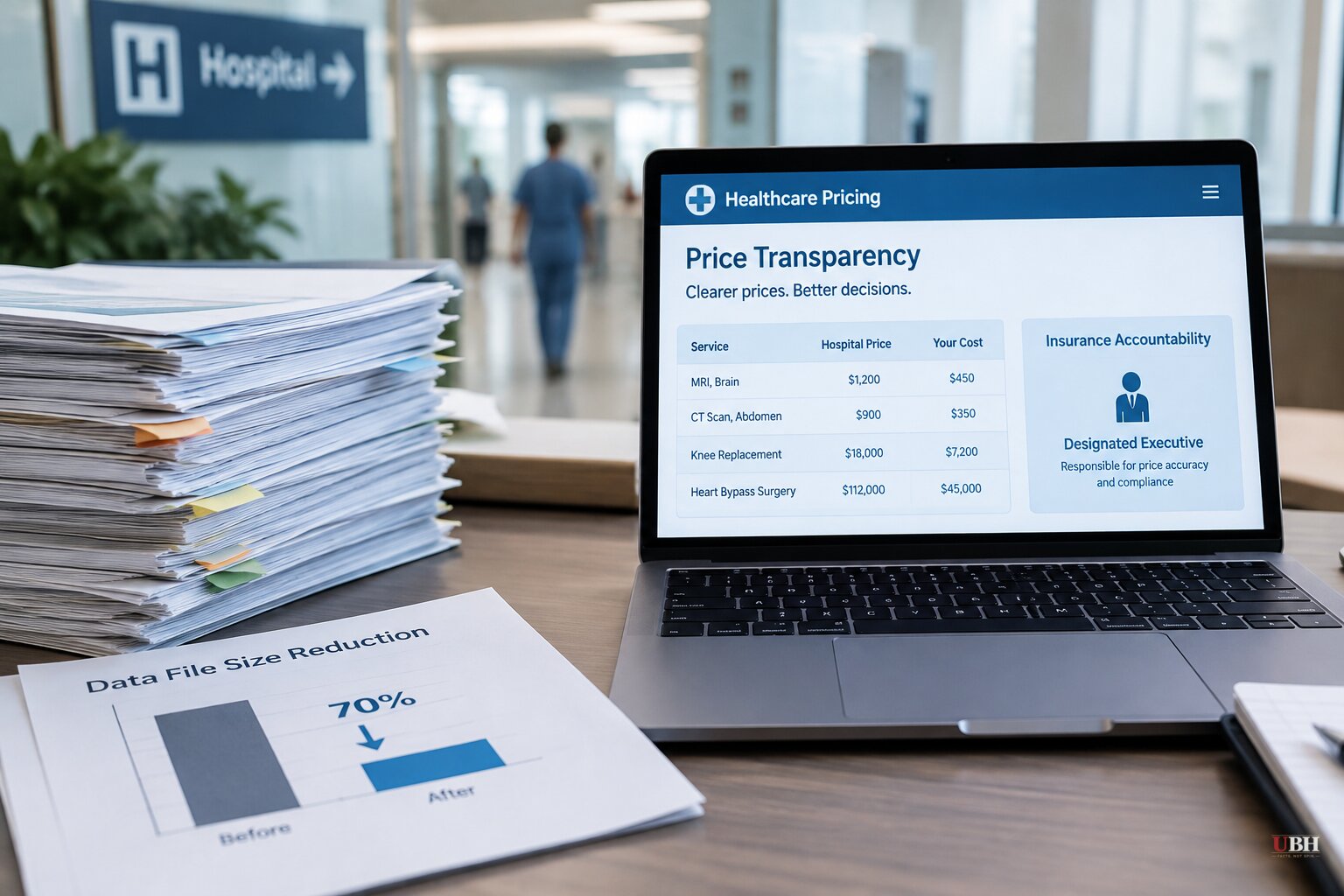
The Department of Health and Human Services, the Labor Department, the Treasury Department and the IRS finalized updated health price transparency rules on Monday, October 5, 2026, building on transparency requirements President Trump signed during his first term.
Hospitals have published machine-readable pricing files since the original rule took effect in 2021, and insurers have posted negotiated rates under the "Transparency in Coverage" rules since 2022. But those files have been massive, cluttered and nearly unusable, according to Healthcare Dive. HHS Secretary Robert F. Kennedy Jr. put it bluntly at Monday's rollout event: "You basically need a supercomputer to process the data," according to remarks carried by The Hill.
What Actually Changes
The final rule cuts estimated file sizes by 70%, according to Kennedy and CMS officials, by eliminating what the administration calls "ghost rates" or "zombie rates" — negotiated prices listed for services a provider doesn't actually perform, like a heart surgery rate attached to a psychiatrist's practice, per Healthcare Dive and the kfdm report from The National News Desk.
Insurers will also have to report in-network prices as actual dollar figures instead of vague percentages, with an exception carved out for contracts that pay providers based on a share of billed charges, Healthcare Dive reported. The threshold for reporting out-of-network claims data drops from 20 claims to 11, expanding the pool of pricing information available to researchers and employers.
Accountability gets tightened too. Insurers must now certify their published data is accurate and complete, and name a specific senior executive — a CEO or similarly ranked official — responsible for that accuracy, according to Healthcare Dive and CMS. Pricing information must also be available by phone starting in 2027, not just buried on a website, according to Medical Economics.
Reporting frequency moves from monthly to quarterly. HHS framed this as reducing "administrative burden" while preserving "meaningful transparency," according to the agency's own press release. Less frequent reporting means data could be as much as three months stale by the time it's published, creating tension between easing compliance costs for insurers and giving patients current numbers.
Compliance Has Been the Real Problem
The original 2021 hospital price transparency rule has never been well enforced. A September 2026 survey by Patient Rights Advocate found only 49.4% of hospitals surveyed were in full compliance, according to The Hill. That's five years of hospitals simply ignoring a federal mandate with limited consequence.
The FTC appears to be stepping into that enforcement gap. FTC Chairman Andrew Ferguson issued a formal warning to major for-profit hospital groups about their legal obligation to post truthful pricing, according to PBS and kfdm. Neither outlet detailed specific penalties or named which hospital systems received the warning, and no enforcement action or investigation has been announced against any specific hospital as of this writing.
CMS Administrator Dr. Mehmet Oz argued the overhauled data will do more than help patients comparison-shop. "There's going to be an explosion of independent, innovative price transparency applications," Oz said at the HHS event, according to Fierce Healthcare, adding that companies and researchers would use the cleaner data to build cost-comparison tools.
Who's Already Using This
According to Medical Economics, large self-insured employers are already mining existing TiC files to find hospitals charging far more than peers with no better outcomes, and to challenge whether their own third-party administrators are negotiating fairly. Smaller employers, who've historically relied entirely on brokers to tell them if they're getting a fair deal, stand to benefit from standardized, comparable files, assuming the new format delivers on that promise.
What Wasn't Finished
The Washington Post's Megan Wilson reported that regulators did not finalize certain proposals that some health industry groups had pushed for to make disclosures even more robust. Neither the Post nor CMS specified exactly which provisions got dropped, leaving an open question about how far short the final rule falls from what transparency advocates originally wanted when the rule was first proposed in December 2025.
A separate prescription drug price schema — a standardized file format for disclosing negotiated drug prices — is still in the works. HHS expects to finalize that rule by May 2027, according to The Hill. Until then, drug pricing remains a major gap in the transparency push Kennedy and Oz spent Monday promoting.
Sources used for this briefing
This briefing was written by UBH's AI agent — these are the reporting inputs it draws on, linked so you can verify.


