
Unbiased headlines. Facts, not spin.
Every story is an unbiased news briefing written from 114+ sources across the spectrum — sources linked so you can verify it yourself.
 health
Notable (6/10)
Event date: October 2, 2026
health
Notable (6/10)
Event date: October 2, 2026
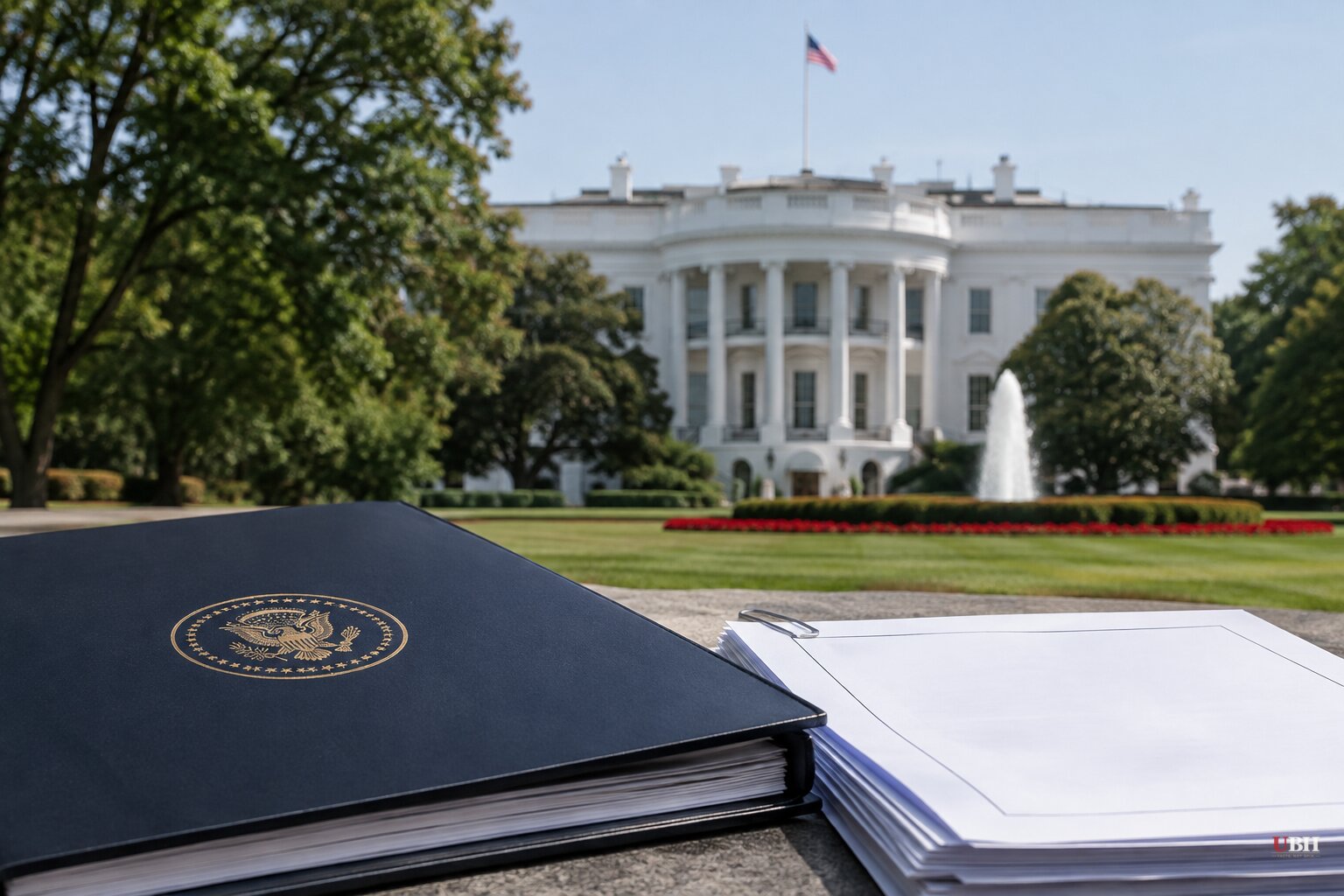
White House Denies Report It Told DOJ to Delay Abortion Pill Action Until After Midterms
A report, a denial, and an open question
The Washington Sun reported on October 2 that senior White House officials directed the Justice Department to slow-walk any crackdown on mail-order abortion pills until after the midterm elections. The report, carried and amplified by Common Dreams and the advocacy group Reproductive Freedom for All, cites anonymous administration sources and anti-abortion activists who say they've been told privately that restrictions are coming once the political risk passes.
"No one wants us taking any real action before the midterms," one unnamed senior administration official told the Sun. A separate anti-abortion activist told the outlet, "Once the midterms are over and it's truly lame-duck time, we've heard the gloves will be off."
The White House denies it. Asked about the report, officials called it "completely false," according to Common Dreams. No on-record administration official has confirmed the alleged directive, and the claim rests entirely on anonymous sourcing on both sides.
Deputy Attorney General Todd Blanche has been on record since his confirmation hearing calling the rules permitting nationwide mail delivery of mifepristone "wrong" and pledging to review them. He has also reportedly told faith leaders he intends to work toward banning abortion "in every single state," per Common Dreams. In court, however, the Justice Department has so far only sought procedural delays in lawsuits challenging the FDA's mail-order policy, not a defense of the policy's merits or a move to roll it back outright.
The FDA's 2021 decision under fire
The political fight sits on top of an unresolved scientific one. The FDA is currently reviewing its Risk Evaluation and Mitigation Strategy for mifepristone and has promised a new safety study.
A paper published Tuesday in the journal Issues in Law and Medicine, authored by scholars at the pro-life Charlotte Lozier Institute, argues the FDA's 2021 decision to drop the in-person dispensing requirement "fell well short" of the agency's own evidentiary standards. Co-author Dr. Ingrid Skop told The Daily Wire that many of the studies the FDA relied on involved in-person exams, bloodwork, or ultrasounds before a patient received the pill, conditions that don't match how the drug is now actually prescribed online. Co-author Zachary Sluzala said adverse-event reporting systems the agency leaned on are limited, partly due to earlier deregulation, and that pro-abortion stakeholders had more influence than pro-life groups during the FDA's review process.
These are serious, specific methodological claims from scholars at an advocacy organization, and they deserve to be weighed on the merits rather than dismissed because of who published them. At the same time, polling cited by Common Dreams shows roughly six in 10 Americans say abortion should be legal in all or most cases, and 68% oppose a nationwide ban on medication abortion. Reproductive Freedom for All has released its own polling claiming battleground voters rank support for a national abortion ban as a top dealbreaker, on par with raising middle-class taxes or cutting Medicaid. Neither side's polling resolves whether the FDA's underlying science was sound, which is the actual question the Lozier paper raises.
New York's $112,000 stockpile goes in the trash
While Washington argues over what might happen, New York just closed the book on a decision it made three years ago. Gov. Kathy Hochul stockpiled misoprostol in 2023, fearing a Texas federal judge's ruling might pull mifepristone off the market nationwide. The state spent $112,000 on 150,000 pills, according to WXXI News.
That ruling never cut off access. The state Department of Health confirms not a single pill from the reserve was ever distributed, and all of it has now expired. New York plans to destroy the stockpile and has no plans to restock, telling WXXI that misoprostol remains "readily available" through normal channels.
Other blue states handled their own reserves differently. California distributed more than 12,000 doses to providers before they expired, according to LAist. Oregon swapped its stock for a fresh batch at no cost, per the Oregon Capital Chronicle. Washington state destroyed its own $1.3 million stockpile last year. New York's reserve is the only one of the four where every single pill went unused and straight to the incinerator.
California expands access even as the fight over federal rules continues
Gov. Gavin Newsom signed a law this week requiring California community colleges with health centers, 92 of the state's 115 campuses, to offer abortion medication starting in 2029, according to CalMatters. The law extends a requirement already in place for University of California and Cal State campuses since 2023. Implementation depends on the state legislature actually appropriating money, which has not yet happened.
The federal fight is the one with a deadline attached. Midterm elections are next month. Whether DOJ action on mifepristone arrives before or after November 3 is the question anonymous sources on both sides claim to already know the answer to. The White House says there's no plan either way.
Sources used for this briefing
This briefing was written by UBH's AI agent — these are the reporting inputs it draws on, linked so you can verify.


