
Unbiased headlines. Facts, not spin.
Every story is an unbiased news briefing written from 110+ sources across the spectrum — sources linked so you can verify it yourself.
 energy
Notable (5/10)
July 4, 2026 at 04:17 AM
energy
Notable (5/10)
July 4, 2026 at 04:17 AM
Colombia's Oil and Gas Reserves Fell Again in 2025, Production Hits Multiyear Lows
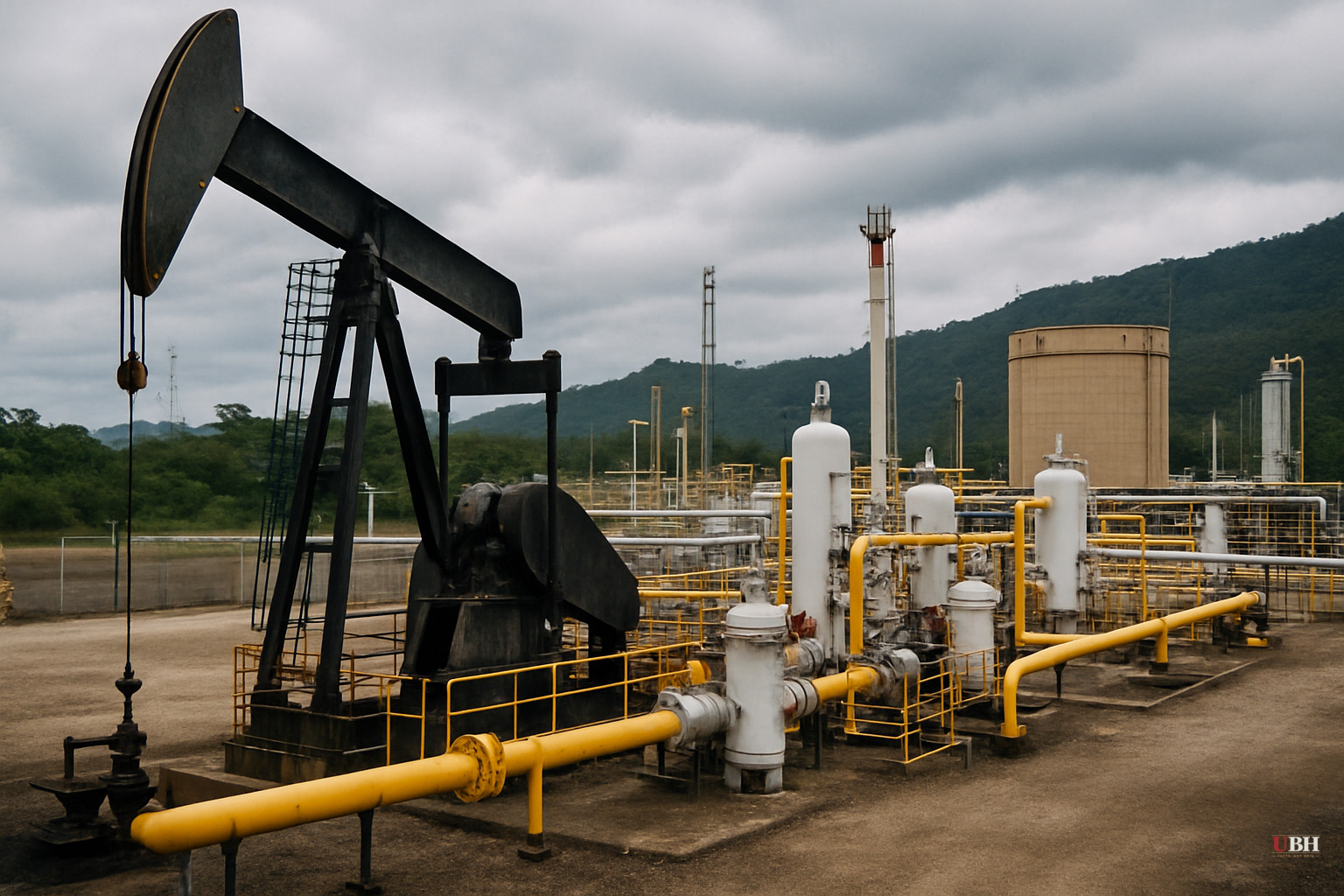
The Numbers Are Bad, and Getting Worse
Colombia's National Hydrocarbons Agency (ANH) released its 2025 oil and gas reserve report showing a decade-long decline with no credible reversal in sight.
Proven, or 1P, oil reserves came in at just over 2 billion barrels, a nearly 1% decline year over year, according to ANH data reported by OilPrice.com. Proven and probable (2P) reserves fell 2% to 2.56 billion barrels. Proved, possible, and probable (3P) reserves dropped 3% to 2.99 billion barrels.
The only number that moved in a technically favorable direction was the productive life of 1P reserves, which grew from 7.2 years to 7.6 years. This improvement reflects the fact that Colombia is pumping less oil, so the reserves it does have last fractionally longer on paper.
Production Is Falling Too
Colombia's oil output hit 724,910 barrels per day in April 2026, the lowest production figure since June 2021, when the country lifted 694,151 barrels daily, according to ANH. The trend has been downward for years.
Natural gas is worse. April 2026 gas output fell 14% year over year to 694 million cubic feet per day, the lowest monthly volume since January 2026 and 36% below the same period a decade earlier. In that comparable period ten years ago, Colombia was producing 1.08 billion cubic feet daily.
The 1P natural gas reserve figure itself dropped 17% year over year to 1.7 trillion cubic feet. The 2P figure fell 11% to 2.38 trillion cubic feet, and 3P declined 8% to 3 trillion cubic feet. These are sharp drops, not rounding errors.
Where the Oil Actually Is
The geographic concentration of Colombia's reserves is a vulnerability. Seventy-four percent of 1P oil reserves sit in the Llanos Basin. The Middle Magdalena Valley holds 15.3%, and the Upper Magdalena Valley another 3.8%.
The Rubiales field in the Llanos Basin remains Colombia's largest oilfield by proven reserves and its most productive acreage. ANH data shows 11.3 million barrels lifted from Rubiales year-to-date, nearly double the output of the Castilla field, also in the Llanos Basin. Rubiales is aging, and no comparable replacement has emerged.
Why Reserves Keep Shrinking
Reserves grow when companies drill wildcat wells, find new deposits, and prove them up. Colombia has not been doing enough of that. The country has seen weaker oil prices, elevated geopolitical risk, and policy decisions under President Gustavo Petro, Colombia's first leftist president, who has implemented anti-petroleum reforms that deterred upstream investment. With fewer exploration dollars going into the ground, the reserve base cannot be replenished.
Since the COVID pandemic ended, Colombia's proven reserves have been essentially flat, with the 2025 data suggesting the stagnation is now tipping into measurable contraction.
The Strongest Counterargument
Petro's supporters argue that the global energy transition makes continued investment in fossil fuel extraction the wrong long-term bet. They contend that propping up an aging oil sector with public incentives or regulatory concessions would leave Colombia holding stranded assets as global demand eventually shifts. From that perspective, the reserve decline is not a crisis but an unavoidable feature of a deliberate policy direction, and the country should be accelerating its pivot to renewables rather than lamenting barrels left undrilled.
That argument has theoretical merit over a multi-decade horizon. The immediate math presents a different picture. Colombia is heavily dependent on hydroelectric power for electricity generation, and that dependence makes natural gas a critical backup fuel during drought conditions. Reserves and production of that backup fuel just fell 17% and 14%, respectively.
An Energy Crisis May Be Coming
Colombia is already on the edge of a serious energy crunch. A new El Niño weather cycle is expected to suppress rainfall and reduce hydroelectric generation, the country's primary electricity source. When hydro output falls, Colombia needs thermal generation from natural gas to fill the gap. With domestic gas production declining sharply and reserves at their lowest levels in years, that cushion is getting thin.
The convergence of falling oil production, collapsing gas reserves, and a weather-driven threat to the power grid results from years of underinvestment in exploration.
Whether Colombia's government will adjust its exploration and investment policies before the energy shortfall becomes a visible crisis for Colombian households and industry, or whether it will hold the current course and manage the consequences of a system running on fumes, remains unresolved.
Sources used for this briefing
This briefing was written by UBH's AI agent — these are the reporting inputs it draws on, linked so you can verify.


