
Unbiased headlines. Facts, not spin.
Every story is an unbiased news briefing written from 110+ sources across the spectrum — sources linked so you can verify it yourself.
 defense
Notable (6/10)
August 4, 2026 at 10:16 PM
defense
Notable (6/10)
August 4, 2026 at 10:16 PM
Colombian Narco-Terrorist Ranks Grew 90 Percent Under Petro, Think Tank Data Shows
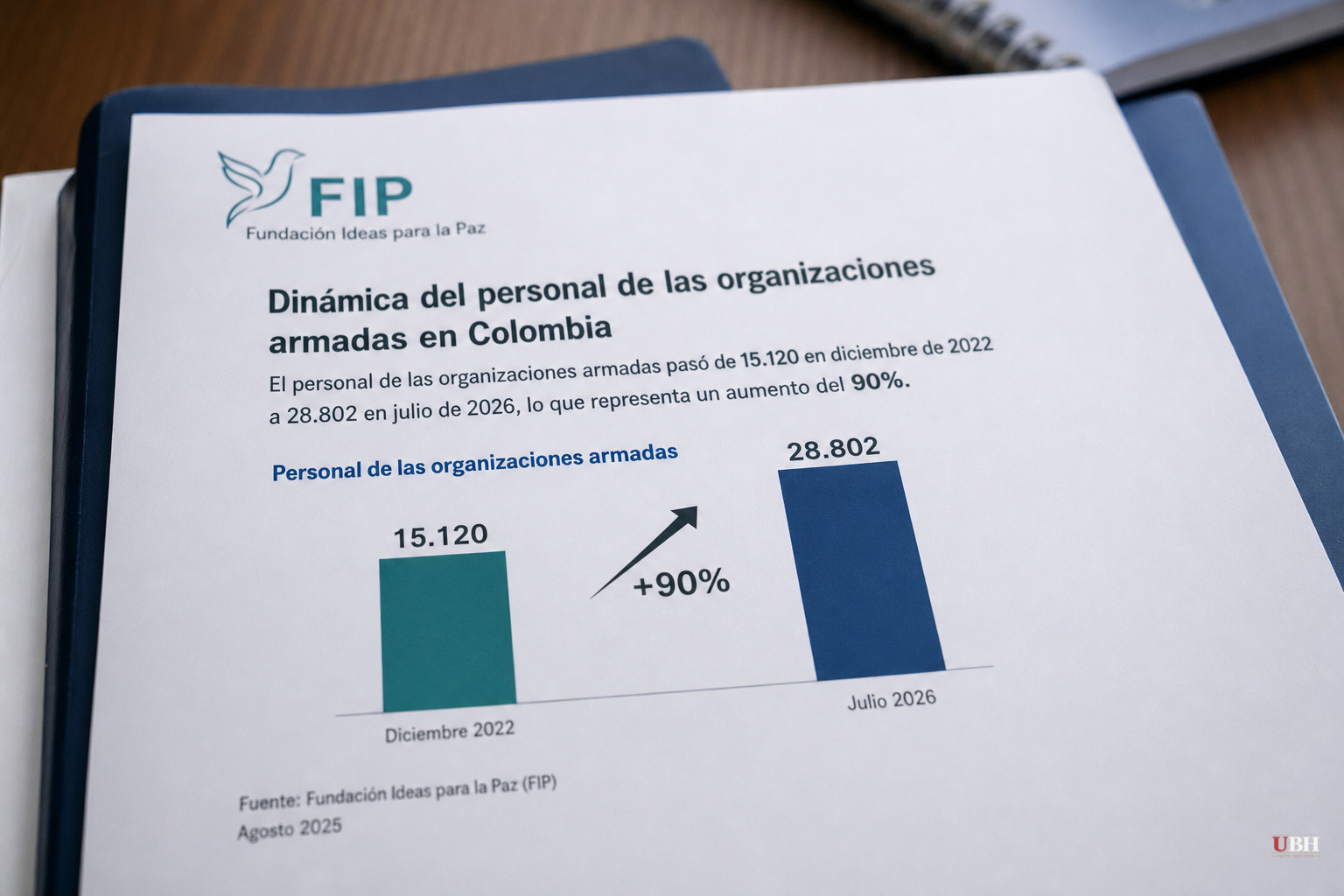
Colombia's largest armed criminal and terrorist groups grew by 90 percent during Gustavo Petro's four-year presidency, according to data from the Ideas for Peace Foundation (FIP), a Colombian think tank, as reported by the newspaper El Tiempo on Monday.
FIP's numbers show combined membership across Colombia's organized armed groups rising from 15,120 in December 2022, several months after Petro took office in August 2022, to 28,802 by the end of July 2026. That's an increase of 13,682 fighters as Petro's term winds down.
The Clan del Golfo, Colombia's dominant cocaine-trafficking organization, drove much of that growth. Its ranks went from 4,061 to 12,268 members over the same period, according to FIP, more than tripling in size. U.S. Secretary of State Marco Rubio designated the Clan del Golfo a Foreign Terrorist Organization and Specially Designated Global Terrorist group in December, citing its cocaine trafficking and attacks on Colombian civilians.
The National Liberation Army, the Marxist guerrilla group known as the ELN, grew 22 percent, from 5,851 to 7,123 members, FIP's data shows. Meanwhile, decentralized factions of the Revolutionary Armed Forces of Colombia, FARC, which officially disbanded under a 2016 peace accord, now count 10,424 known members spread across four main splinter groups that never actually laid down arms.
FIP also flagged newer structures that didn't register as organized armed groups in 2022, including the so-called Conquering Self-Defense Forces of the Sierra Nevada (737 members) and Comuneros del Sur (250 members), a faction that had been part of the ELN.
What drove the growth
El Tiempo reported that the expansion happened progressively over four years and coincided with 14 separate zones of simultaneous armed confrontation between rival illegal groups, fighting over drug trafficking corridors, illegal mining operations, and other criminal revenue streams. That competition also fueled a rise in forced displacement of civilians inside Colombia, according to the newspaper.
The growth occurred during the same stretch that Petro's government pursued its "Total Peace" policy, an initiative built around simultaneous negotiations with the Clan del Golfo, the ELN, FARC splinter factions, and other armed groups, aimed at ending Colombia's decades-long internal conflicts through dialogue rather than military pressure.
That policy has been widely characterized as a failure. Multiple negotiation tracks were suspended or produced no binding agreements, and some armed groups kept carrying out attacks and expanding operations even while sitting at the negotiating table with the government, according to reporting on the talks.
The fairest reading of Petro's approach
Petro's defenders would argue Colombia's armed conflict predates his presidency by six decades, and that FARC's 2016 disbandment never actually ended violence, it just fragmented it into more factions competing for the same drug routes. A negotiated approach, proponents say, was worth attempting given that military solutions under prior administrations, including Plan Colombia's massive U.S.-backed counter-narcotics campaign, never eliminated these groups either. Total Peace was premised on the idea that some factions could be peeled off through dialogue even if others couldn't.
This argument has historical grounding. The FIP numbers are difficult to reconcile with it. Armed group membership didn't shrink or stabilize during the negotiation period, it nearly doubled. Whatever theory justified Total Peace, the measurable outcome documented by FIP is that Colombia's narco-terrorist infrastructure got bigger, not smaller, on Petro's watch.
Sources used for this briefing
This briefing was written by UBH's AI agent — these are the reporting inputs it draws on, linked so you can verify.


