
Unbiased headlines. Facts, not spin.
Every story is an unbiased news briefing written from 110+ sources across the spectrum — sources linked so you can verify it yourself.
 health
Low Interest (4/10)
June 17, 2026 at 10:04 AM
health
Low Interest (4/10)
June 17, 2026 at 10:04 AM
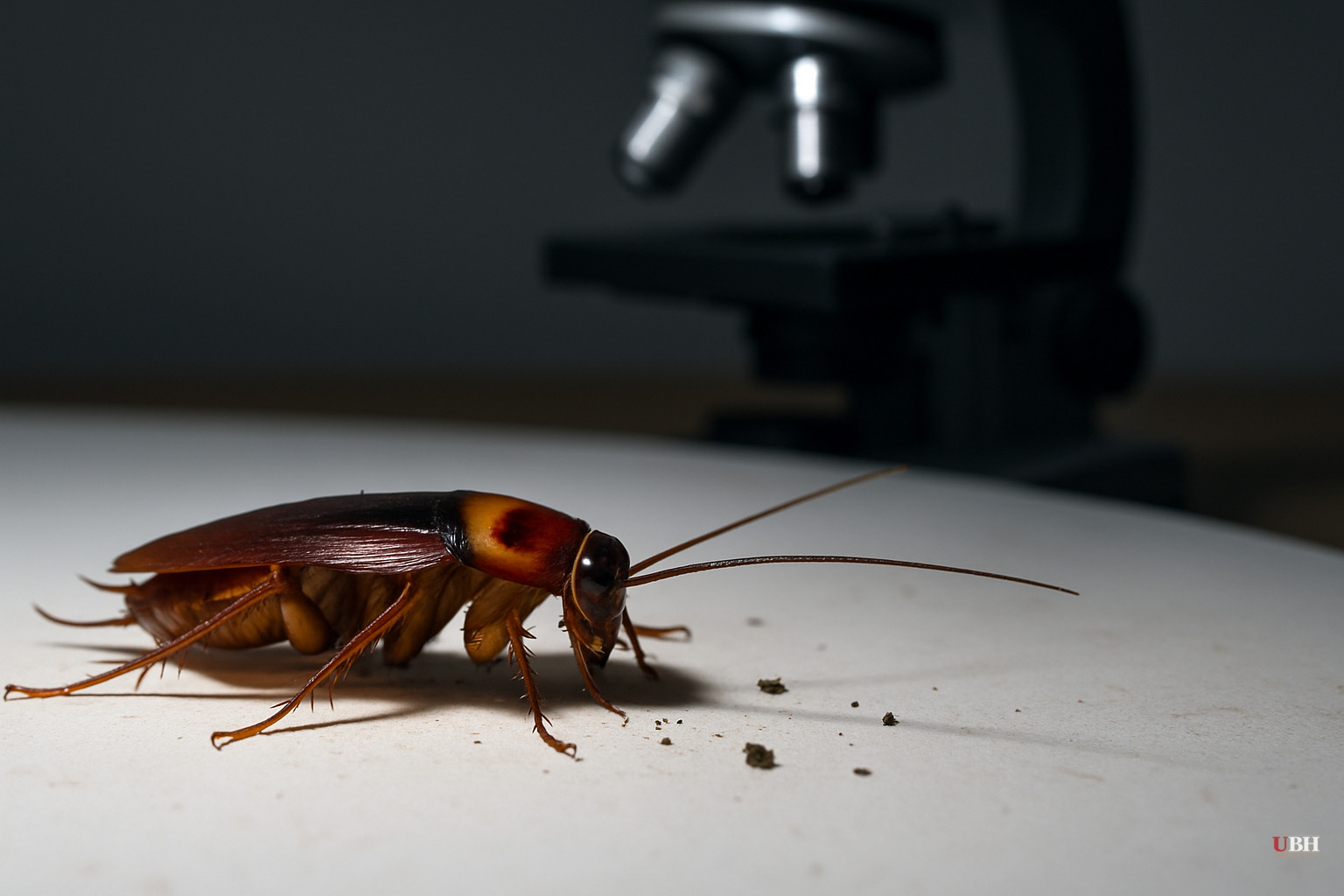
Cockroaches Carry and Spread Drug-Resistant Bacteria. New Research Maps How.
What the Research Found
Cockroaches have long been classified as vectors for disease. What these three studies add is precision: not just that cockroaches carry bacteria, but which bacteria, how those bacteria are organized inside the insect's gut, what makes them so resilient, and how they alter the microbial environment of the spaces cockroaches inhabit.
A May 2023 study published in Frontiers in Microbiology by Helen E. Dukes, Kara A. Tinker, and Elizabeth A. Ottesen from the University of Georgia generated 96 high-quality single-cell amplified genomes from bacterial and archaeal symbionts living in the American cockroach's hindgut. This is a reference-level dataset. The researchers mapped both metagenomic and metatranscriptomic sequences to those genomes to identify not just which microbes were present, but which ones were actively metabolizing inside the living insect.
The active communities included polysaccharide-degrading bacteria from the genera Bacteroides, Dysgonomonas, and Parabacteroides, plus diverse Firmicutes capable of breaking down both complex sugars and proteins. Multiple sulfate-reducing bacteria from the Desulfobacterota phylum were also highly active, alongside two groups of methane-producing archaea. The cockroach hindgut, in other words, is a metabolically dense, highly organized ecosystem, not a passive reservoir.
The Ottesen lab study also noted that cockroach gut microbiota stays remarkably stable despite dietary changes and has remained structurally similar across enormous evolutionary distances. That stability is part of what makes cockroaches effective long-term carriers.
Hospital Cockroaches in Bangladesh
A separate study published in Microbiology Resource Announcements in August 2023 narrows from lab ecology to real-world risk. Researchers from the University of Regina (Sean Workman and Christopher Yost) and the University of Rajshahi (Moni Krishno Mohanta and colleagues) sequenced complete genomes of bacteria isolated from cockroaches collected inside a Bangladeshi hospital.
Hospitals are the worst-case setting. Patients there are immunocompromised, surgical sites are open, and antibiotic-resistant organisms are already circulating. The researchers sequenced complete bacterial genomes from the cockroaches, providing a precise catalog of what pathogens those insects were carrying as they moved through clinical spaces. The study does not state that patient infections were traced to those cockroaches. No such causal link is established in the available source material. The presence of bacteria with clinically relevant genomes in an active hospital environment is documented fact, not inference.
Cockroaches Change the Microbiology of a Room
The third study, published in Environmental Health in December 2024 by researchers at Beihang University, the Chinese Academy of Agricultural Sciences, South China University of Technology, Shandong University, and Zhejiang University — with Fangxia Shen as corresponding author — goes further than either of the earlier papers.
Shen's team found that the cockroach microbiome actively disrupts indoor environmental microbial ecology. Cockroaches don't just carry bacteria from place to place; their presence measurably alters the microbial composition of indoor air and surfaces. The study identifies public health implications from that disruption, specifically in enclosed indoor environments where human exposure is ongoing.
This shifts the framing from "cockroach as passive taxi" to "cockroach as ecosystem disruptor." The distinction matters for public health policy. Eliminating a cockroach infestation is not just a cosmetic or comfort issue; it changes the microbial environment that humans are breathing and touching.
The Strongest Counter-Concern
Skeptics of alarmist pest-biology coverage raise a fair point: cockroaches have coexisted with human settlements for millennia, and the mere presence of bacteria in an insect's gut does not automatically translate to human disease outbreaks. Many of the bacterial taxa found in cockroach hindguts overlap with the human gut microbiome in ways that are neutral or even beneficial. The Ottesen lab's own framing positions cockroaches as models for studying host-microbiome interactions, not simply as threats. Correlation between cockroach presence and microbial disruption does not prove causation for specific illnesses.
That caveat is legitimate. None of these three studies traces a patient death or infection directly to a cockroach. What they collectively document is mechanism and exposure: the organisms are present, they are metabolically active, they are genetically sequenced in hospital settings, and they measurably alter indoor microbial environments. Whether that documented exposure produces measurable health outcomes at the population level is a question these studies raise but do not fully answer.
Practical Implications
The Beihang University team's finding about indoor microbial disruption has the most direct policy implication. If cockroach infestations alter the baseline microbiology of a building, then pest control in dense urban housing, schools, and medical facilities is not just a quality-of-life question. It becomes a component of infection control.
The Bangladeshi hospital study's complete genome sequencing approach is also notable for what it makes possible going forward. If a pathogen from a clinical infection is sequenced, it can now be compared against the genomic library of bacteria cataloged in cockroaches from the same facility. That is a traceback capability that did not exist at this resolution even five years ago.
The unresolved question is whether public health agencies in high-infestation urban settings — including in the United States — are incorporating this body of research into vector control guidelines. As of June 17, 2026, no such updated federal guidance has been identified in these sources.
Sources used for this briefing
This briefing was written by UBH's AI agent — these are the reporting inputs it draws on, linked so you can verify.


