
Unbiased headlines. Facts, not spin.
Every story is an unbiased news briefing written from 110+ sources across the spectrum — sources linked so you can verify it yourself.
 defense
Notable (5/10)
July 27, 2026 at 09:47 PM
defense
Notable (5/10)
July 27, 2026 at 09:47 PM
Coast Guard Asks Industry for Tech to Kill Underwater Drones at U.S. Ports
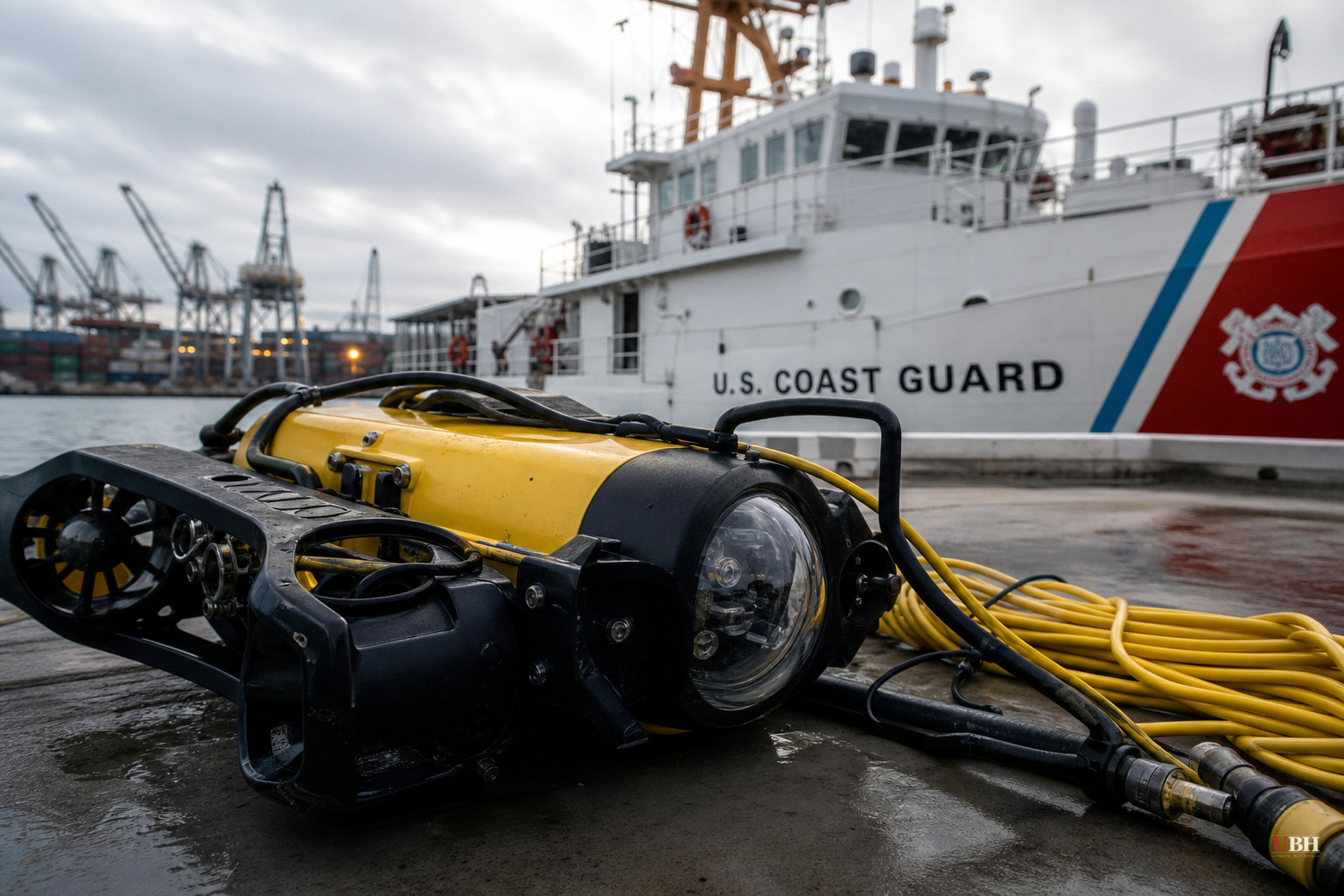
The Coast Guard wants weapons, not just sensors.
In a request for information published Friday, the Coast Guard Research and Development Center said it's hunting for technology that can detect, track, and destroy unmanned underwater vehicles threatening American ports and waterways. Systems that only detect will not be considered. The agency wants defeat capability, period.
"Effective" detection technology already exists, according to the notice. What's missing are "tested and fielded" systems that can actually stop a UUV once it's spotted. The Coast Guard called defeat technology "an essential piece in the kill chain," arguing detection alone does nothing if there's no way to neutralize the threat.
Why Now
The notice lays out the danger bluntly: UUVs can be used for spying, smuggling, sabotaging infrastructure, or launching strikes, and their stealth and modern navigation make them hard to catch with normal maritime patrol tactics.
In February 2024, U.S. forces carried out self-defense strikes against Houthi mobile anti-ship missiles, an unmanned surface vessel, and a UUV during an attack in the Red Sea, according to U.S. Central Command. CENTCOM said it was the first confirmed Houthi use of a UUV since their attacks began in October 2023.
That incident, along with the broader proliferation of unmanned maritime systems among state and non-state actors, has kept port and coastal security in the spotlight for military planners and, now, the Coast Guard.
What the Coast Guard Is Asking For
The RFI specifically wants information on commercially available sensor platforms, kinetic solutions, and integrated response systems that can plug into existing port security setups. The agency said any accepted technology needs to be "scalable and adaptable for compatibility with existing detection systems and/or various configurations for different ports."
Only systems with an actual effector, a direct mitigation capability, or a combined detect-track-identify-mitigate package will make the cut. Pure detection vendors need not apply.
Companies have until Aug. 7 to submit details on products already available for procurement. The Coast Guard says it's looking for solutions that have already completed field testing and can be deployed relatively fast to protect ports, waterways, and coastal operations. Depending on what comes in, the agency said it may schedule maritime tests of the proposed systems.
The Gap Nobody's Filled
This is a straightforward acknowledgment from a federal agency that America's port defenses have a hole in them. Plenty of companies can tell you a drone submarine is approaching. Almost nobody has a fielded system that can stop it before it does damage.
A UUV that can smuggle drugs, spy on naval assets, or sabotage a pipeline doesn't care how good your sonar is if there's no way to intercept it. Critics of defense procurement broadly, on both the left and right, have long argued the Pentagon and its sister agencies are slow to close capability gaps that industry could fill faster with the right incentive. This RFI is at least an attempt to move fast: a roughly two-week window from publication to a hard deadline, with field testing on the table almost immediately after.
What happens next depends entirely on who answers the call. If defense contractors and smaller tech firms come back with genuinely fielded, working defeat systems, the Coast Guard could move to real-world maritime testing within weeks of the Aug. 7 deadline. If the responses show the same gap the Coast Guard flagged—that this technology exists mostly in prototype or lab form—the agency will be back where it started: able to see the threat, unable to stop it.
Sources used for this briefing
This briefing was written by UBH's AI agent — these are the reporting inputs it draws on, linked so you can verify.


