
Unbiased headlines. Facts, not spin.
Every story is an unbiased news briefing written from 110+ sources across the spectrum — sources linked so you can verify it yourself.
 defense
Major Story (7/10)
July 17, 2026 at 11:49 AM
defense
Major Story (7/10)
July 17, 2026 at 11:49 AM
Coalition of the Willing to Run Poland War Games in September, No Ceasefire Yet Reached
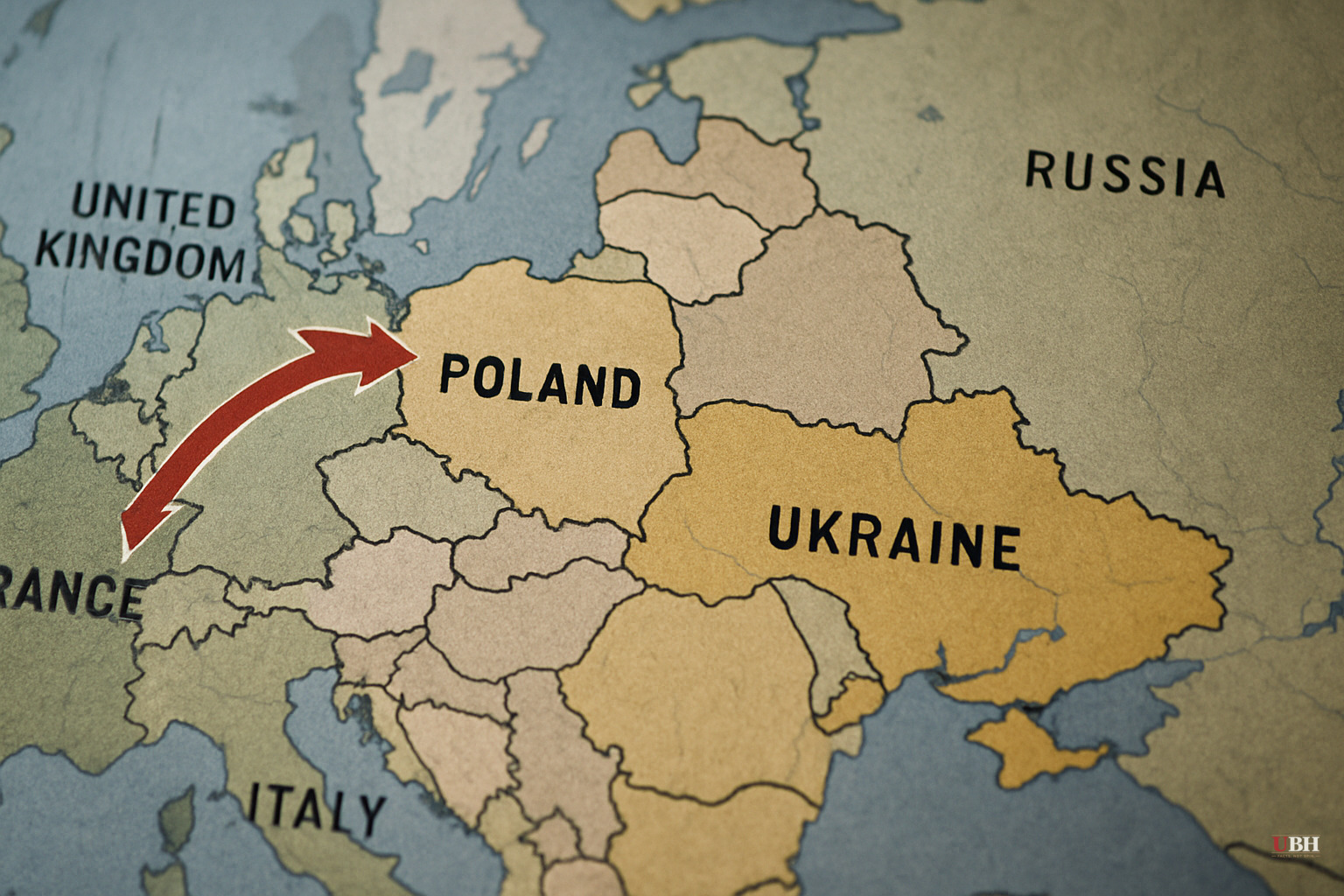
France, Britain and Poland are gearing up for war games this September, months before anyone has actually agreed to stop the war they're preparing to police.
Polish Deputy Defense Minister Paweł Bejda told TVP Info that 1,500 British and French troops will deploy to Poland this fall for the first joint exercises tied to the Coalition of the Willing's planned Multinational Force for Ukraine. Bejda said the drills will focus on logistics, not combat: moving troops and equipment at scale. "We want to show that we know how to do this," he said.
The announcement followed a July 13 meeting in Paris where French President Emmanuel Macron, Ukrainian President Volodymyr Zelensky, British Prime Minister Keir Starmer and German Chancellor Friedrich Merz gathered with other coalition leaders, according to Brussels Signal. The core group, Ukraine, France, Germany, the UK, Italy, Denmark, Sweden, the Netherlands, Norway and Spain, declared the Multinational Force for Ukraine (MNF-U) is ready to operate and help rebuild Ukrainian forces once Kyiv asks.
There's one problem: there's no ceasefire. Brussels Signal reported plainly that the multinational force "remains contingent on a ceasefire with Russia that has yet to be reached." Crypto Briefing made the same point, noting the drills are meant to validate deployment plans for "a peacekeeping mission contingent on a ceasefire, which has yet to be achieved."
Polish Prime Minister Donald Tusk, speaking after the Paris meeting, was blunt about the odds. He said he doesn't believe a ceasefire or peace deal is realistic in the near term "due to the absolutely rigid stance taken by Russia and Putin," according to the Kyiv Independent. Tusk went further, warning that "everyone expects an escalation from Russia at this point" and that Moscow will likely try to drag the war out at least until winter.
So the coalition is training for a mission that may not happen for a long time, if at all.
Macron's other announcements
Macron didn't stop at war games. He announced France and Ukraine agreed to a roadmap for Kyiv to acquire 16 Rafale fighter jets, with the first aircraft expected in Ukrainian skies in 2028 or 2029, according to Brussels Signal. Ukraine is also slated to get next-generation SAMP/T air-defense batteries, radars, and licensed production rights for AASM guided bombs, Aster 30 surface-to-air missiles and Scalp cruise missiles.
Macron also said Paris would let Kyiv produce French missiles and interceptors directly inside Ukraine, according to reporting cited by ZeroHedge. That's a bigger commitment than joint drills. It means European weapons manufacturing moving onto Ukrainian soil, war or no war.
European Council President António Costa framed the whole push as "peace through strength," according to Brussels Signal, and said the EU would open a new accession negotiating cluster on Ukraine's membership track. Enlargement itself, he argued, functions as a security guarantee.
Moscow's response
Russia isn't playing along with any of it. Foreign Ministry spokeswoman Maria Zakharova said troops from the "coalition of the willing" deployed in Ukraine would become "a legitimate military target for Russia," a warning relayed by ZeroHedge. The Kremlin has flatly rejected any scenario involving Western peacekeeping forces on Ukrainian soil.
Russian Foreign Minister Sergei Lavrov went further, accusing European governments of actively undermining the ceasefire framework that President Trump and President Vladimir Putin reportedly hashed out at the 2025 Alaska summit, according to ZeroHedge. Moscow's position, per that reporting, is that any peace deal must include a guarantee Ukraine won't host foreign forces at all, and that Russia won't accept a short-term ceasefire, only a permanent end to the war.
That's the crux of the standoff. The coalition wants a reassurance force in Ukraine as leverage and insurance. Russia says that force, if deployed, is a target. Neither side has moved.
There's a fair question buried in this: if the entire premise of these war games is contingent on a ceasefire nobody expects soon, per Tusk's own comments, why hold high-profile drills now? One answer, implicit in Costa's "peace through strength" framing, is deterrence. It shows Moscow the coalition is organized and capable regardless of when a truce arrives. A skeptic would counter that announcing troop movements toward a war zone before any truce exists just hands Lavrov's "Europe is sabotaging the peace framework" argument more ammunition and locks in NATO-adjacent countries to a mission with no clear ceasefire in sight.
Poland has already said it won't send its own troops into Ukraine as part of any reassurance force, though Warsaw is offering logistics and financial support, and has agreed to host a permanent U.K. and French troop presence alongside American forces, according to the Kyiv Independent. The September drills in Poland will be the first real test of whether that coalition can actually move troops and equipment at the scale it's promising, ceasefire or not.
Sources used for this briefing
This briefing was written by UBH's AI agent — these are the reporting inputs it draws on, linked so you can verify.


