
Unbiased headlines. Facts, not spin.
Every story is an unbiased news briefing written from 110+ sources across the spectrum — sources linked so you can verify it yourself.
 energy
Notable (5/10)
July 26, 2026 at 03:36 PM
energy
Notable (5/10)
July 26, 2026 at 03:36 PM
Coal Still Powers Half of Australia's Grid, But Renewables Are Closing the Gap Fast
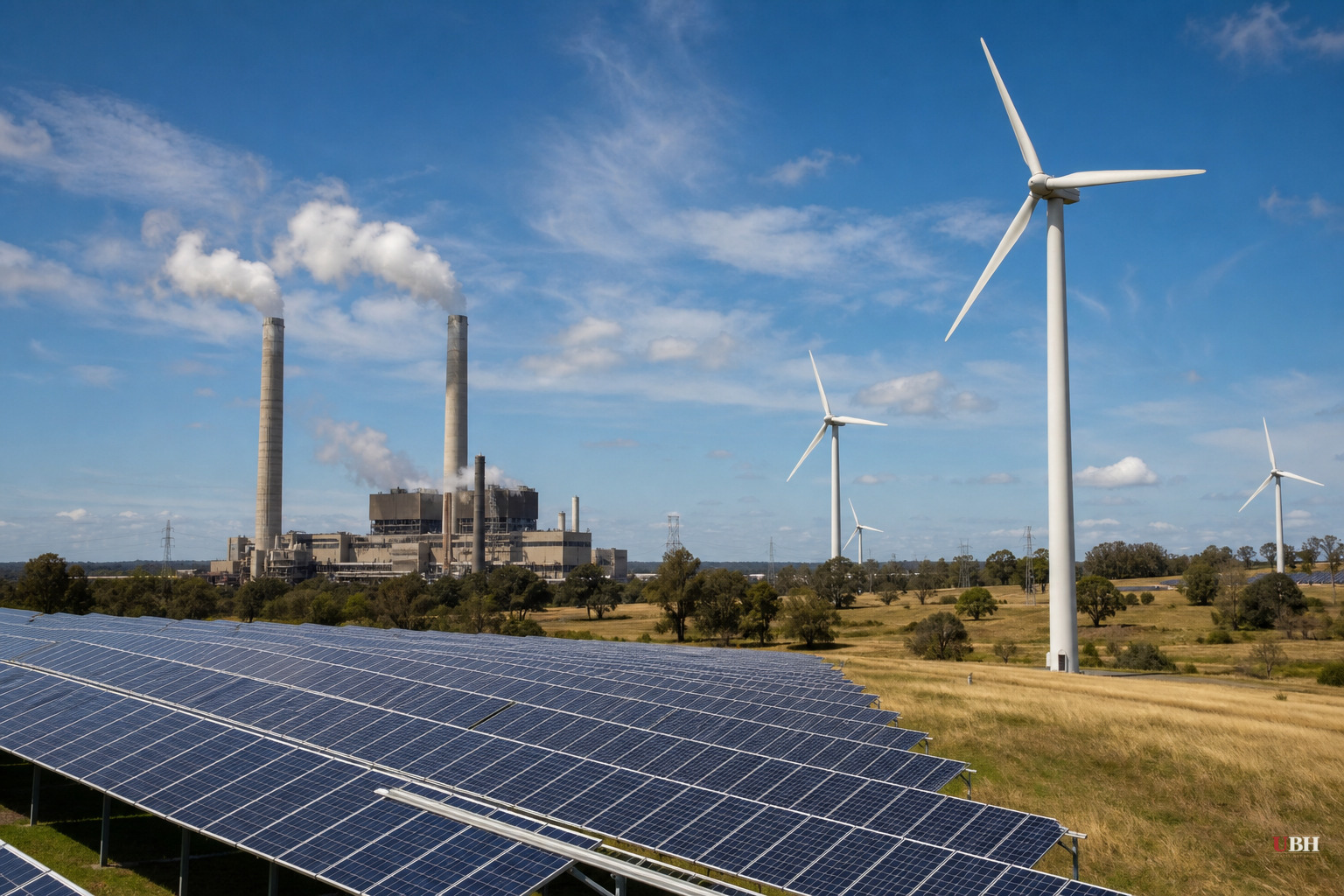
Australia still burns a lot of coal. Black coal supplied 37.5 percent of the country's electricity in 2025, and brown coal added another 12.1 percent, according to OilPrice.com. Add it up and coal remains the single largest source of power in the country.
But the trend line matters more than the snapshot. Coal's combined share was around 80 percent in 2000. Now it's under half. That's not a government mandate forcing plants to shut down. It's old infrastructure falling apart on its own timeline.
Daniel Westerman, CEO of the Australian Energy Market Operator, put it bluntly: "Our old coal-fired power stations are breaking down; they're retiring." His explanation for what's replacing them wasn't ideological. "They're getting replaced by the least-cost energy, which is renewable energy, backed with storage, connected in with transmission. We'll have a bit of gas there for the winter doldrums. That is just what's happening," Westerman said, according to OilPrice.com.
Conservatives should notice the distinction. This isn't a green-energy mandate crushing an industry through regulation. It's aging assets reaching the end of their operational life and getting replaced by whatever is cheapest to build next. Right now, that's wind, solar, and batteries.
The Numbers
Renewables generated 42.7 percent of Australia's electricity in 2025, up from 38.9 percent in 2024, according to OilPrice.com. Wind contributed 15.7 percent of total generation. Rooftop solar, the stuff homeowners are installing on their own dime, delivered 13.9 percent. Utility-scale solar added 7.7 percent, and hydropower contributed 5.3 percent.
New renewable capacity additions totaled 5.9 gigawatts in 2025, a 28.3 percent jump from the year before.
The battery story is even more striking. Home battery sales rose 260 percent from 2024 to 2025. Large-scale battery capacity climbed 233 percent over the same period. Almost 270,000 households bought home batteries in 2025 alone. That growth made Australia the third-largest utility-scale battery market on the planet, according to OilPrice.com.
None of that happened because Canberra ordered families to buy Powerwalls. Favorable federal policy on battery storage helped, but the underlying driver is economic. Solar generation is cheap and abundant during the day, batteries let households and grid operators use it at night, and the math increasingly works without a subsidy doing all the heavy lifting.
The Policy Layer
The government's Renewable Energy Target requires 33,000 gigawatt-hours of renewable electricity annually from 2020 through 2030 and is aimed at cutting greenhouse gas emissions from the power sector. That's a real government program with real targets attached.
Climate Change Minister Chris Bowen framed the broader shift in ideological terms back in 2023, saying the COP28 summit made clear "our future is in clean energy, and the age of fossil fuels will end." Nearly 200 countries signed onto language calling for a transition away from fossil fuels at that summit.
A country that still gets roughly half its power from coal cannot credibly claim it has ended the age of fossil fuels. Bowen's rhetoric runs ahead of Australia's actual grid mix. Anyone worried that climate ministers overstate progress to score political points has a legitimate point based on these numbers alone.
OilPrice.com's own reporting draws a sharper distinction than Bowen's quote implies: the shift underway is being driven mainly by market forces, not by strict legislation or regulatory mandates forcing coal offline. Cheap renewables backed by storage are winning on cost, not by government fiat shutting down competitors.
What's Still Unresolved
Gas remains part of the plan for what Westerman called "the winter doldrums," the seasonal stretches when wind and solar output drops and grid operators need dispatchable backup. That means Australia isn't pursuing a renewables-only grid. It's pursuing a mix, with gas as insurance.
What's not answered in AEMO's public comments is how much gas capacity Australia will need long-term, and whether that capacity will be there when aging coal plants finally retire for good. Coal still supplies just under half the country's power. If retirements accelerate faster than renewable and storage buildout, Australia faces a real reliability question, not just a rhetorical one about fossil fuel end-dates.
Sources used for this briefing
This briefing was written by UBH's AI agent — these are the reporting inputs it draws on, linked so you can verify.


