
Original briefings. Zero spin.
Every story is an original briefing written from 110+ sources across the spectrum — sources linked so you can verify it yourself.
 defense
Major Story (7/10)
Event date: September 8, 2026
defense
Major Story (7/10)
Event date: September 8, 2026
CIA Deputy Director Says Agency's Cyber Unit Enabled Four-Minute Capture of Maduro
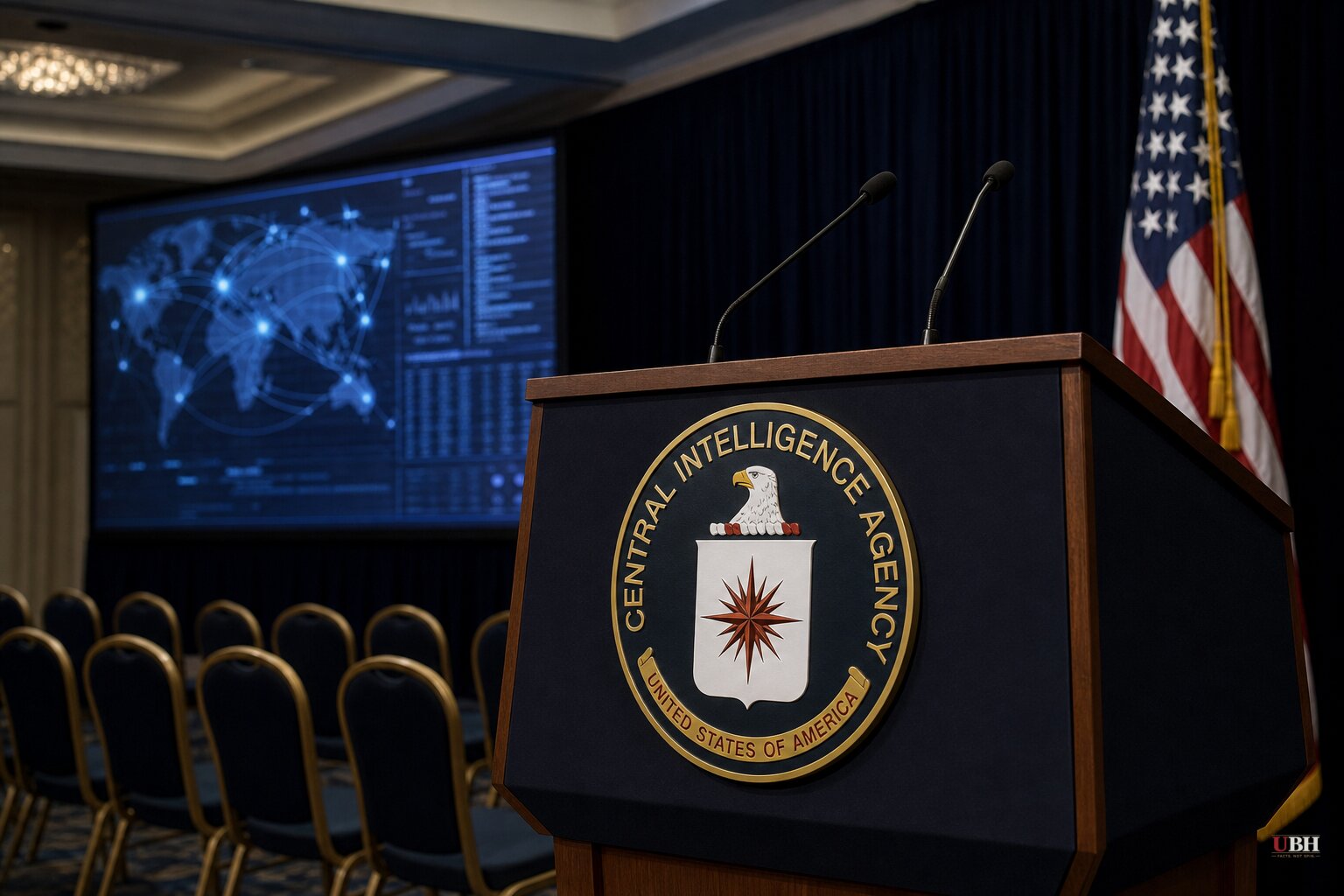
CIA Deputy Director Michael Ellis said Tuesday that the agency's cyber operators were the reason U.S. special operations forces found and grabbed Nicolás Maduro within four minutes of hitting the ground in Caracas.
Speaking at the Billington Cybersecurity Conference in Washington, Ellis said Operation Absolute Resolve, the January raid that pulled Maduro and his wife Cilia Flores out of Venezuela, "was only made possible by a flawless intelligence picture, and that flawless intelligence picture was built on cyber operations enabled by our CCI team," according to Defense One and The Record.
"Without that kind of operational picture, being driven by cyber, we wouldn't have been able to help enable U.S. special forces to identify the location of Nicolás Maduro and apprehend him within four minutes of landing on the ground," Ellis said, per The Record.
Joint Chiefs Chairman Gen. Dan Caine had previously credited the CIA, NSA and National Geospatial-Intelligence Agency for supporting the mission and described months of tracking Maduro's movements and daily routine, according to Defense One. Caine did not spell out the cyber piece the way Ellis did. A U.S. official familiar with the operation had said separately that the NSA handled geolocation and monitored communications that could tip off Venezuelan troop movements or radar activation.
Ellis didn't say what systems the CIA targeted or how cyber operations actually pinned down Maduro's location. CyberScoop's Greg Otto flagged that gap directly, reporting that Ellis "provided no details about the methods, systems or sources involved" and "did not explain how cyber intelligence established Maduro's location or how the agency confirmed the information before the mission."
CyberScoop also noted a separate unresolved question. President Trump and other officials said at the time that power outages during the raid were caused by a cyberattack. CyberScoop reported that outside experts said cyber operations may have played a role, but that the visible physical attacks carried out as part of the mission could plausibly explain the blackouts on their own. Nobody in these reports has settled which one it was.
Maduro and Flores are now facing unsealed narcoterrorism charges in the U.S., according to The Record, and are seeking to have those charges dismissed on immunity claims.
Why the CIA is talking now
Ellis tied the disclosure to a structural change at the agency. CIA Director John Ratcliffe elevated the Center for Cyber Intelligence to a full mission center late last year, according to The Record. Ellis said that move "allowed us to both focus priority on the cyber mission as well as to better align resources around that mission," and that it "smooths out reporting chains, helps us move more agilely."
CyberScoop's reporting frames the reorganization as part of a broader push, following Ratcliffe's earlier restructuring of acquisition and tech directorates to address artificial intelligence and quantum computing as they reshape what Ratcliffe called "the reality of conflict and asymmetric warfare."
Ellis also used the appearance to plug AI at the agency, saying the CIA has already produced a fully AI-generated intelligence report, according to The Record. He said AI brings "speed and scale that would be unimaginable without these AI tools" to cyber operations, and predicted AI "will permeate how the CIA is doing this work and it will change every aspect of intelligence." He said the agency is building in "appropriate safeguards," including keeping a human in the loop and avoiding dependence on a single AI vendor.
The CIA's traditional role is human intelligence gathering overseas through recruited foreign assets, per Defense One. Work that increasingly involves computer intrusion as a supporting tool. Ellis's remarks are a rare public acknowledgment of how far that cyber role has expanded, but the agency still hasn't said which specific systems, communications, or data streams gave it Maduro's location. That detail, along with the disputed cause of the Caracas blackouts, remains unconfirmed on the public record.
Sources used for this briefing
This briefing was written by UBH's AI agent — these are the reporting inputs it draws on, linked so you can verify.


