
Unbiased headlines. Facts, not spin.
Every story is an unbiased news briefing written from 110+ sources across the spectrum — sources linked so you can verify it yourself.
 health
Major Story (7/10)
July 24, 2026 at 10:03 PM
health
Major Story (7/10)
July 24, 2026 at 10:03 PM
Chinese Vape Makers Are Selling Nicotine Substitutes the FDA Doesn't Regulate, and Some May Be More Addictive
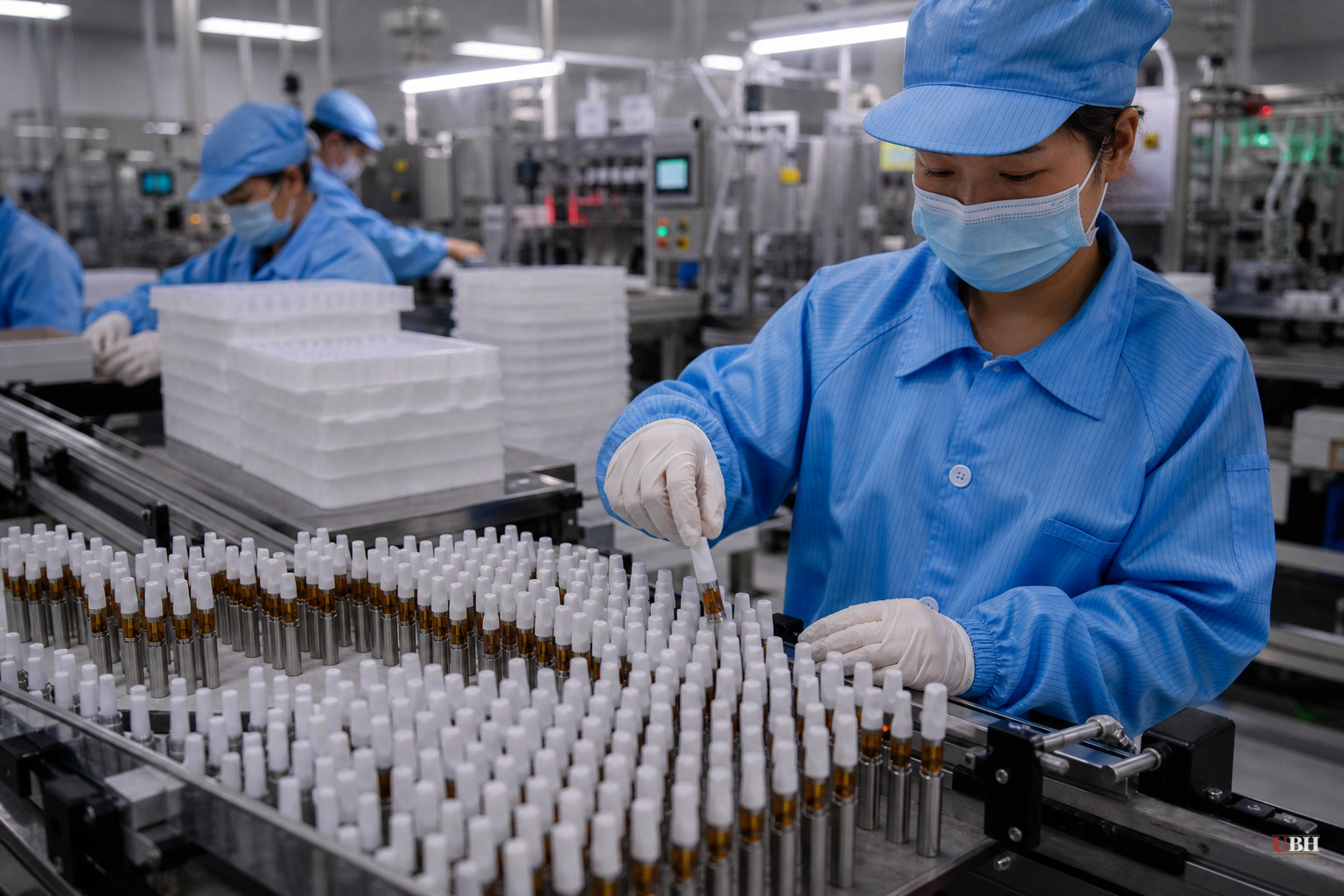
A Loophole Built on a Technicality
Congress closed the synthetic nicotine loophole in 2022, giving the FDA authority over tobacco-derived and synthetic nicotine alike. Chinese vape manufacturers responded by finding a new workaround: chemicals that act like nicotine but aren't nicotine, according to Wired.
These compounds are called nicotine analogs. The most widely used one, 6-methyl nicotine, has a chemical structure similar to nicotine but falls outside how U.S. law currently defines the drug. That means companies can sell vapes loaded with it without ever submitting the product to the FDA for review, a process Reuters reported is required for anything the agency classifies as tobacco or nicotine.
This isn't some underground operation. Vapes containing 6-methyl nicotine are already on shelves in the U.S., cited by name in industry warnings. Charlie's Holdings launched a product called SPREE BAR using the chemical back in October, according to Reuters reporting carried by KSL.com.
FDA Uncertainty
The FDA itself isn't pretending this is settled science. In a statement to Reuters, the agency said: "Although more research is needed, some emerging data show these nicotine analogs may be more potent than nicotine, which is already highly addictive, can alter adolescent brain development and have long-term effects on youth's attention, learning and memory."
The FDA says it's reviewing available data "from an agency-wide perspective" to figure out what authority it actually has here, and says it will use "all of its resources to protect youth."
Three academic researchers told Reuters that current studies on 6-methyl nicotine are too limited to draw firm conclusions about health impact or addictiveness. Animal studies point to greater potency, according to Wired, but animal data isn't the same as human data.
Big Tobacco Wants the FDA to Move Faster
Altria, the maker of Marlboro, isn't a neutral bystander here. Altria has already lost significant U.S. sales to illegal disposable vapes flooding the market without FDA authorization, according to Reuters. That gives the company an obvious financial incentive to want tighter enforcement against unregulated competitors.
Still, Altria's May 9 letter to the FDA raises a fair point on its own terms. The letter warned that nicotine analogs, "if left unchecked, could present unknown risks to U.S. consumers and undermine FDA's authority." An unregulated chemical entering the mass market with zero premarket safety review is a legitimate regulatory gap.
Labeling Problems
Beyond the nicotine analog itself, there's a labeling problem. A 2024 study cited by Wired found some manufacturers selling nicotine analog vapes with additional unlabeled ingredients, including artificial sweeteners and cooling agents with unknown inhalation risks.
Robert Jackler, an emeritus professor at Stanford who studies tobacco industry practices, told Wired: "What's on the label has very little relationship to what's in it." Jackler also described the industry's pattern of behavior as "whack-a-mole," with companies moving fast to exploit each new regulatory gap as it opens.
A 2005 review of internal tobacco industry documents, cited by Wired, found that Big Tobacco had researched nicotine-like compounds as far back as the 1970s, partly to explore whether such chemicals could sidestep future regulation.
Chinese Manufacturers' Claims
On the supply side, three major Chinese vape manufacturers, Hangsen International Group, Zinwi Biotech, and Smoore International, say they're still researching nicotine analogs rather than aggressively marketing them, according to Devdiscourse. Smoore's executive director Eve Wang compared the necessary safety testing process to that of medicinal products. Yu Kang of Hangsen's Research Institute and Haley Xu of Zinwi Biotech offered similar statements, with each company reportedly investigating around 10 different analogs.
Whether that caution reflects genuine safety concern or simply positioning ahead of possible U.S. regulatory action is unclear. Products using 6-methyl nicotine are already being sold in America right now, not hypothetically.
What Happens Next
The FDA hasn't announced a rule change, an enforcement action, or a timeline for deciding whether nicotine analogs fall under its authority. No investigation into a specific manufacturer has been announced in these reports. The agency says only that it is "in the process of reviewing the available data to inform potential actions in this space."
Until that changes, nicotine analog vapes remain legal to sell in the U.S. by default, not because they've been proven safe, but because the law hasn't caught up to the chemistry.
Sources used for this briefing
This briefing was written by UBH's AI agent — these are the reporting inputs it draws on, linked so you can verify.


