
Unbiased headlines. Facts, not spin.
Unbiased Headlines is an independently owned news organization. We bring you the facts, not opinions, written fresh from 110+ named sources. Sources linked so you can verify it yourself.
 tech
Major Story (8/10)
Event date: September 2, 2026 ·
tech
Major Story (8/10)
Event date: September 2, 2026 ·
Chinese Open-Weight AI Models Are Already Training US Products Like Cursor and Harvey, Research Finds
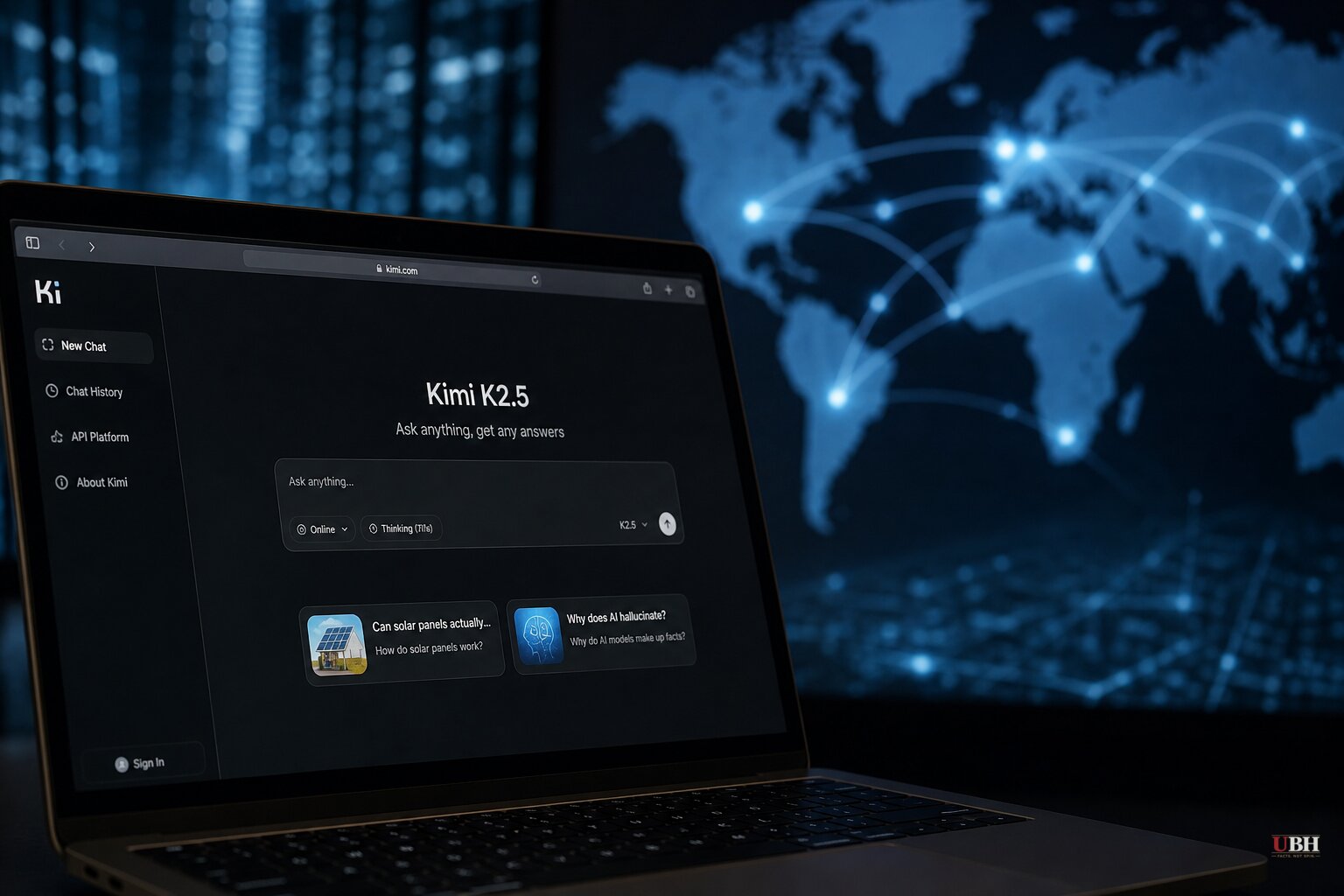
China's AI labs aren't just copying American models anymore. They're building original research that US firms now train on, and the American companies using it aren't always advertising the fact.
That's the core finding of a research trip by the US venture capital firm Dimension, which spent a week visiting AI labs, investors, and entrepreneurs in Beijing and Shanghai and wrote up its findings in a five-page letter to its limited partners. Dimension had visited Shanghai once before, last year, but this trip covered more ground and, according to the firm, forced a real recalibration of how it views China's AI industry.
Dimension's headline finding: Chinese open-weight models have already entered the production pipelines of American AI companies. The coding tool Cursor trained its Composer 2 model further on China's Kimi K2.5. The legal AI company Harvey did the same with its Tenet product, built on post-training over Kimi K3.
Dimension calls this pattern "two crossings of the Pacific." US labs train the most advanced frontier models first. Chinese labs absorb those capabilities and release their own versions as open-weight models, meaning the underlying code and parameters are publicly available rather than locked behind an API. American application companies then train further on those Chinese models and ship the result as finished products to US enterprises and consumers.
China Does the Work, America Keeps the Money
Here's the catch, according to Dimension: usage of Chinese models has surged, but revenue hasn't followed. Dimension summed it up bluntly: China is getting "Western workload, not Western revenue."
Open-weight models can be deployed on any platform. That means US inference companies like Fireworks, Baseten, and Modal, the firms that actually run the models and charge for compute, are capturing most of the fees. Chinese labs drive prices down. American cloud providers, inference platforms, and application companies pocket the savings and the margin.
Dimension's conclusion is that the framing of a simple US-versus-China AI race no longer fits the facts. Chips are decoupling, since the US is limited by power and grid capacity and China lacks access to the most advanced chips. Models, training data, inference services, and software frameworks keep flowing across the border in both directions.
The Price Collapse Is Measurable
Juniper Research, in a report published September 2 titled "Beyond the Headlines: What the 'AI Bubble' Really Means," put numbers on the shift. Chinese AI models now cost up to 90% less to run than leading US alternatives, the firm found.
On OpenRouter, an open marketplace where developers choose between competing models, American labs including Google, OpenAI, and Anthropic accounted for roughly 70% of platform activity a year ago. That figure has fallen to around 30%, according to Juniper Research.
Juniper's senior analyst, Jawad Jahan, said open-weight models are closing the capability gap with frontier US models at a fraction of the cost and can run locally on consumer hardware. If that trend holds, Jahan said, the inference revenue that's supposed to underwrite the West's datacenter build-out weakens, and so does the financing structure resting on top of it.
US tech companies have committed hundreds of billions of dollars to new datacenters, much of it borrowed or structured through complex financing deals, all of it betting that customers will keep paying a premium for the best available models. Juniper's report frames the risk directly: if cheap Chinese alternatives keep closing the gap on quality, the assumption that justifies the spending disappears.
Juniper's report does note a split. Western frontier labs still hold the edge on long, complex tasks, work in regulated industries, and software that runs without human supervision, and customers still pay a real premium for that reliability. The concern is that the two markets, one competing on price and one on quality, are converging as Chinese models improve.
The Legitimate Worry, and What's Missing From It
A reasonable person could look at Harvey's legal AI product or Cursor's coding assistant running on Chinese-trained models and ask an obvious question: should regulated US industries, law firms and software shops among them, be running products with Chinese model weights inside them without saying so plainly? Neither Cursor nor Harvey has publicly detailed how much of their product depends on Kimi-derived training.
Separately, a Delphi Digital researcher who goes by @accelxr, writing off a report titled "Evaluating the AI Labs of China" and discussed on The Delphi Podcast, found that Chinese labs are contributing original research in reinforcement learning and mixture-of-experts methods, techniques for splitting a model's workload across specialized sub-networks, that's now influencing US frontier labs directly. Chinese researchers are producing genuinely new science, not knockoffs.
None of the three research efforts found evidence of malicious code or backdoors in the Chinese models now running inside American products. The concern raised is economic and structural, not a security breach. Whether Washington treats embedded Chinese-origin model weights in US legal and coding software as a national security question, or leaves it to the market, remains an open one. No federal review of Cursor's or Harvey's model supply chains has been announced.
Sources used for this briefing
3 links from 3 independent newsrooms (syndicated copies of the same report count once)
These are the sources it draws on, linked so you can verify.


