
Original briefings. Zero spin.
Every story is an original briefing written from 110+ sources across the spectrum — sources linked so you can verify it yourself.
 tech
Major Story (8/10)
Event date: September 2, 2026
tech
Major Story (8/10)
Event date: September 2, 2026
AI Data Centers Run on Circular Financing and Blurred Responsibility, Records Show
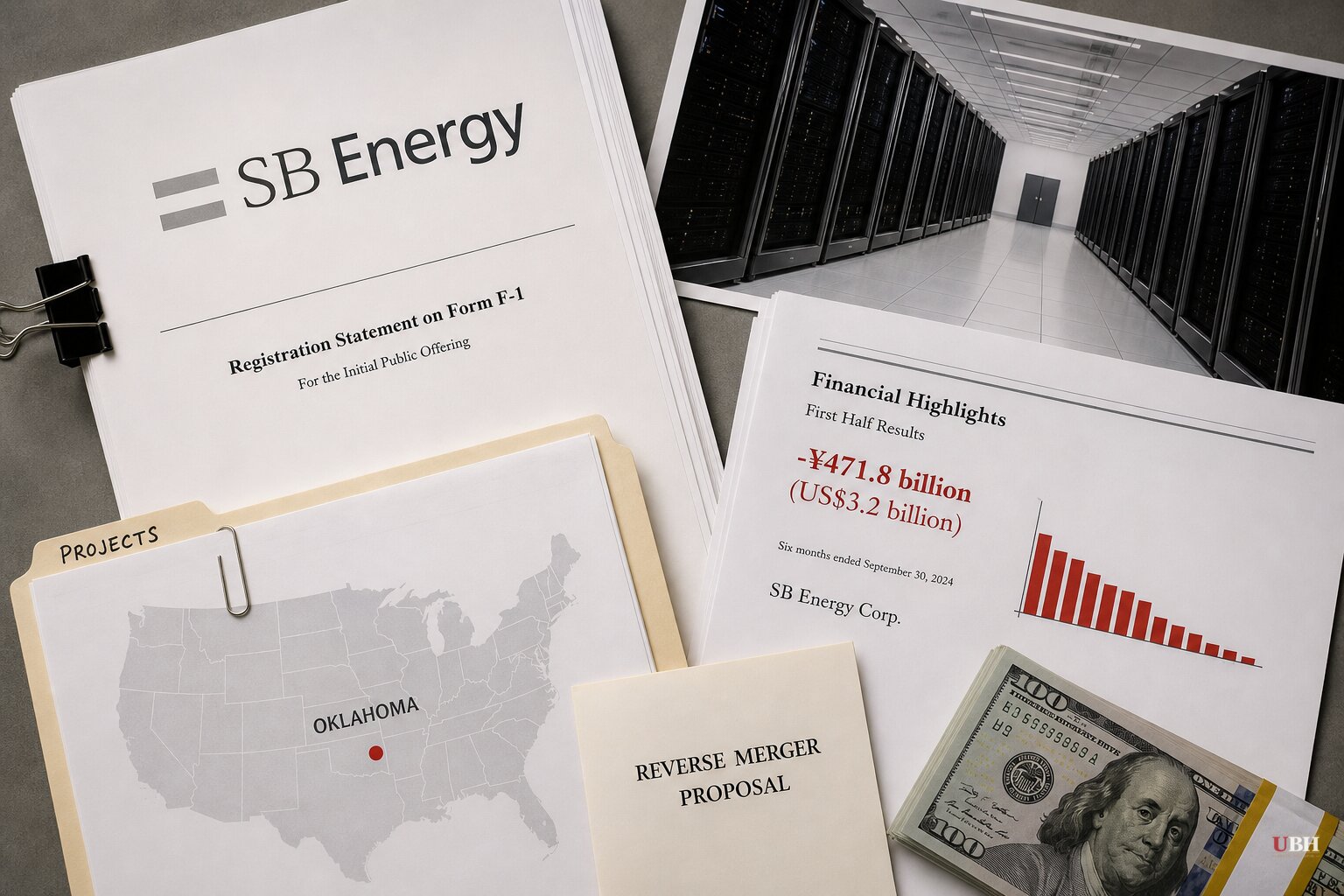
SB Energy Inc., the SoftBank Group unit building data centers for OpenAI, filed for an initial public offering on September 1, according to SiliconANGLE and MarketWise. The Wall Street Journal reported the company is trying to raise between $5 billion and $7 billion, and Reuters sources put the potential valuation above $50 billion. The company hasn't set a listing date, but reports say it could trade as soon as this month.
SB Energy has no operational data centers. Its own prospectus says so directly: "No data center capacity is currently in operation." In the six months ending June 2026, the company reported $138.7 million in sales, most of it from changes in the value of financial instruments rather than customer revenue, according to MarketWise. Its $3.2 billion loss over that same period was almost entirely non-cash, tied to stock compensation and derivative losses.
SB Energy's flagship project is a 10-gigawatt campus in Ohio called PORTS-Pike, built for OpenAI, according to SiliconANGLE. Nvidia is providing a "residual value guarantee" worth up to $105 billion for part of that capacity, and has separately committed $1.5 billion to buy SB Energy shares at the IPO price. OpenAI holds stock warrants in SB Energy valued at $5.5 billion. SB Energy's own prospectus flags that it is "substantially dependent on OpenAI." MarketWise cites a $439 billion sales backlog; SiliconANGLE cites $430 billion, a discrepancy that matters since neither figure represents booked revenue, only contracted future business tied almost entirely to one customer.
That structure, chips and cash flowing between Nvidia, OpenAI and the infrastructure company building OpenAI's future homes, is part of a broader pattern. BigGo Finance, citing Reuters, puts the total AI infrastructure financing need at roughly $3.6 trillion between 2026 and 2030. Hyperscalers like Microsoft, Alphabet, Meta and Amazon can fund expansion from their own cash flow. Smaller players can't, so they lean on convertible debt, private credit, and vendor financing, often from the same chipmaker selling them the GPUs. Atreides Management founder Gavin Baker argues the bigger risk is underbuilding, not a bubble, according to BigGo Finance, pointing to a 100-fold jump in his firm's own AI token usage as evidence demand keeps outrunning supply. That's a genuine industry position, and it deserves consideration against concerns about circular financing before anyone declares the whole thing a house of cards.
A Fire, Dry Hydrants, and Nobody Answering the Phone
While Wall Street books hundreds of billions in future contracts, the on-the-ground reality at existing sites looks shakier. Ars Technica reported that a fire broke out in June at the Lake Mariner data center in Somerset, New York, a $3.2 billion campus on a former coal mine site. Firefighters arrived to find no working alarm, no suppression system, and three dead hydrants. Barker Fire Department chief Steve Matisz said his crew went in "kind of blind" because the chemical safety sheets they're legally entitled to review had reportedly burned up in the same fire.
The site involves at least four companies with distinct roles: TeraWulf owns and operates the facility on land leased from a company controlled by its own CEO; UK-based Fluidstack is set to run it; Google holds warrants for a future 14 percent equity stake and has guaranteed Fluidstack's lease payments; and Anthropic is among the AI firms whose compute demand the facility exists to serve, per Ars Technica.
TeraWulf told Ars Technica it is responsible for "operational safety and emergency preparedness," and chief strategy officer Kerri Langlais said the company added Knox boxes, more hydrants, and safety-sheet "go-bags" after a county review. But when Ars Technica reached Matisz again in mid-August, roughly two months after the fire, he said the hydrants were, as far as he knew, still dry. Somerset town supervisor Jeffrey Dewart has also been unable to get TeraWulf's communications team to meet with the community, according to Ars Technica.
A Penny Stock Rides the Wave
At the small end of the market, Healthy Choice Wellness Corp., trading on NYSE American under HCWC, announced a lease deal through its pending merger target, Host Digital, covering 43 megawatts in northeast Oklahoma with a tenant described only as "one of the world's largest privately held cloud infrastructure companies," according to a GlobeNewswire release republished by Business Insider. The release, labeled "Equity Insider News Commentary," pegs the deal at $1.25 billion in base-term revenue and up to $3.2 billion if every renewal option gets exercised over 30 years. HCWC shareholders have approved the merger, expected to close in September, after which the company plans to trade as HOST.
That's a real contract on paper, but it's also a small shell company rebranding itself around a single lease and a promotional write-up, not an operating track record. Nothing in the available filings establishes wrongdoing by HCWC or Host Digital, but the gap between a 15-year lease and a company with no data-center operating history raises questions before anyone buys the stock on the headline number.
The open question across all of it: when the AI compute these projects were built for doesn't need to expand at the pace the contracts assume, or when a facility fails the way Lake Mariner did, who's actually on the hook? The operator, the landlord, the guarantor, or the shareholders who bought in on a press release.
Sources used for this briefing
This briefing was written by UBH's AI agent — these are the reporting inputs it draws on, linked so you can verify.


