
Unbiased headlines. Facts, not spin.
Unbiased Headlines is an independently owned news organization. We bring you the facts, not opinions, written fresh from 110+ named sources. Sources linked so you can verify it yourself.
 tech
Low Interest (3/10)
tech
Low Interest (3/10)
Japanese AI Chip Firm Preferred Networks Plans IPO by 2030 to Take on Nvidia
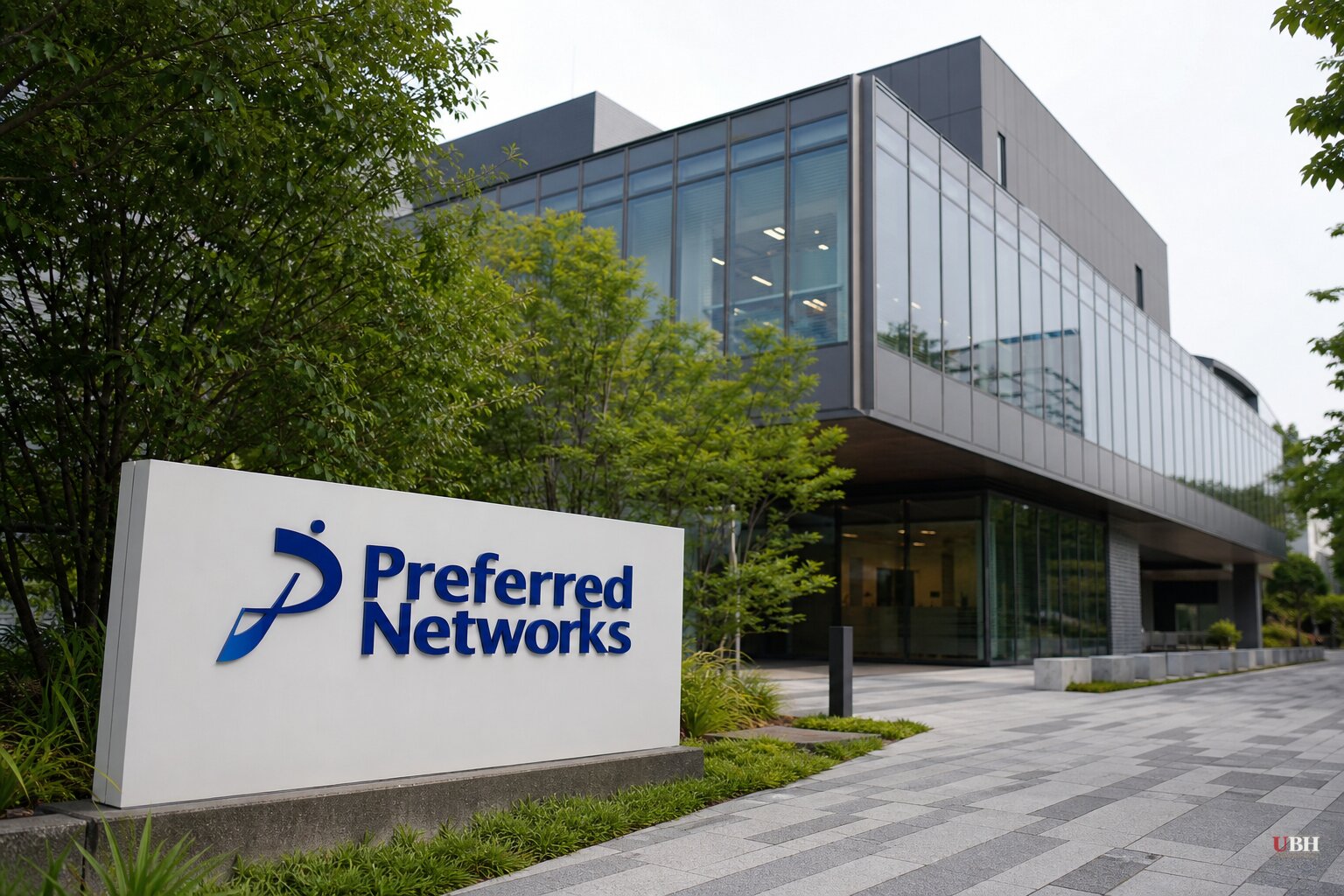
A Tokyo-based AI company with roughly 450 employees says it plans to go public sometime between 2028 and 2030 to fund mass production of a chip it claims can outrun Nvidia's GPUs on AI inference speed by as much as 10 times.
Preferred Networks (PFN), founded in 2014, has been developing its MN-Core line of processors since 2016. The company launched MN-Core 2 in 2024 and is now targeting a follow-up, the MN-Core L1000. According to the company, an IPO is roughly three to five years out from March 2025, which puts a realistic listing date somewhere between 2028 and 2030, and even that is contingent on scaling chip production.
PFN is not going public this year, this quarter, or even next. Anyone reading headlines about this as an imminent Nvidia challenger should understand this as a multi-year bet, not a market event happening today.
The Pitch: Different Architecture, Same Bottleneck
PFN's MN-Core chips use 3D-stacked architecture, which the company says dramatically boosts memory bandwidth. Memory bandwidth, not raw compute, is often the real chokepoint slowing down generative AI inference on standard GPU setups.
The 10x inference speed claim comes directly from Preferred Networks. No independent third-party benchmark comparing MN-Core chips against current-generation Nvidia hardware appears in the available reporting. That does not mean the claim is false. It means PFN is marketing its own product ahead of a fundraising push, and reasonable people should treat it with the same skepticism they'd apply to any startup's performance claims before an IPO.
Who's Backing This
PFN currently carries a valuation of around $2 billion. Its strategic investor list includes Toyota, SBI Group, Fanuc, and NTT, according to the company. That investor base represents Japanese industrial and financial heavyweights and suggests institutional confidence in the technology even without public benchmark data.
The Toyota relationship goes beyond a check. It extends into robotics applications, giving PFN a foothold in industrial AI that's distinct from the chatbot and image-generation products dominating U.S. headlines.
In December 2024, PFN closed a funding round of 19 billion yen, roughly $126 million, earmarked for developing and producing the MN-Core L1000 and supporting related infrastructure. In March 2026, the company formed a joint venture called GMO Preferred Security, expanding into adjacent technology areas beyond pure AI computation.
No Fabs of Its Own
PFN doesn't manufacture its own chips. It's leaning on the two foundries that actually matter in this business: TSMC, for current 12-nanometer and 7-nanometer processes, and Samsung, for an ambitious push toward 2-nanometer production.
PFN's entire mass-production timeline rides on TSMC and Samsung's capacity and willingness to prioritize a relatively small Japanese customer against giants like Nvidia, Apple, and AMD who already have massive standing orders. Foundry capacity is scarce and contested. A three-to-five-year IPO window assumes those manufacturing partnerships deliver on schedule, and advanced node production has a well-documented history of slipping.
Why This Matters Beyond Tokyo
Nvidia currently holds something close to a chokehold on AI training and inference hardware, commanding the overwhelming majority of the data center GPU market. High margins invite competitors, and competitors force prices down and innovation up.
Whether PFN is the company that actually does it is an open question. Custom AI silicon has burned plenty of well-funded challengers before, and a public listing is still years away, dependent on Samsung and TSMC hitting production targets that neither company has publicly committed to on PFN's behalf.
The next concrete milestone to watch is whether MN-Core L1000 chips actually ship at scale, and whether any customer outside PFN's existing investor circle puts them into production workloads and publishes real-world performance numbers against Nvidia's current lineup. Until that happens, the 10x claim remains a company's projection, not a proven benchmark.
Sources used for this briefing
1 link from 1 independent newsroom (syndicated copies of the same report count once)
These are the sources it draws on, linked so you can verify.


