
Original briefings. Zero spin.
Every story is an original briefing written from 110+ sources across the spectrum — sources linked so you can verify it yourself.
 tech
Notable (6/10)
Event date: September 4, 2026
tech
Notable (6/10)
Event date: September 4, 2026
DESI Team Releases 5.6-Trillion-Pixel Map of the Universe, Free for Anyone to Explore
A map with 4 billion objects, built on public money
The Dark Energy Spectroscopic Instrument collaboration has released its eleventh data set from the DESI Legacy Imaging Surveys, and it's the largest two-dimensional map of the universe ever assembled, according to Universe Today. The map contains 5.6 trillion pixels and roughly 4 billion celestial objects, including stars, galaxies, black holes, and asteroids, covering about 75 percent of the sky in visible and near-infrared light, according to Wired.
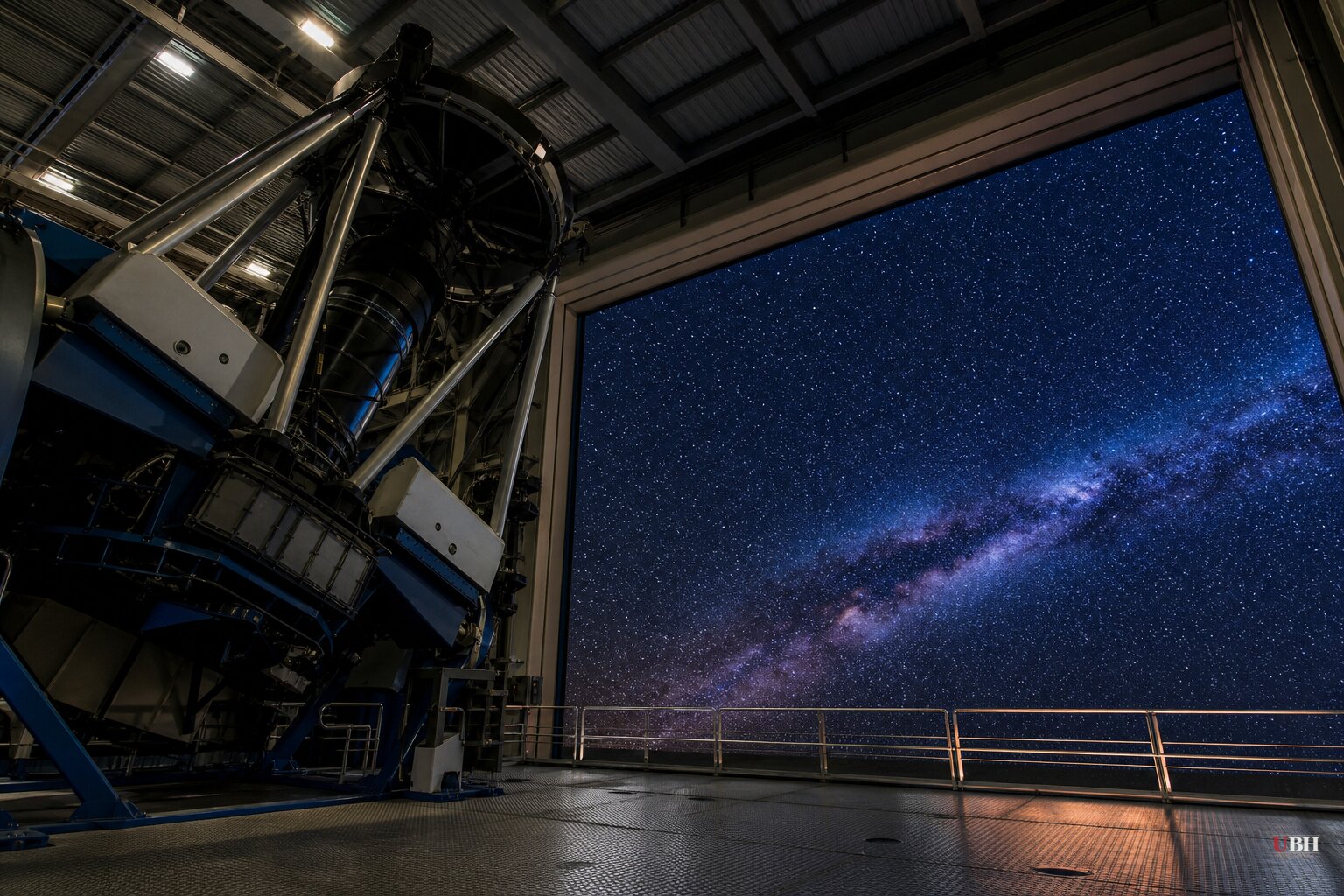
The instrument sits atop the Nicholas U. Mayall 4-meter Telescope at Kitt Peak National Observatory in Arizona's Sonoran Desert. Data collection also drew on the Dark Energy Camera, the University of Arizona's Bok 2.3-meter Telescope, and NASA's Wide-field Infrared Survey Explorer, according to Universe Today.
The goal isn't just a pretty picture. DESI exists to chase down dark energy, the unexplained force scientists believe is accelerating the universe's expansion. Researchers track it indirectly by measuring how fast galaxies and quasars appear to be moving away from us. Earlier this year, DESI released a separate 3D map plotting the distances of 47 million galaxies and quasars, reconstructing 11 billion years of cosmic history, according to Wired.
Who paid for it, and who gets to use it
This is publicly funded science. Kitt Peak is operated by NSF NOIRLab, and the project draws on the Department of Energy's Berkeley Lab, per Wired's reporting. More than 160 scientists contributed across three component surveys: the Dark Energy Camera Legacy Survey, the Mayall z-band Legacy Survey, and the Beijing-Arizona Sky Survey, according to Universe Today.
The payoff isn't locked behind a paywall or restricted to grant recipients. The full dataset is available to anyone through the Legacy Survey Sky Viewer, a free online tool, according to Wired. Type in coordinates, or just scroll, and you're looking at the same imaging professional astronomers use.
"It's part of the fabric of astronomy research now," said David Schlegel, a Lawrence Berkeley National Laboratory scientist and co-lead of the Legacy Surveys, according to Universe Today and Wired. "When you're working with astronomical objects today, you often start by pulling up the Legacy Imaging Viewer to see what you're looking at."
Arjun Dey, the project's other co-lead and an astronomer at NSF NOIRLab, framed the public release in blunter terms: "the skies belong to everyone, and this survey gives everyone the chance to marvel at their wonders," he said, according to Universe Today.
The numbers behind the release
The current survey phase took five years, but it built on 13 years of prior groundwork, according to Wired. Researchers have already published more than 1,800 scientific papers citing the data, a figure that will keep climbing now that the newest release is public.
The imaging isn't complete, and it can't be. The Milky Way's own stars, dust, and gas block large chunks of the deep sky, a limitation every ground-based survey faces. Researchers get around this partially by pointing DESI's 5,000 mechanical fiber-optic "eyes" away from the galactic plane, toward the top or bottom of the Milky Way's disk, where the view of distant space is clearer, according to Wired.
One image from the release shows a compact cluster in the constellation Leo nicknamed "Copeland's Septuplets," credited to the DESI Legacy Imaging Surveys and a consortium that includes the Department of Energy, the National Science Foundation, and NOIRLab.
What's still unknown
Dark energy itself remains completely unexplained. The imaging map is a tool, not an answer. It lets DESI scientists select galaxies and quasars, measure their light across wavelengths, and calculate distances, which then feeds the 3D clustering maps that actually constrain models of cosmic expansion, according to Universe Today.
The open question going forward is whether the next phase of DESI's spectroscopic survey, building on this imaging catalog, narrows down what dark energy actually is, or simply adds more precise measurements of a force scientists still can't identify. Neither source reports a timeline for when DESI expects a definitive answer.
Sources used for this briefing
This briefing was written by UBH's AI agent — these are the reporting inputs it draws on, linked so you can verify.


