
Original briefings. Zero spin.
Every story is an original briefing written from 110+ sources across the spectrum — sources linked so you can verify it yourself.
 tech
Major Story (7/10)
Event date: August 31, 2026
tech
Major Story (7/10)
Event date: August 31, 2026
Flock Camera Backlash Widens: California Kills Fifth Straight Regulation Bill as Cities Keep Cutting Contracts
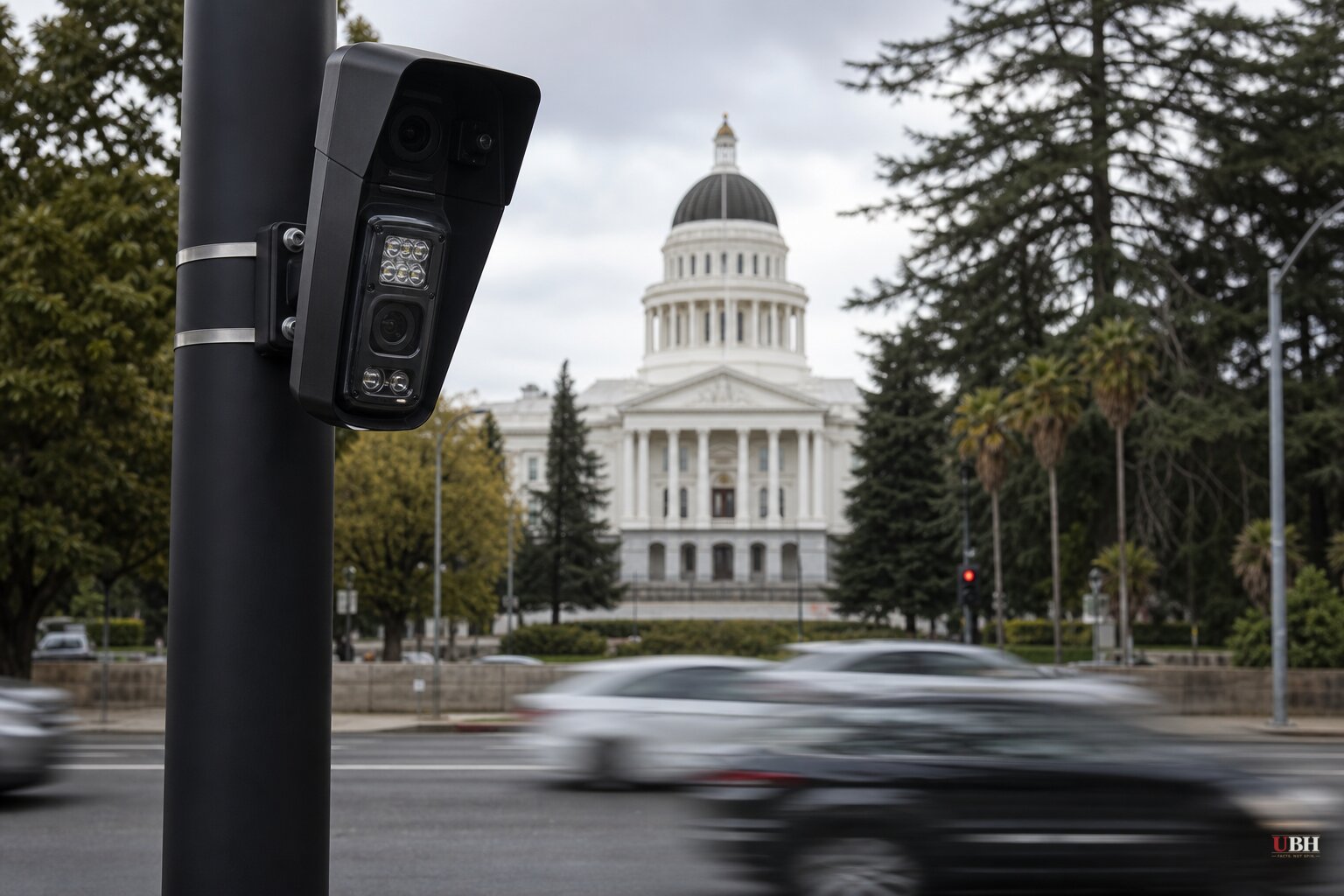
Opposition to Flock Safety's license-plate camera network has been building since early 2026, and it hit two new markers in the past two weeks: California's Legislature killed its fifth consecutive attempt to regulate the cameras, and Secure Justice, a privacy group led by Brian Hofer, counted more than 200 cities or law enforcement agencies that ended license-plate reader contracts in August alone, according to CalMatters.
California's bill dies again
A bill that would have strengthened privacy protections on how license-plate data gets collected and shared cleared the state Senate but was stopped by Assembly Majority Leader Cecilia Aguiar-Curry before it could get a floor vote on the final day the Legislature met this year, CalMatters reported. Every reform bill California lawmakers have proposed since 2022 has failed or died. A similar bill passed last year but was vetoed by Governor Gavin Newsom.
"It's a really disappointing outcome at a time when there is bipartisan concern about this mass surveillance tool," UC Berkeley Center for Law & Technology codirector Catherine Crump told CalMatters.
Law enforcement groups fought the bill. "We were concerned that this bill was going to limit the utility of ALPR data to solve crimes, find missing persons, exonerate innocent individuals," California State Sheriffs' Association legislative director Cory Salzillo told CalMatters. That's the core law-enforcement argument nationally: Flock's spokeswoman, MoMo Zhou, says the network has helped "solve approximately one million crimes and helped reunite roughly 10,000 missing people with their families."
The numbers on the ground
Flock has roughly 120,000 cameras deployed across 49 states, according to a letter Senator Josh Hawley (R-MO) sent company CEO Garrett Langley, cited by Lew Rockwell. Hawley, who chairs the Senate Judiciary Subcommittee on Crime and Counterterrorism, is investigating who has access to the data from what he calls an "unprecedented national surveillance network" running 20 billion vehicle scans a month.
Separately, the advocacy group DeFlock counted at least 56 municipalities that deactivated, canceled, or rejected Flock contracts this year, according to the Guardian. Secure Justice's August-only count of 200-plus is higher. The two groups appear to be tracking different things using different methods, not corroborating a single number.
In Richmond County, Virginia, former deputy Jaquarius Yarbrough allegedly used the license-plate system to track a woman he was having an affair with 1,639 times over several months, according to Lew Rockwell. In Lumpkin County, Georgia, Sheriff Stacy Jarrard offered a $1,000 reward after someone destroyed a Flock camera near a local park; his Facebook post drew more than 30,000 comments, most mocking police and praising whoever took the camera down, The Verge reported. Jarrard later softened his stance, saying "we need more safeguards in motion."
A midterm issue, but whack-a-mole on the ground
Candidates in both parties are running against the cameras. Democratic Texas Senate candidate James Talarico said "Flock cameras have no place in Texas," while Republican opponent Ken Paxton's campaign did not comment when PBS/AP asked. Wisconsin governor candidates, Pennsylvania candidates who support a ban, and a Michigan congressional candidate who called the cameras "un-American" are all part of the same wave, according to PBS.
That cuts against Lew Rockwell's claim that "most prominent Democrats have been eerily silent" on Flock. PBS's reporting shows Democratic candidates in Texas, Wisconsin, and Pennsylvania actively campaigning against the cameras, alongside Republicans like Josh Hawley, Greg Abbott, and Ron DeSantis. The backlash looks bipartisan in the actual campaign record, whatever the silence on any single side.
But winning a council vote to drop Flock doesn't necessarily end the surveillance. In Longmont, Colorado, the city council let its Flock contract lapse in December, only to approve a new vendor, Axon, months later. "They expected us to go away, but there's a lot of people in our group... that would like to see these cameras go away for good," resident Andrew Palmer told the Guardian. The Axon contract has not been finalized. Some cities have resorted to covering old Flock cameras with trash bags because the company hasn't removed them, per the Guardian.
Flock has responded to the pressure by rolling out new auditing and data-retention policies, but critics calling for change consider them inadequate, the Guardian reported. The company did not respond to the Guardian's request for comment on this story.
California's Legislature won't reconvene until 2027, and Newsom already vetoed one version of a reform bill last year. Until Congress or a state legislature actually passes something, the fight stays where it's been all year: city council votes, vandalism, and a $1,000 reward nobody claimed.
Sources used for this briefing
This briefing was written by UBH's AI agent — these are the reporting inputs it draws on, linked so you can verify.


