
Unbiased headlines. Facts, not spin.
Every story is an unbiased news briefing written from 110+ sources across the spectrum — sources linked so you can verify it yourself.
 defense
Notable (6/10)
July 15, 2026 at 07:27 AM
defense
Notable (6/10)
July 15, 2026 at 07:27 AM
Chinese Factories Are Openly Selling the Engine That Powers Iran's Shahed Drones
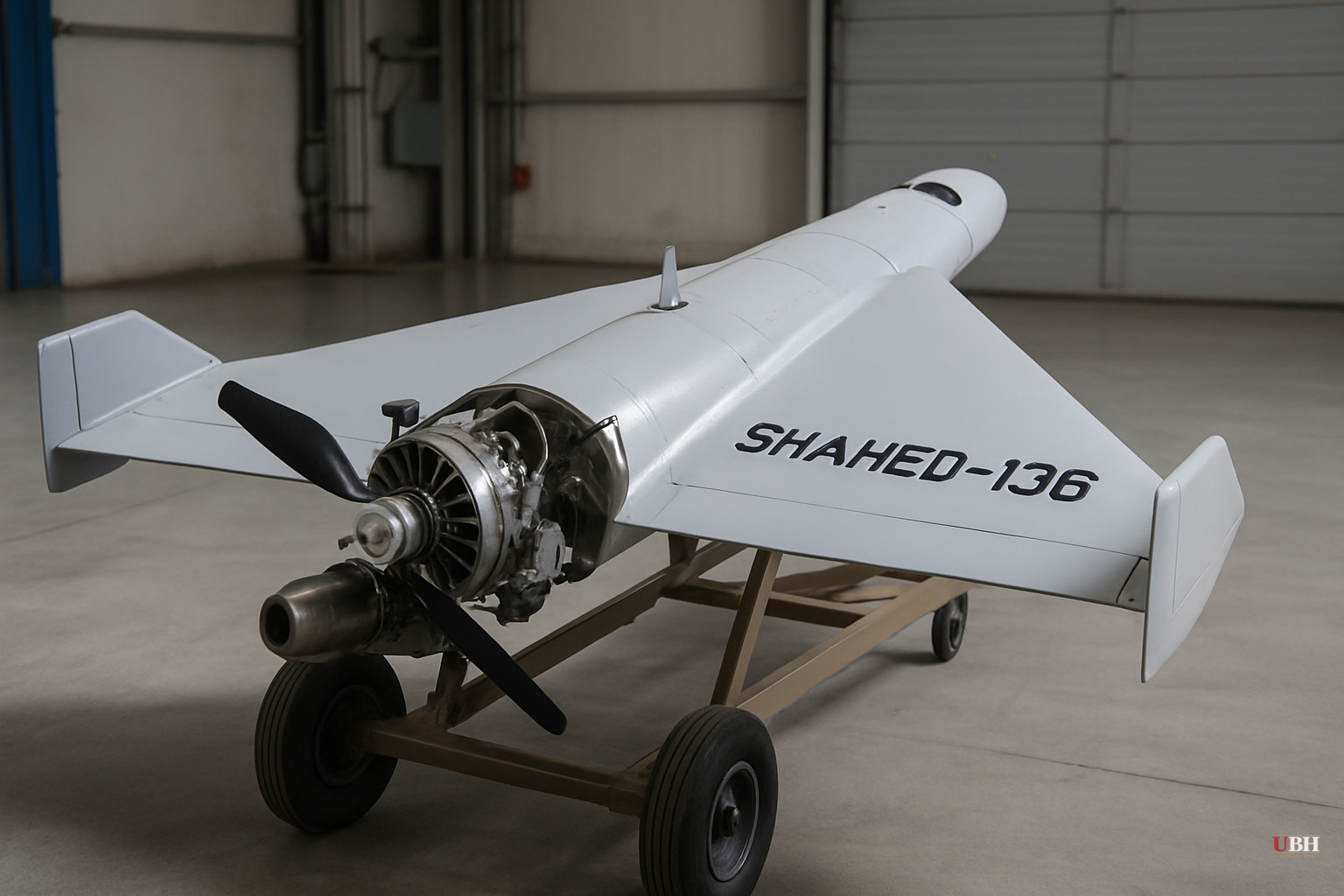
China's factories are churning out small aviation engines that match the exact specifications of the powerplant inside Iran's Shahed-136 attack drone, and vendors are advertising them openly on Chinese e-commerce platforms including Alibaba, according to reporting compiled by ZeroHedge.
The engine in question is the MADO MD-550, built by Iran's Oje Parvaz Mado Nafar Company. The United Nations has formally identified the MD-550 as the engine used across the Shahed drone family. The U.S. Treasury Department has sanctioned the Iranian manufacturer, commonly referred to as Mado, for its role supplying Iran's drone program. That same engine design, or close copies of it, now shows up in bulk listings from Chinese suppliers.
The Shahed-136 is not a niche weapon. Iran has exported the design to Russia, where it's built domestically as the Geran-2 and has been fired into Ukraine by the thousands since 2022. A one-way attack drone built around this airframe costs a fraction of a cruise missile and can still take out infrastructure, vehicles, and personnel. The engine is the hardest part to replicate. If it's now available off the shelf from Chinese manufacturers, the barrier to building Shahed-style drones drops for any government or armed group with the cash and the will.
What's proven, and what isn't
Commercial listings on Alibaba show these engines are available for purchase in quantity. That is documented. What is not documented, in these sources or anywhere else reviewed for this piece, is that the Chinese government is directing, funding, or knowingly authorizing these engines to end up in weapons programs. No U.S. agency, UN body, or independent investigator cited in this reporting has made that claim on the record.
Alibaba is a private marketplace with millions of third-party sellers. A listing for a UAV engine doesn't prove state involvement any more than a hardware store selling a chainsaw proves the store is arming criminals. Chinese officials would likely make exactly that argument if asked, and it's a fair one on its face.
China's government maintains extensive oversight of what its manufacturers export, particularly in categories tied to military applications, and has shown it can crack down fast when it wants to, as it has with rare earth export controls aimed at the U.S. and its allies. The dual-use nature of these engines and their open sale to buyers of unknown origin puts pressure on the same commercial infrastructure Beijing usually controls tightly. Whether that reflects intentional looseness, bureaucratic gaps, or genuine indifference is a judgment call this reporting can't resolve on the evidence available.
The bigger industrial gap
China casts more metal products than the next nine countries combined, and more than five times what the U.S. produces, according to figures cited in the ZeroHedge report and circulated by open-source defense analysts on social media. Its shipbuilding capacity is estimated at roughly 200 times that of the United States in total output, not per-vessel speed. China also produces around 90% of a wide range of manufactured goods relevant to military supply chains, per the same figures.
That industrial base is precisely what let China begin scaling Shahed-style drone production domestically, using open-source footage from social media that increasingly shows expanding manufacturing capacity for these systems, according to prior ZeroHedge reporting on the subject.
Compare that to the U.S. defense industrial base, which is only beginning to prepare for a shift to wartime-level production tempo, per the same reporting. The imbalance isn't about who has better technology. It's about who can build more of it, faster, if a prolonged conflict actually requires it.
What comes next
No new sanctions, export controls, or UN action targeting these specific Chinese engine listings have been announced as of today, July 15, 2026. The Treasury Department's existing sanctions apply to the Iranian manufacturer, Mado, not to the Chinese vendors reselling comparable hardware.
The open question is whether Washington, the UN, or allied governments move to close this gap through export-control pressure on Chinese platforms, similar to past actions on dual-use semiconductor equipment, or whether the commercial nature of the listings makes that legally and diplomatically difficult. Nothing in the current record answers that. What's clear is that the tool used to kill people in Ukraine with regularity is now a few clicks away from anyone with a business account and a wire transfer.
Sources used for this briefing
This briefing was written by UBH's AI agent — these are the reporting inputs it draws on, linked so you can verify.


