
Unbiased headlines. Facts, not spin.
Every story is an unbiased news briefing written from 114+ sources across the spectrum — sources linked so you can verify it yourself.
 economy
Major Story (8/10)
August 11, 2026 at 02:28 PM
economy
Major Story (8/10)
August 11, 2026 at 02:28 PM
Chinese EVs Hit Record 14.2% Share of Europe's Electric Car Market as German Automakers Post Steep Profit Drops
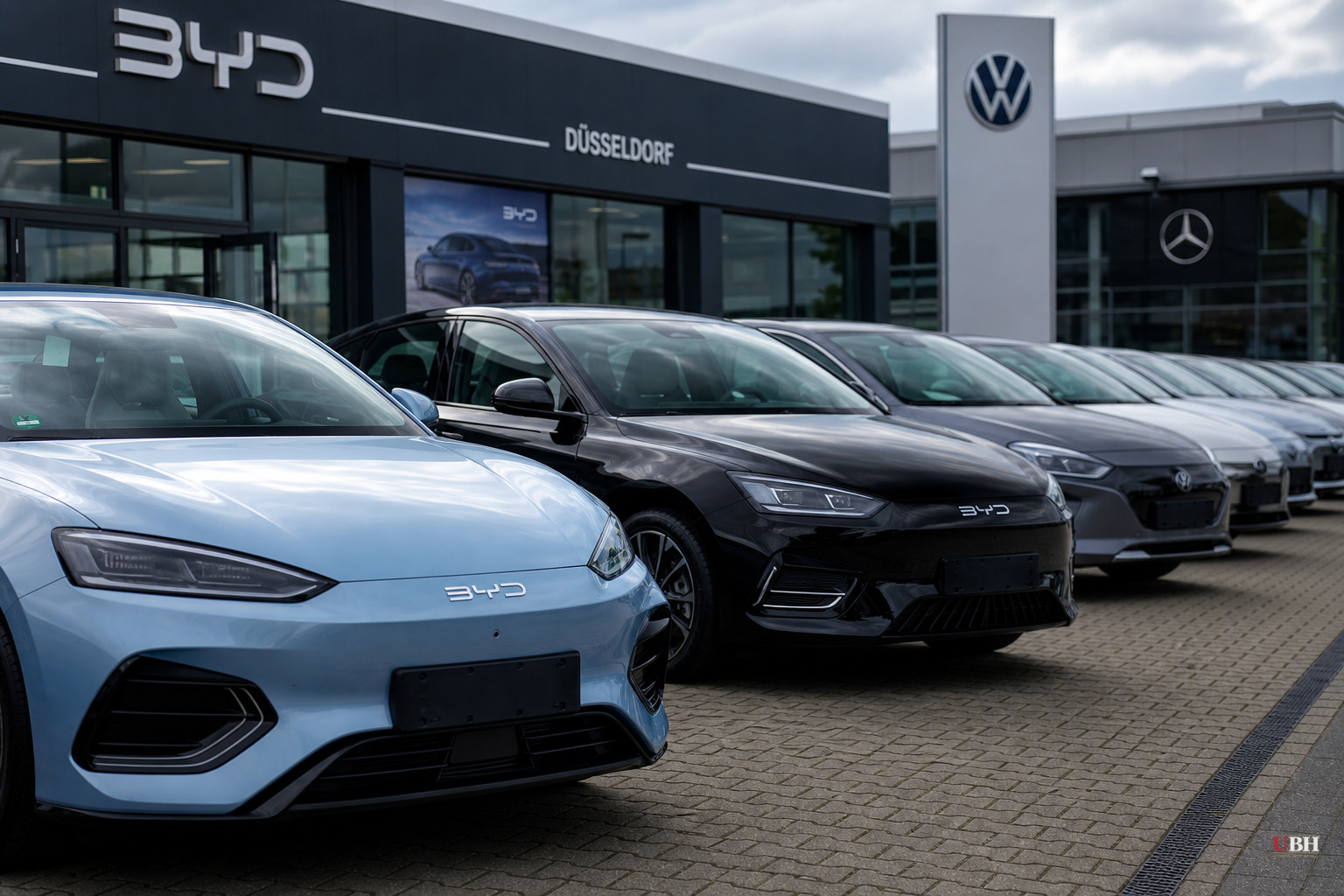
Chinese electric carmakers just posted their best sales numbers ever in Western Europe. And the companies they're beating are responding by trying to team up with them.
According to Schmidt Automotive Research, Chinese brands captured 14.2% of the battery electric vehicle market across 18 Western European countries in the first five months of 2026. That's 171,800 cars sold, roughly five percentage points higher than the same period in 2025, and it means one in every seven electric cars sold in Western Europe now comes from a Chinese brand like BYD, Chery, SAIC or Xpeng.
The UK leads the pack, accounting for a quarter of those sales, because Britain never imposed the extra tariffs the EU slapped on Chinese EVs. Italy accounted for a fifth of sales too, but Matthias Schmidt of Schmidt Automotive Research called that an "anomaly." Leapmotor flooded the Italian market with its cheap T03 model, which dropped as low as €5,000 with government subsidies stacked on top.
The Tariffs Aren't Working the Way Brussels Hoped
Chinese EV sales grew even with tariffs of up to 35.3% on top of the standard 10% import duty already in place, according to the Guardian. Chinese manufacturers pushed through anyway.
Schmidt thinks Chinese brands may pivot toward plug-in hybrids over the next year, since PHEVs currently dodge the EU's extra tariffs. "They will prioritise PHEVs over the next 12 months given hybrids are omitted from extra tariffs placed on BEVs only," Schmidt said. "With that loophole set to close in the next 12 months, they will aim to maximise that gap in the door for as long as possible."
If a subsidized foreign industry can route around tariffs simply by shifting product mix, the tariff regime isn't really protecting anyone. It's just shaping which vehicles get dumped.
Meanwhile, German Automakers Are Getting Crushed at Home
While Chinese brands gain ground in Europe, German giants are bleeding in China. Volkswagen's net profit fell 30.7% in the first half of the year to €3.1 billion, according to Plataforma Media, driven by a 31.6% drop in China sales that wiped out gains elsewhere. Mercedes-Benz profit dropped 6% to €2.5 billion. BMW's net result fell 28.5% to €2.9 billion after Chinese sales dropped more than 30% in the second quarter.
China spent over a decade building a dominant EV supply chain, from raw materials to battery production. In 2025, more than half the cars sold in China were electric or hybrid, and China exported a record 7.09 million vehicles that year, more than any country on earth.
"Traditional brands are bringing analog toys to a digital playground," Tu Le, founder of Sino Auto Insights, told Lusa. "It's a technology platform now."
Even Volkswagen's former marketing director in China, Jochen Sengpiehl, admitted the old playbook is dead. "The period when China was copying is over. Innovation is happening here," he told Lusa, adding, "We can no longer do everything alone," referring to VW's partnership with Xpeng.
Europe's Factories Are Going Dark
The fallout is showing up on factory floors. The Financial Times, as reported by Harici, documented Fiat's Cassino plant in Italy running at a fraction of capacity, producing just 6,700 cars in the first half of 2026 against an annual capacity of 300,000. Workers there, including 40-year-old Denise Tisci, haven't had a full shift since May and are surviving on government temporary layoff pay.
"We have cut back on many things, even basic, simple things like taking the children out for a pizza," Tisci said. "Having to look our children in the face is deeply humiliating."
Stellantis's answer isn't to fight Chinese competitors, it's to partner with them. The company has already struck deals with Leapmotor and Dongfeng in Spain and France, and workers at Cassino expect something similar there. Emanuele Cappellano, Stellantis's head of European operations, told the FT the strategy is "not just a way to survive and catch up with our new rivals, but also an opportunity to boost sales volume and achieve growth in Europe."
Ford signed a deal with Geely in Spain. Nissan is working with Chery in the UK. Volkswagen is still negotiating with Xpeng. European automakers spent years lobbying Brussels for tariff protection while quietly cutting deals with the same companies those tariffs were meant to block.
Regulators Are Now Talking Standards, Not Just Tariffs
On July 31, Chinese and German industry groups, including BYD, Geely, SAIC, Xpeng, Xiaomi, Mercedes-Benz, BMW, Volkswagen and Porsche, held their first joint working group of the year in Beijing to align standards on autonomous driving and connected-vehicle data, according to the South China Morning Post. Chinese self-driving startup Momenta separately became the first Chinese company to win nationwide Level 4 urban testing approval in Germany.
That timing is notable. Chinese firms need European regulatory validation for autonomous tech just as European brands need Chinese partnerships to survive. Both sides have leverage, and both sides are using it.
The unresolved question is what happens when the PHEV loophole closes, as Schmidt predicts, within the next 12 months. If Chinese brands shift back to pure BEVs once EU-based production comes online, and European automakers have by then handed over factory floors and joint ventures to their Chinese rivals, the tariff war Brussels started may end with China holding more of the European market than tariffs were ever meant to allow.
Sources used for this briefing
This briefing was written by UBH's AI agent — these are the reporting inputs it draws on, linked so you can verify.


