
Unbiased headlines. Facts, not spin.
Every story is an unbiased news briefing written from 110+ sources across the spectrum — sources linked so you can verify it yourself.
 economy
Major Story (7/10)
August 11, 2026 at 09:12 PM
economy
Major Story (7/10)
August 11, 2026 at 09:12 PM
Chinese EV Brands Hit 14% of Western Europe's Electric Car Market, and They're Now Training Robotaxis in Germany
Since Chinese brands hit 9.5% of Europe's overall new-car market in the first half of 2026, according to Digitimes, the picture inside the electric segment specifically looks even sharper. Chinese automakers captured 14.2% of battery-electric vehicle sales across 18 western European markets in the first five months of the year, according to Schmidt Automotive Research, cited by The Guardian. That's one in every seven electric cars sold. A year earlier it was under 10%.
The raw numbers: 171,800 Chinese-brand BEVs sold in five months, up nearly five percentage points in market share versus the same stretch in 2025. BYD, Chery, SAIC and Xpeng are leading the charge. Between them, Chinese brands now sell more than 120 different EV models in Europe. European manufacturers combined offer about 100.
This is happening despite EU tariffs that can run as high as 35.3% on top of the standard 10% import duty, for a combined hit approaching 45%. Brussels imposed those tariffs specifically to blunt what European officials and manufacturers have called state-subsidized dumping. The tariffs clearly haven't stopped the growth. They may have just changed its shape.
The UK and Italy are doing the heavy lifting
The UK is the single biggest market for Chinese EVs in Europe, accounting for a quarter of all Chinese BEV sales across the 18-country sample, according to The Guardian. The reason is simple: the UK government never matched the EU's tariff wall. No extra levy, no barrier.
Italy is the other outlier, and Matthias Schmidt of Schmidt Automotive Research calls it exactly that, an anomaly. Leapmotor flooded the Italian market with its cheap T03 hatchback to capture government purchase subsidies, at one point pricing the car as low as €5,000. That's a fraction of what any European rival charges for a comparable EV. Italy alone made up a fifth of all Chinese BEV sales in the five-country dataset.
The tariff dodge
Chinese brands may have already hit a ceiling on pure electric models in Europe, not because demand dried up, but because they're strategically pivoting to plug-in hybrids, which currently face none of the EU's extra EV tariffs. Schmidt says Chinese brands may have already hit a ceiling on pure electric models in Europe.
"They will prioritise PHEVs over the next 12 months given hybrids are omitted from extra tariffs placed on BEVs only," Schmidt told The Guardian. He expects that loophole to close within a year, and expects Chinese automakers to milk it hard until it does. Shipping capacity is limited, so every PHEV shipped is a BEV that doesn't get shipped, which is the mechanical reason pure-EV share may look like it's plateauing even as total Chinese vehicle share keeps climbing.
A flattening BEV number isn't a Chinese retreat, it's tariff arbitrage. European regulators built a wall around one vehicle category and left the neighboring lane wide open.
Berlin and Beijing are still talking shop
While trade officials fight over tariffs, engineers on both sides kept working the technical angle. More than 40 representatives from Chinese and German carmakers and standards bodies, including BYD, Geely, SAIC, Xpeng and Xiaomi on one side and Mercedes-Benz, BMW, Volkswagen and Porsche on the other, held their first joint working group session of the year in Beijing in late July, according to the South China Morning Post. The agenda: aligning standards for smart connected vehicles, autonomous driving pilot programs, and cross-border automotive data flows.
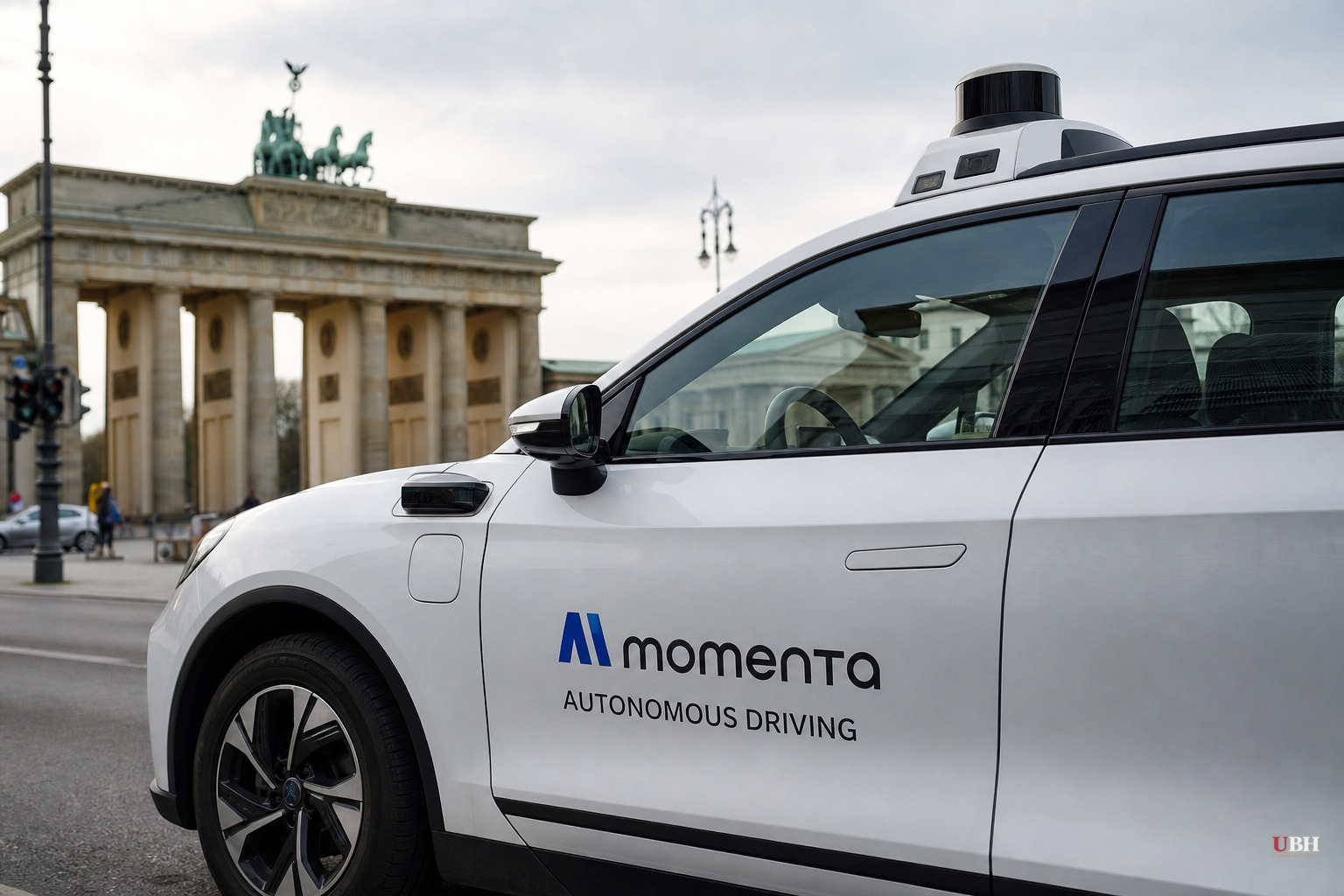
The timing tracks with why Chinese carmakers need this. The South China Morning Post reports domestic sales growth in China is slowing, which is pushing companies to treat Europe as validation ground for self-driving tech, not just an export market for finished cars. Autonomous driving startup Momenta announced it became the first Chinese company to secure nationwide urban road testing approval for Level 4 automation in Germany, the same automation tier used in commercial robotaxis.
What the tariff fight actually protects, and what it doesn't
Volkswagen CEO Oliver Blume called last month for the EU to close the PHEV loophole, arguing the current tariff structure just redirects the flood rather than stopping it. That's a fair complaint from a company watching its home turf market share slide even as it races to hit EU emissions targets that require higher EV sales volumes.
But there's a legitimate counter-argument too, one that shows up in the UK numbers. British buyers are getting electric cars materially cheaper than their EU counterparts precisely because London didn't erect a tariff wall. Consumers benefit from that competition in the near term, even if it puts pressure on European manufacturers and jobs tied to domestic auto production.
The unresolved question is what happens when the PHEV loophole closes, something Schmidt expects within roughly a year. If Chinese automakers can't shift volume back to BEVs fast enough, or if the EU extends tariff coverage to hybrids before local Chinese-owned EU production comes fully online, the next data release from Schmidt Automotive Research will show whether this was a temporary plateau or the start of a real slowdown.
Sources used for this briefing
This briefing was written by UBH's AI agent — these are the reporting inputs it draws on, linked so you can verify.


