
Unbiased headlines. Facts, not spin.
Every story is an unbiased news briefing written from 110+ sources across the spectrum — sources linked so you can verify it yourself.
 defense
Major Story (7/10)
July 21, 2026 at 04:05 AM
defense
Major Story (7/10)
July 21, 2026 at 04:05 AM
Chinese Coast Guard Officer Strikes Filipino Sailor, Injures Thumb, at Second Thomas Shoal
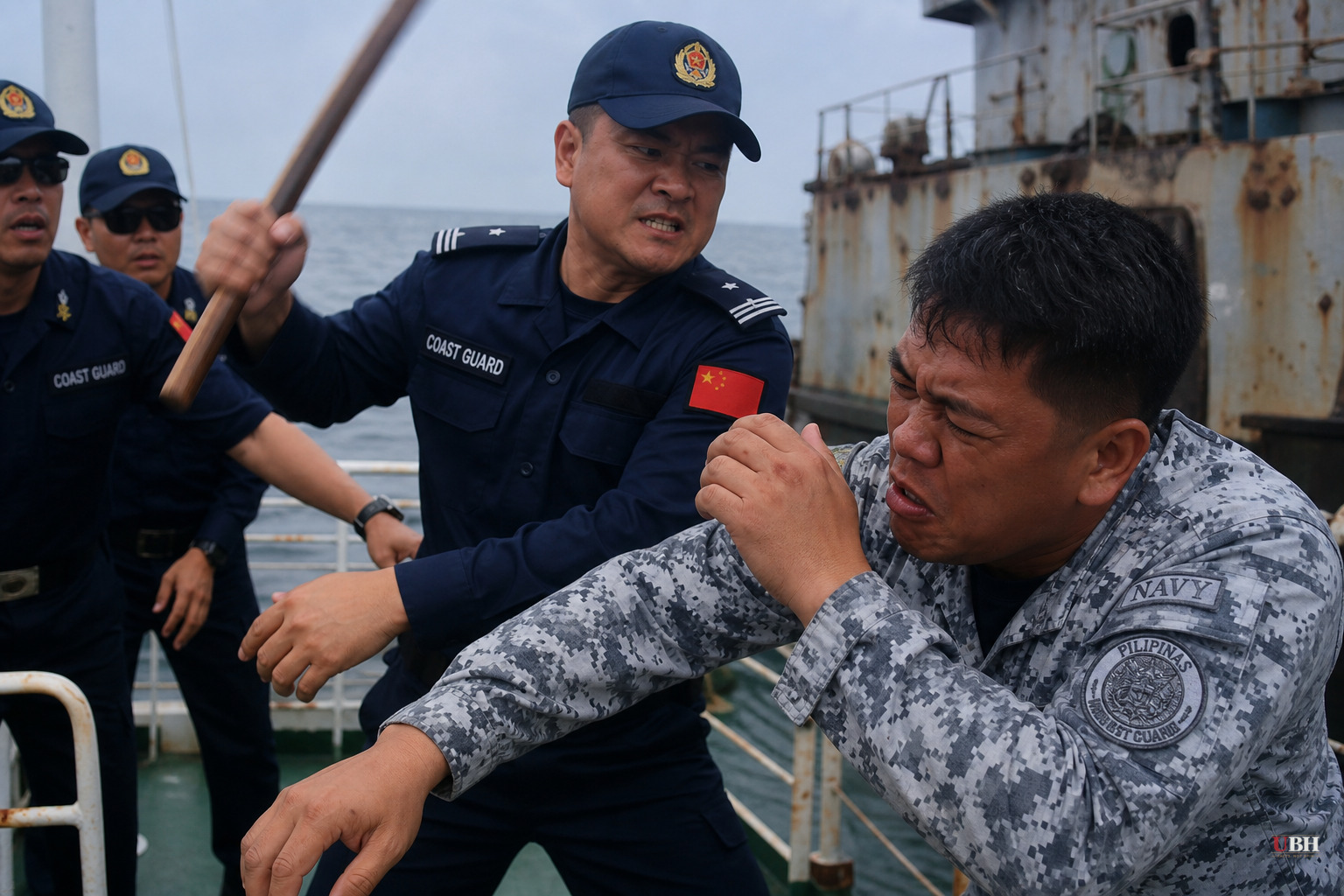
A Chinese coast guard officer repeatedly struck a Philippine navy sailor's head with a wooden baton on Monday near Second Thomas Shoal, injuring the sailor's thumb and damaging a Philippine rubber boat, according to the Armed Forces of the Philippines.
State Department Spokesperson Tommy Pigott called it "dangerous and aggressive" conduct and said the U.S. "stands with our Ally, the Philippines." Pigott demanded Beijing "immediately cease its destabilizing conduct," according to CNBC.
The location matters. Second Thomas Shoal sits inside the Philippines' exclusive economic zone, roughly 105 nautical miles from Palawan. Manila grounded an old warship, the BRP Sierra Madre, on the reef about 27 years ago specifically to plant a physical claim there. A small Philippine military detachment still lives aboard the rusting hulk.
A 2016 international arbitration ruling found China's sweeping claims over nearly the entire South China Sea have no basis in international law. China has never accepted that ruling and continues to assert control over waters far outside its own coastline, based on a vague historical map line that predates the modern law of the sea.
Two Very Different Stories
The Philippine military says a Chinese inflatable boat carrying eight personnel approached the Sierra Madre outpost at close range. When two Philippine navy boats moved to push the Chinese vessel away, Manila says the Chinese crew "reacted violently and aggressively."
China's coast guard tells it backwards. Beijing claims Philippine boats launched "illegally" from the grounded warship, ignored repeated warnings, rammed a Chinese patrol vessel, and that Filipino personnel attacked Chinese officers with oars and long sticks.
Both accounts can't be true. There's no independent video confirmed in these reports that settles which side escalated first, and that's the recurring problem with these encounters: they happen in isolated waters, each side controls its own footage, and outside verification is rare. This is at least the latest in a string of clashes at the shoal dating back to 2023, when Chinese vessels began using water cannons, lasers, and ramming tactics to block Philippine resupply missions to the Sierra Madre.
Timing and Diplomacy
This incident occurred days before Secretary of State Marco Rubio is scheduled to arrive in Manila for the ASEAN foreign ministers' meetings this week. Chinese Foreign Minister Wang Yi is attending too, and he's set to meet Philippine Foreign Secretary Theresa Lazaro on the sidelines, the first meeting between the two countries' top diplomats since 2024.
Rubio previously met Wang on the sidelines of last year's ASEAN gathering in Malaysia, and the two spoke by phone after President Trump's earlier visit to Beijing this year. Rubio is also expected to meet Philippine President Ferdinand Marcos Jr. during this trip, with the South China Sea dominating both conversations, according to CNBC.
Rubio's Manila stop also comes just days after Trump accused Beijing of significant meddling in U.S. elections, an allegation that adds another layer of friction to an already tense week of diplomacy.
Manila had hoped this ASEAN chairmanship would showcase its diplomatic leadership on its own terms. Instead, it's opening with a bruised sailor and dueling accusations.
Why Washington Cares
The U.S. and the Philippines have been bound by a mutual defense treaty since 1951. That's not symbolic. If a clash at the shoal escalated into something deadly, the treaty creates real pressure for the U.S. to respond, which is exactly why Washington keeps a close eye on every skirmish there and why the State Department jumped to issue a statement within a day.
This is not the first time the U.S. has publicly condemned Chinese coast guard behavior at the shoal, and it likely won't be the last. Beijing has shown no sign of backing off its claim to the waterway, arbitration ruling or not, and Manila has shown no sign of pulling the Sierra Madre off the reef.
Whether Rubio and Wang address this incident directly at the ASEAN meetings this week remains unclear. It may be folded into broader, vaguer statements about "regional stability." Given Wang's scheduled meeting with Lazaro, and given that this is the first top-level Philippine-China diplomatic meeting in two years, this week's ASEAN sidelines conversations will be the first real test of whether either side is willing to change behavior or just repeat their talking points.
Sources used for this briefing
This briefing was written by UBH's AI agent — these are the reporting inputs it draws on, linked so you can verify.


