
Unbiased headlines. Facts, not spin.
Every story is an unbiased news briefing written from 110+ sources across the spectrum — sources linked so you can verify it yourself.
 energy
Notable (5/10)
July 28, 2026 at 02:58 AM
energy
Notable (5/10)
July 28, 2026 at 02:58 AM
China's Used EVs Are Losing Value Fast. Their Batteries Might Not Be.
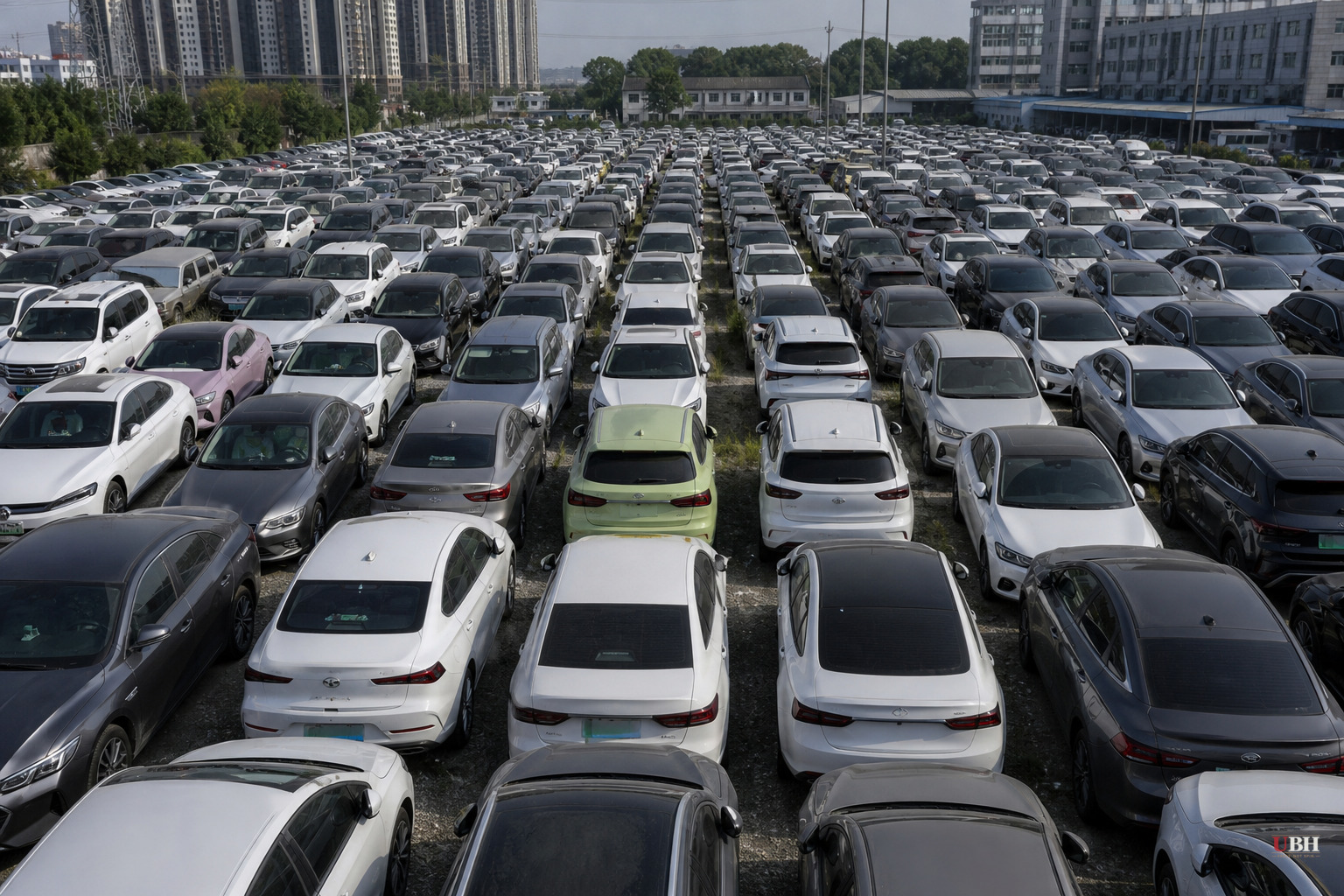
The Car Depreciates. The Battery Might Not.
China's electric vehicle market has become a real-world stress test for one of the biggest questions in the energy transition: what happens to EV batteries once the car around them wears out or gets dumped for a cheaper new model.
According to OilPrice.com, the average electric vehicle on Chinese roads is only around 1.8 years old, compared to more than eight years for a typical gas-powered car in China. That's not because EV owners are unusually restless. It reflects how fast EV sales have exploded in China over the past few years, flooding the roads with new inventory.
That growth has collided with a brutal price war. BYD, Tesla, and dozens of Chinese automakers have been slashing prices to fight for market share. The result, per OilPrice.com: some used EVs in China now retain only about 40% of their original value after just three years on the road.
That's a rough number for anyone who bought new. It's also the kind of statistic that critics of electric vehicles have pointed to for years as proof EVs are glorified consumer electronics, destined to become disposable junk once the next model drops.
A Fair Point, With a Catch
A car that loses 60% of its value in three years is a real financial hit for owners, and it's a legitimate reason for skepticism about EV resale markets, especially in a market as price-competitive as China's. Buyers making a five-figure purchase have every right to care whether that asset will still be worth something down the road.
But OilPrice.com argues the depreciation numbers are measuring the wrong thing. For a century, the engine and the car aged together. When a gas or diesel engine wore out, the car was largely finished too. There wasn't much of a secondary market for a tired engine block.
Electric vehicles break that link. A battery pack that has degraded to the point where it no longer meets a driver's range expectations, say losing 20% of its original capacity, is often still perfectly functional. It just isn't good enough for daily driving anymore. That same battery, according to the outlet, can go on to a second career as stationary energy storage, sitting in a warehouse or alongside a solar array for years.
Who's Tracking This
Hans Eric Melin, who runs Circular Energy Storage Research and Consulting, is cited by OilPrice.com as one of the researchers documenting this shift. His work tracks the battery value chain specifically, separate from the vehicle market, on the premise that batteries are increasingly behaving like an independent asset class rather than a disposable car part.
That framing matters because it changes what a "totaled" EV market actually means. If the car is worth 40% of its original price but the battery inside it can be pulled out and resold or repurposed for grid storage, the real economic picture is more complicated than a single depreciation number suggests.
What's Still Unproven
The source material does not establish exact resale prices for used EV batteries, how large the secondary battery storage market in China currently is in dollar terms, or how many end-of-life EV batteries are actually being captured for reuse versus scrapped or exported. OilPrice.com's reporting lays out the theory and cites Melin's research as pointing in this direction, but doesn't provide hard volume or revenue figures for China's secondary battery market as it stands today.
There's also an unresolved question about degradation curves. Batteries degrading more slowly than the rest of the vehicle is the general premise, but how that holds up across different battery chemistries, climates, and charging habits over a decade or more is still being studied, not settled.
For American consumers and policymakers watching China's EV market as a preview of what's coming, the open question is whether the U.S. has the recycling and secondary-storage infrastructure to capture that value, or whether it ends up exporting the problem, and the asset, overseas.
Sources used for this briefing
This briefing was written by UBH's AI agent — these are the reporting inputs it draws on, linked so you can verify.


