
Unbiased headlines. Facts, not spin.
Unbiased Headlines is an independently owned news organization. We bring you the facts, not opinions, written fresh from 110+ named sources. Sources linked so you can verify it yourself.
 economy
Major Story (8/10)
Event date: July 10, 2026 ·
economy
Major Story (8/10)
Event date: July 10, 2026 ·
China's Trade Surplus Hits $119 Billion in August as Trump Weighs New Tariff Ahead of Xi Meeting
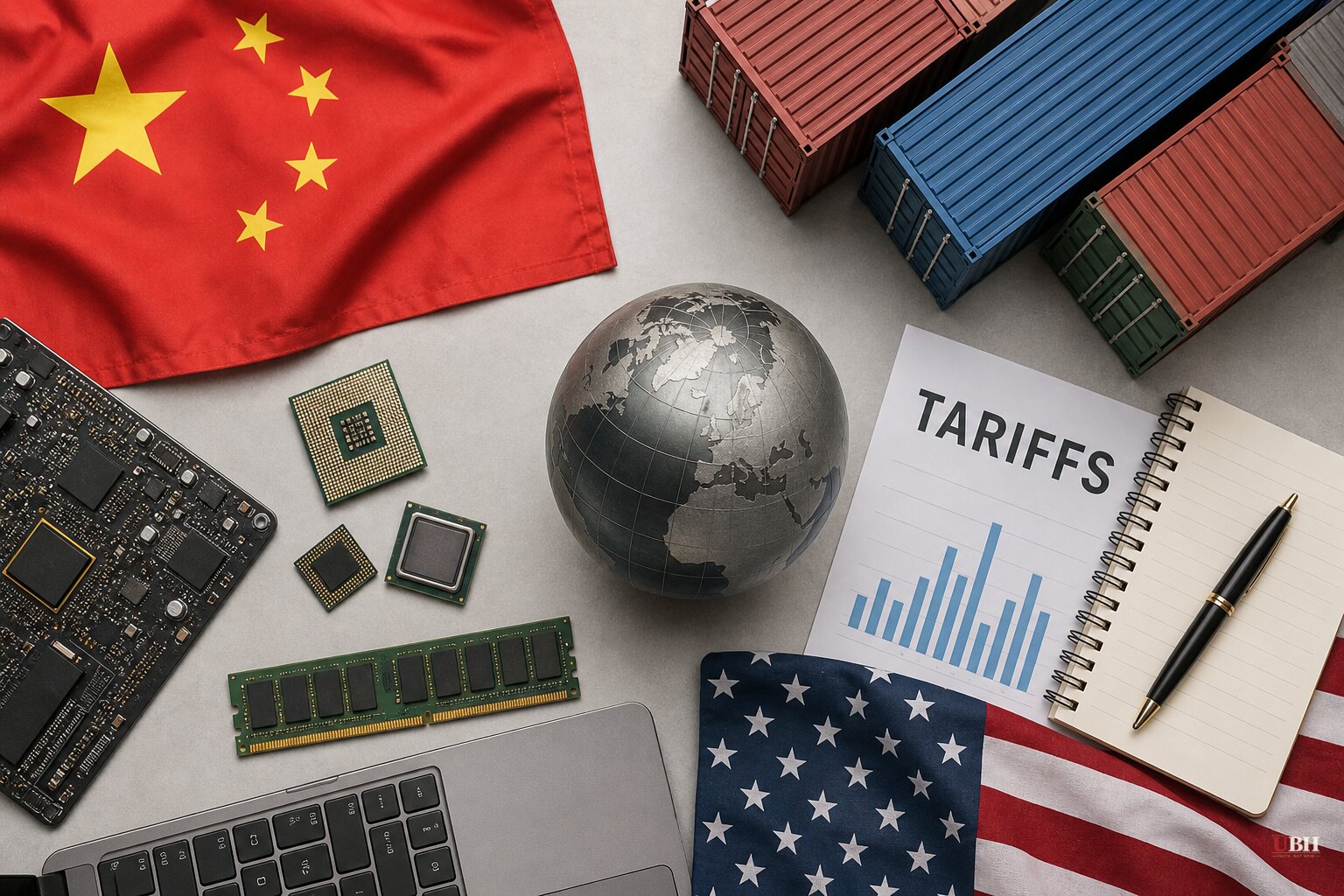
China's cumulative trade surplus for 2026 hit $805.5 billion through the end of August, according to the General Administration of Customs, putting the country on pace to beat last year's record $1.1 trillion haul. That number lands just weeks before Xi Jinping is expected to sit down with Donald Trump in Washington, a meeting Trump has said will include a formal state dinner on September 24.
Exports rose 25% year-over-year in August, customs data show, up from 23.9% growth in July, though the increase fell just short of the 25.9% forecast in a Bloomberg survey of economists. Imports climbed 28.2%, faster than July's 27.5% pace, according to the same data reported by Yahoo Finance and Daily Sabah. That produced a monthly trade surplus of $119.1 billion, up from $112.5 billion in July.
The growth is being driven almost entirely by tech. China's exports of computers and related parts surged 49.4% from January through August, customs data show. Semiconductor exports alone jumped 129.8% year-over-year in August, and auto exports grew 43%, according to Daily Sabah's reporting on the customs release. Chi Lo, senior market strategist for Asia Pacific at BNP Paribas Asset Management, told Daily Sabah that "China has moved aggressively up the value chain and has become a major player in AI infrastructure and industrial automation."
The numbers mask a weaker domestic picture. Factory activity contracted for a second straight month in August, and Alicia Garcia-Herrero, Asia-Pacific chief economist at Natixis, told AFP that import growth "looks more consistent with stronger corporate spending on computing capacity, electronics and manufacturing investment than with a broad recovery in household consumption." Zhiwei Zhang, president and chief economist at Pinpoint Asset Management, put it more bluntly: "China continues to rely on the exporters to support the economy."
The US Angle: Bigger Deficit, New Tariff on the Table
China's exports to the United States hit $42.5 billion in August, up 34.4% year-over-year, according to Daily Sabah, partly because tariff-driven declines a year earlier created an easy comparison. US exports to China totaled just $13.3 billion, leaving Beijing with roughly a $29.2 billion monthly surplus against Washington alone.
That imbalance is exactly what the Trump administration is now targeting. Three people familiar with internal deliberations, speaking to the Associated Press on condition of anonymity, said Trump is considering a new 7.5% tariff on China meant to punish Beijing for flooding global markets with underpriced goods. Two of those people said officials believe 7.5% is low enough to avoid derailing the one-year trade truce or the planned Trump-Xi meeting.
The move would run through a Section 301 investigation into Chinese industrial overcapacity and forced-labor practices that the administration launched in March, after the Supreme Court struck down Trump's earlier sweeping "reciprocal" tariff scheme in February. It would stack on top of tariffs of 10% to 12.5% that took effect last month on 60 economies, including China, over forced-labor enforcement. The people cautioned Trump could still change course before any decision is finalized.
The Chinese embassy in Washington responded that trade disputes should be resolved through bilateral talks, not unilateral tariffs, and rejected the premise that China has an overcapacity problem, according to the Associated Press.
The Overcapacity Argument, Fairly Stated
US officials and industry groups pushing for the tariff have a real data point behind them: semiconductor exports up 129.8% and computer-parts exports up nearly 50% year-to-date is a flood rather than steady growth. Trading partners from the EU to Southeast Asia have raised similar alarms about being undercut by Chinese pricing, and Zhang told AFP that "the US government made it clear at the G20 meeting that they are concerned about this issue." That is a legitimate industrial-policy concern, not a fringe one.
Beijing's counter is that its surplus reflects genuine competitiveness in EVs, batteries and now AI hardware, not dumping, and that it isn't trying to maximize the surplus on purpose. Nobody in these sources has produced a side-by-side accounting settling which explanation carries more weight, and no US agency ruling has yet been issued in the Section 301 probe.
The Diplomatic Layer
Epoch Times gathered comments from several pseudonymous Chinese scholars who argue Trump's warm public rhetoric toward Xi is tactical. Li Bin, a China-based trade scholar quoted by Epoch Times under a pseudonym for fear of reprisal, said Trump is "seeking orders for agricultural products and Boeing aircraft, as well as U.S. jobs," while Xi wants sanctions relief and continued ambiguity on Taiwan ahead of the CCP's Fifth Plenary Session, scheduled for October in Beijing. Those are analysts' interpretations of motive, not confirmed administration strategy, and Trump himself has said only that "we do great things with China" and that Xi is a "competitor."
Beijing has not yet confirmed the exact date of Xi's visit, according to both Business Standard and Daily Sabah's reporting on the customs data release. Whether the new tariff gets finalized before or after that meeting, and at what rate, remains an open question the AP's sources say is still being worked out inside the White House.
Sources used for this briefing
6 links from 6 independent newsrooms (syndicated copies of the same report count once)
These are the sources it draws on, linked so you can verify.


