
Original briefings. Zero spin.
Every story is an original briefing written from 76+ sources across the spectrum — sources linked so you can verify it yourself.
 defense
Notable (6/10)
August 16, 2026 at 08:29 AM
defense
Notable (6/10)
August 16, 2026 at 08:29 AM
China's Surveillance Giants Are Wiring Turkey's Cities, and That's Just One Country
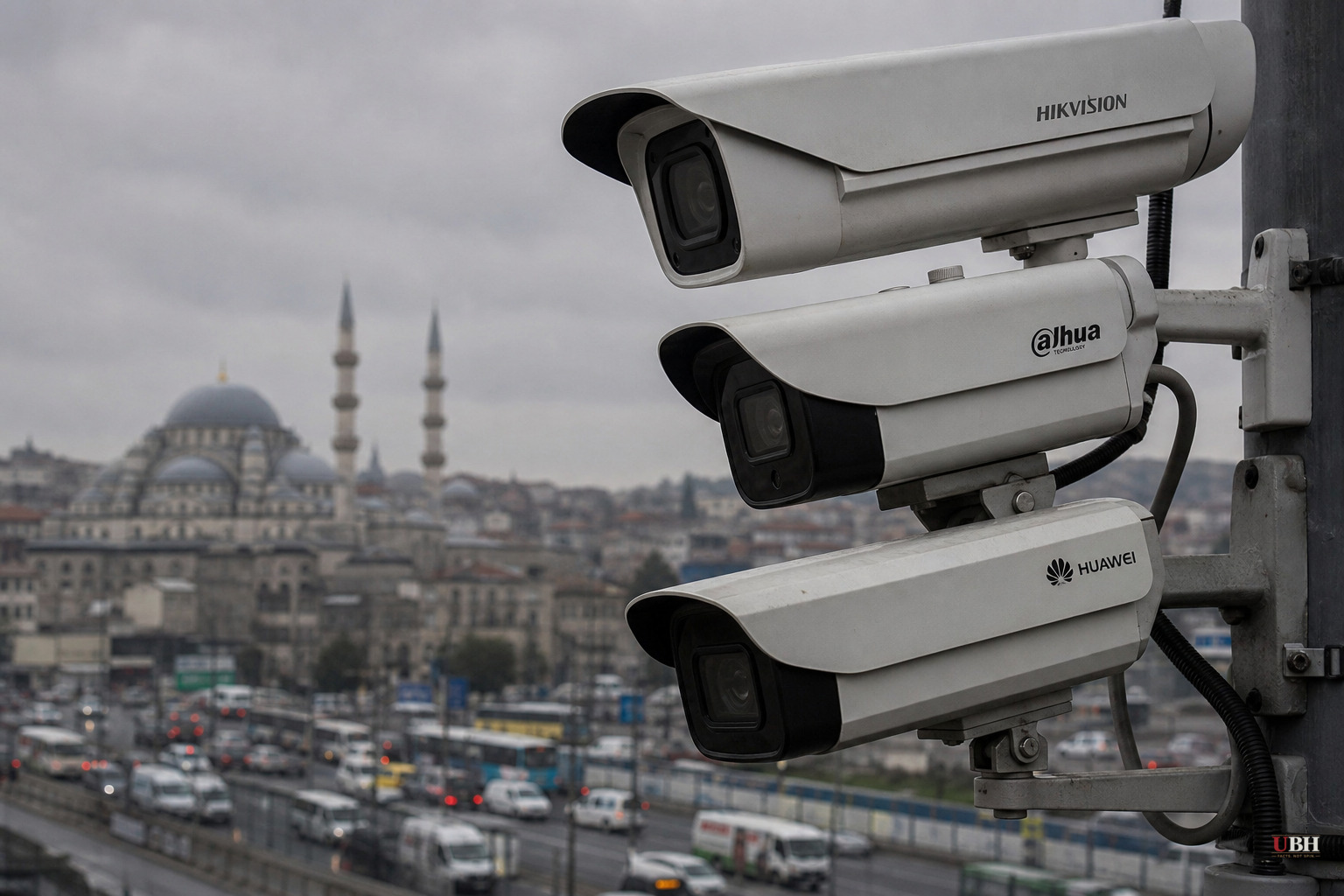
Turkey isn't China. Its courts, elections, and media still operate independently of Beijing's model, whatever their domestic critics say about President Recep Tayyip Erdogan's government. But walk through a major Turkish city today and there's a decent chance the cameras watching you were made by Hikvision or Dahua, and the network processing that footage may run on Huawei's infrastructure, according to reporting from The Epoch Times.
Nothing here proves Turkey is being turned into an authoritarian state by Chinese contractors. What it does show is that the physical and digital plumbing for mass surveillance is being installed, piece by piece, commercially, legally, and with government cooperation.
The Building Blocks
Huawei has openly marketed its AI-powered CCTV and "Safe City" surveillance packages in the Turkish market, according to The Epoch Times. These aren't just cameras. They're cameras with embedded AI chips capable of facial recognition, license-plate reading, and behavioral analysis, feeding data into cloud-based systems that can process it at scale.
Hikvision and Dahua, two Chinese companies, have become the world's largest video-surveillance equipment manufacturers, according to the Center for Strategic and International Studies (CSIS), cited in the reporting. Add Huawei's smart-city platform, which the company markets as an integrated "digital brain" combining 5G, AI, Internet-of-Things sensors, and big-data analytics, and you have the full stack: capture, transmit, store, analyze.
None of these technologies is inherently sinister. Smart traffic lights, efficient power grids, and connected public services are legitimate uses of the same tech stack. A city government buying AI cameras to manage congestion is not the same thing as a government using that same network to track dissidents.
The concern raised by analysts is what happens when these separate systems get linked. A camera captures an image. A telecom network captures location data. A smart-city sensor captures movement patterns. Once those streams feed into one AI system, you no longer have isolated tools. You have a surveillance architecture, whether or not the government intends to use it that way today.
What's Proven and What Isn't
It's documented and not seriously disputed that Huawei, Hikvision, and Dahua have sold and installed surveillance and smart-city technology across Turkey and dozens of other countries, per CSIS and Epoch Times reporting. It's also true these companies are Chinese, subject to Chinese national security law, which requires companies to cooperate with state intelligence requests when asked.
What is not proven, and what the sourcing doesn't establish, is that Turkey's government is currently using this infrastructure for the kind of population-wide social control China deploys domestically against groups like Uyghurs in Xinjiang. There's no evidence in these reports of documented abuse tied specifically to Huawei-supplied systems in Turkey. The argument is about capability and dependency, not a proven pattern of misuse.
That distinction matters. Governments buy off-the-shelf surveillance tech from lots of vendors, American and European companies included. Critics of the "digital dictatorship" framing would note that the mere existence of powerful surveillance tools doesn't mean a democracy with functioning courts and elections will misuse them. Turkey has its own domestic politics, its own opposition parties, and its own legal system that operates independently of Beijing's wishes.
But the concern about dependency isn't nothing either. Once a country's telecom backbone, cloud storage, and camera network all run through Chinese vendors, switching providers becomes expensive and disruptive. That gives Beijing leverage over maintenance contracts, software updates, and data-sharing agreements long after the original sale closes. It's a structural vulnerability, not a conspiracy.
No Watchdog With Teeth
There's no international regulator auditing what data flows through these systems or where it ends up. No U.S. or EU agency has announced an investigation into Huawei's Turkish smart-city contracts specifically. The oversight, such as it is, comes from Turkey's own government, the same government buying and deploying the systems.
That's the real gap. Not proof of abuse, but an absence of independent verification either way. Countries adopting these systems are largely taking Huawei's, Hikvision's, and Dahua's word for how the data is handled, because there's no outside mechanism forcing transparency.
The unresolved question is whether Ankara, or any other government buying this technology, will face pressure from its own citizens, courts, or allies to build in safeguards before these networks become too entrenched to unwind. Right now, according to the available reporting, that pressure doesn't appear to exist in any organized form.
Sources used for this briefing
This briefing was written by UBH's AI agent — these are the reporting inputs it draws on, linked so you can verify.

