
Original briefings. Zero spin.
Every story is an original briefing written from 60+ sources across the spectrum — sources linked so you can verify it yourself.
 defense
Notable (5/10)
August 14, 2026 at 05:37 AM
defense
Notable (5/10)
August 14, 2026 at 05:37 AM
China's Science Foundation Announces Rare Earth Research Program With Iran
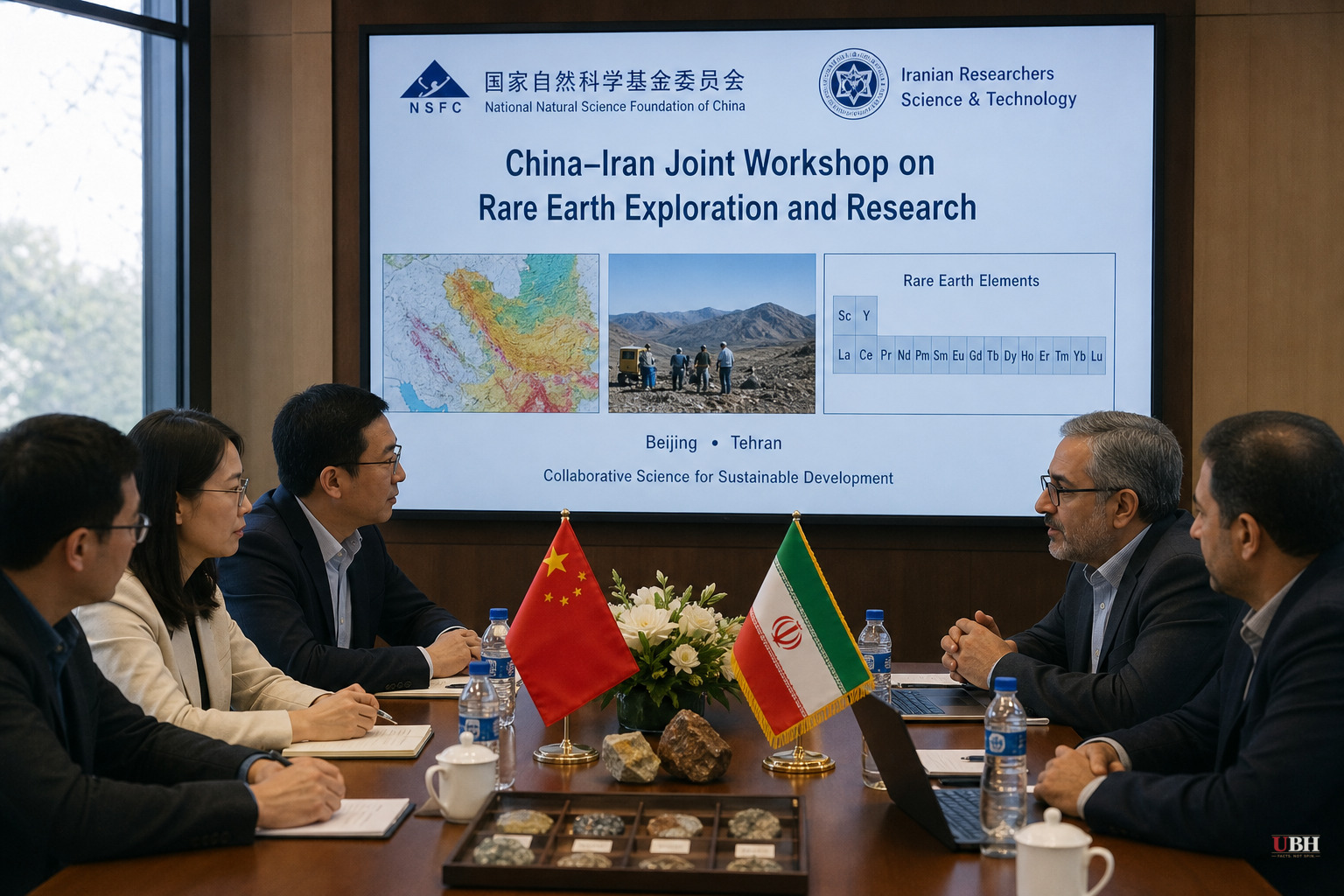
China's National Natural Science Foundation announced this week that it will collaborate with Iran's National Science Foundation on what both sides are calling the "exploration and processing of rare earth elements." The mechanism is a series of academic workshops, not a mining deal or industrial joint venture.
The money involved is small. The NSFC said it will provide roughly $4,200 in funding per workshop. Iran's science foundation will handle travel and lodging for visiting Chinese researchers, and China will reciprocate for Iranian scientists traveling the other direction, according to the South China Morning Post.
The South China Morning Post flagged the timing as notable, describing it as a "particularly sensitive" moment for Beijing to formalize any new cooperation with Tehran. The U.S. and Iran remain in an adversarial standoff, and Iran is under extensive American sanctions covering its energy, financial, and industrial sectors.
Xi Jinping is scheduled to travel to the United States in September for trade talks with President Trump. Those talks are already under strain. The two governments have been trading rounds of tariffs and export restrictions, and there is no guarantee the meeting happens as planned. Announcing a new research tie-up with Iran days before that summit signals intentional timing.
Why Iran, and why now
China holds the world's largest confirmed rare earth reserves and dominates global refining capacity for these minerals, which are essential for everything from fighter jets to electric vehicle motors to smartphones. That dominance is exactly what the Trump administration has been trying to break, through efforts to build alternative supply chains with allies and domestic producers.
So why would China risk diplomatic friction with Washington over a program this small? The South China Morning Post's own reporting suggests China may be doing basic reconnaissance. Iran's central region has geological formations, iron and phosphate deposits, that can sometimes indicate rare earth potential. But Iran has never had the technology or capital to confirm whether commercially viable deposits actually exist there, let alone extract them.
This program looks less like a resource grab and more like Beijing testing the ground before deciding whether a bigger investment is worth it.
Iran's side of the equation
The American Enterprise Institute offered a different angle back in March: Iran may have approached China, not the other way around. Iran currently spends significant money every year importing rare earth elements for its electronics and weapons manufacturing, according to AEI's analysis. Tehran may be worried that tightening sanctions could eventually choke off even those imports, which would hit its ability to produce weapons systems and consumer electronics domestically.
Under that reading, Iran has an incentive to develop a domestic rare earth supply so it isn't dependent on imports that sanctions could cut off. Whether Iran actually has the deposits to make that work is still an open question, not an established fact.
The Center for Strategic and International Studies raised a separate possibility in June: Iran may be looking past the current sanctions regime entirely. CSIS suggested Tehran could be trying to build up its mineral sector, including copper as well as rare earths, so it has something to sell once sanctions eventually lift and Iran re-enters global markets. That's speculation about Iranian strategy, not a confirmed policy from Tehran.
What's actually proven versus what's speculation
Here is what's verified: the NSFC and Iran's science foundation have announced a funded workshop series, with a specific dollar figure attached. That's a real, sourced fact.
What is not proven: that Iran has commercially exploitable rare earth deposits, that this workshop program will lead to any mining or refining operation, or that China's motive is primarily strategic rather than a low-cost bet on a long-shot resource play. Those are all analyst speculation, clearly labeled as such by the South China Morning Post, AEI, and CSIS, not established outcomes.
The modest size of the funding, a few thousand dollars per workshop, is a real signal. It suggests China is not making a major bet yet. This is the kind of low-cost, low-commitment move a government makes when it wants information before it wants exposure.
The open question is what happens if the September Xi-Trump meeting collapses over the tariff fights already underway. If it does, a China-Iran research partnership that looked minor in August could become a bigger talking point in Washington, regardless of how much rare earth material actually comes out of central Iran.
Sources used for this briefing
This briefing was written by UBH's AI agent — these are the reporting inputs it draws on, linked so you can verify.

