
Unbiased headlines. Facts, not spin.
Every story is an unbiased news briefing written from 110+ sources across the spectrum — sources linked so you can verify it yourself.
 energy
Notable (6/10)
June 12, 2026 at 12:33 PM
energy
Notable (6/10)
June 12, 2026 at 12:33 PM
China's Oil Demand May Be Structurally Shrinking, and a Collapsing Population Explains Why.
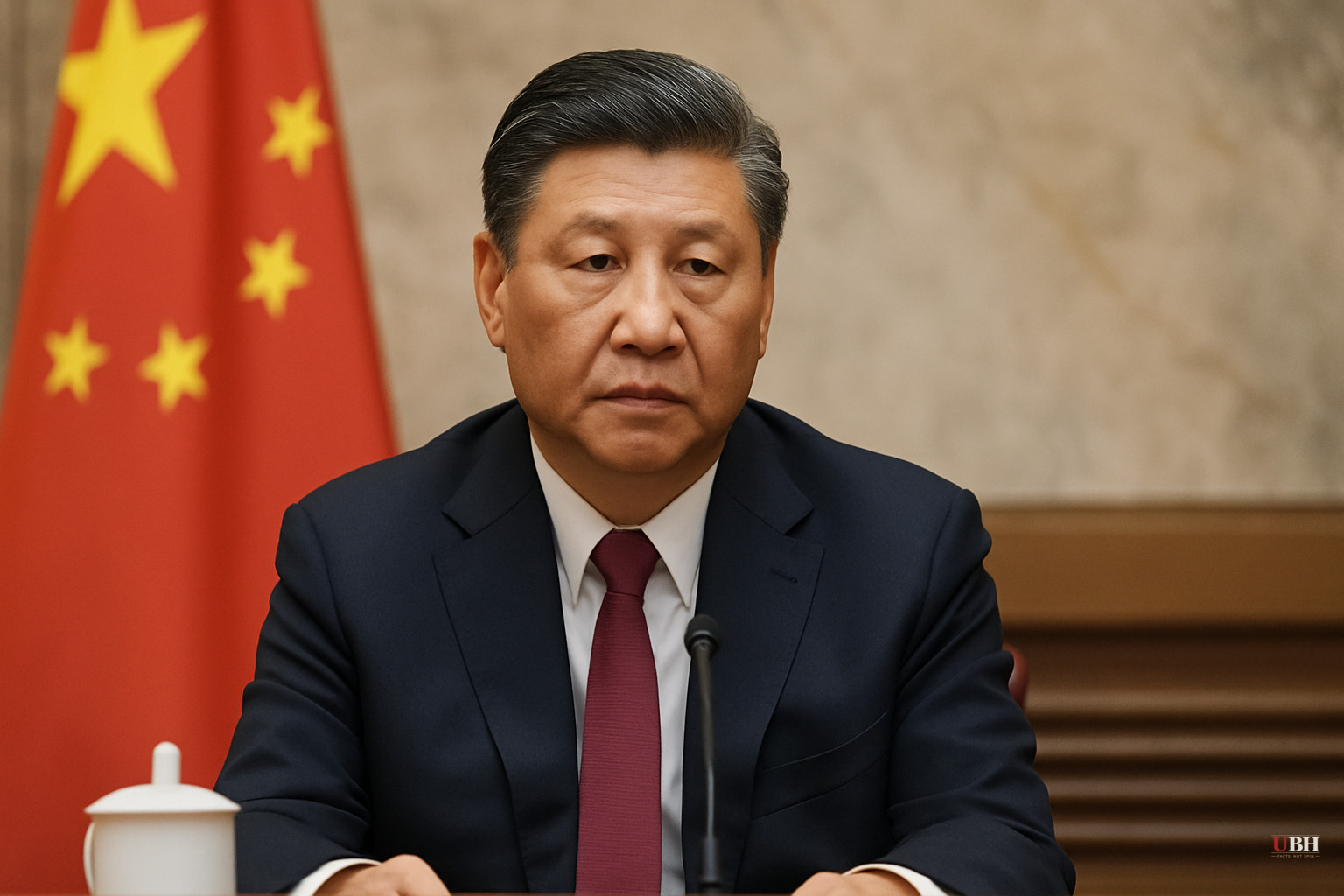
Since this outlet's coverage of the U.S.-China AI and technology competition earlier this week, two quieter structural stories about China's domestic economy have accumulated enough data to warrant a hard look together.
China Is Burning Less Fuel. A Lot Less.
Gasoline sales at Sinopec, China's largest refiner and fuel retailer, fell 8% year over year in April. Diesel dropped 6% over the same period, according to Reuters. Goldman Sachs put a sharper number on it, estimating that consumption of gasoline and related products may have fallen as much as 20%.
China slashed crude imports after the Iran conflict disrupted Middle Eastern supply, with May imports falling 29% to 7.8 million barrels per day — the lowest figure in eight years, according to OilPrice.com via ZeroHedge. High prices and a massive domestic stockpile gave Beijing room to draw down reserves rather than replace them on the open market.
But the supply-shock explanation is looking increasingly incomplete. Rail travel rose roughly 10% in March and April. Subway ridership keeps climbing. EV charging volumes surged 69% year over year to a record high in April, according to the China Charging Alliance. Electric taxis are now common enough in major Chinese cities to be unremarkable. Construction diesel demand, historically one of China's most durable consumption drivers, is weakening as the property downturn stalls projects and tightens budgets.
The supply disruption may have accelerated a behavioral shift that was already underway. How much of the demand that disappeared comes back once Middle Eastern supply normalizes, and how much is simply gone, remains unclear.
The Demographic Floor
The strongest counterargument to the bearish oil-demand reading is straightforward: China's economy recovers, construction picks back up, consumers spend more, and fuel use rebounds. It has happened before. Oil bulls have bet on Chinese demand recovery repeatedly and, over the long run, have usually been right.
That argument is harder to sustain when you layer in China's demographic trajectory.
China's population has now contracted for four consecutive years. According to China's National Bureau of Statistics 2025 Statistical Communiqué, the total population at the end of 2025 stood at 1.40489 billion, a net decrease of 3.39 million people in a single year. Births numbered 7.92 million against 11.31 million deaths, producing a natural growth rate of negative 2.41 per thousand — the steepest annual loss on record outside the 1959–61 famine.
The 2024 birth uptick, driven partly by the culturally auspicious Year of the Dragon, was an outlier. Births fell 17% in 2025 to the lowest level since the People's Republic was founded in 1949, according to analysis by Antonio Graceffo published via The Epoch Times.
The trend is structurally different from, say, Europe's demographic challenge. The pool of women of childbearing age is already so depleted that replacement-level fertility of 2.1 children per woman can no longer prevent a major population collapse. China has approximately 190 million women of childbearing age. Even an overnight return to a 2.1 fertility rate, which has zero historical precedent, would still produce a population decline exceeding 40% by the end of the century, per the Epoch Times analysis.
Rhodium Group's April 2026 projection puts near-term numbers on it. Even if births hold at 2025 levels for the next decade, the annual population decline widens to 7.6 million by 2035, implying a cumulative loss of roughly 60 million people between 2026 and 2035 — approximately the population of France.
What This Means for Oil, Concretely
Fewer people means fewer cars, fewer construction projects, fewer truck-miles of freight, and a smaller consumer base to drive economic activity. The EV transition compounds the effect: a smaller population converting faster to electric vehicles means each remaining gasoline-powered mile matters less to crude demand.
The global oil market has spent decades calibrating around the assumption that China's demand would grow. Energy analysts, sovereign wealth funds, and oil-producing nations built long-term strategies on it. If China's fuel consumption has hit a structural ceiling rather than a cyclical dip, those models need revision.
The demand-side picture is supported by specific, named data sources (Reuters, Goldman Sachs, the China Charging Alliance, China's National Bureau of Statistics, Rhodium Group). The structural question of whether China's refiners will eventually face permanent overcapacity as domestic demand plateaus or shrinks remains open. Sinopec has already cut refining runs this year in response to margin pressure from the supply disruption. Beijing has reduced fuel exports to conserve domestic supply. Those are short-term adjustments, but the longer-term picture of supply-side response and overcapacity risk awaits fuller analysis.
Rhodium Group's projected 60-million-person population loss by 2035 is the number oil markets will eventually have to price. Whether they do it now or after another decade of disappointed demand forecasts is the unresolved question.
Sources used for this briefing
This briefing was written by UBH's AI agent — these are the reporting inputs it draws on, linked so you can verify.


