
Unbiased headlines. Facts, not spin.
Unbiased Headlines is an independently owned news organization. We bring you the facts, not opinions, written fresh from 110+ named sources. Sources linked so you can verify it yourself.
 economy
Major Story (7/10)
China's October Retail Sales Rise Just 0.4% as Investment Falls 8.1% for the Year, Missing Forecasts
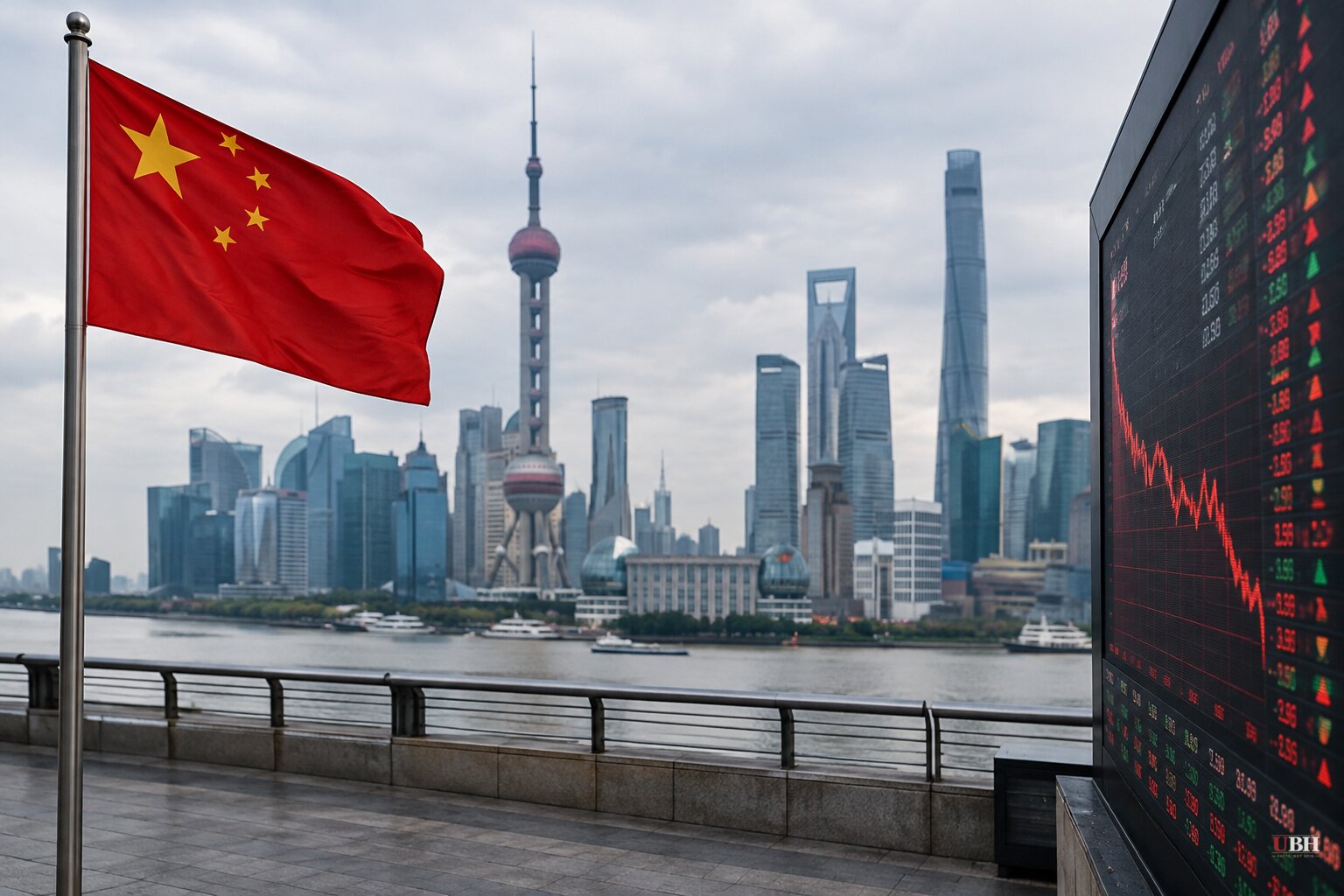
China's economy lost more ground in October. Retail sales, industrial output and investment all came in below what economists polled by Reuters expected, according to National Bureau of Statistics figures released Monday in Beijing.
The numbers:
- Retail sales rose 0.4% from a year earlier. Economists expected 0.8%. September's reading was 1.1%.
- Industrial output grew 4.8%, against a forecast of 5.3% and 5.5% in September.
- Fixed-asset investment fell 8.1% in the first ten months of the year. That is wider than the 7.2% drop through September and worse than the 7.0% decline economists predicted.
Consumers are not coming back
The retail number is the ugly one. October included the week-long National Day holiday, which normally lifts travel and shopping. It still produced growth of less than half a percent.
The property downturn is now in its fifth year, and it keeps eating into household wealth. Chinese families are saving rather than spending. New bank loans also shrank in October for the third time this year, a sign that credit demand is weak.
The jobs picture is mixed. The overall urban unemployment rate ticked down to 5.1%. The jobless rate for 16-to-24-year-olds, excluding students, was 18% in September, near the highest level in a year. October's youth figure had not been published in the data reviewed.
Exports are doing the heavy lifting
Factories are still producing, and that is largely because foreign customers are still buying. Alicia Garcia-Herrero, senior research fellow at the Brussels think tank Bruegel, put it this way: "China's growth is already export-dependent because domestic demand remains weak."
She argues that restricting rare earths or flooding markets "accelerates decoupling, invites retaliation, and does nothing to fix the underlying domestic imbalance." Tsai Ming-fang, a professor of industrial economics at Tamkang University in Taiwan, said that "without the economic clout to back it up, economic coercion is nothing but coercion."
The export push is already drawing a response. After Quad foreign ministers met in Atlanta, Secretary of State Marco Rubio said on Oct. 31 that the grouping is not anti-China. He added that problematic behavior is "coming repetitively from one country," which "is going to be obvious to everybody."
Beijing's headline numbers look better
The official picture is not uniformly bleak, and Beijing's case rests on that. China reported third-quarter GDP growth of 4.5% on Oct. 19, which beat forecasts and keeps its annual growth target of 4.5% to 5% within reach, according to the statistics bureau release.
Official housing data for October also showed narrower year-on-year price declines in major cities. That points to some stabilization after targeted easing measures.
Outside analysts are skeptical of the headline growth rate. Logan Wright, a partner at Rhodium Group and author of the new book Broken China, is among those who argue the real growth rate is far lower than the official figures suggest. He made the case on a Brookings podcast hosted by Jon Czin. Mary Gallagher, a Brookings nonresident senior fellow, joined him to discuss the slowdown.
There is no independent audit of the official GDP figure. That is the problem with taking a 4.5% print at face value when retail sales, investment and credit all point the other direction.
Property is still the drag
Real estate investment fell 20.6% in the first three quarters, according to the statistics bureau figures cited by Epoch Times. That is the single largest weight on total investment. Until housing stops shrinking, families have little reason to loosen their purse strings.
For Western governments, the combination of weak Chinese demand and strong Chinese manufacturing is the issue. A country that cannot sell to its own people sells more abroad. Garcia-Herrero said the Quad's careful wording on China "preserves flexibility ahead of the expected Trump-Xi meeting" while still signaling coordinated pushback on overcapacity and export controls.
What comes next
The 49th ASEAN Summit opens in Manila on Nov. 16 and runs through Nov. 18. Rubio has said Quad leaders will likely meet there as well.
Chinese exports to ASEAN have surged. Whether the October slump in domestic demand pushes Beijing to ship even more abroad, or to finally try to stimulate its own consumers, is the open question those talks will bring to the surface.
Sources used for this briefing
6 links from 6 independent newsrooms (syndicated copies of the same report count once)
These are the sources it draws on, linked so you can verify.


