
Unbiased headlines. Facts, not spin.
Every story is an unbiased news briefing written from 110+ sources across the spectrum — sources linked so you can verify it yourself.
 defense
Major Story (7/10)
June 28, 2026 at 10:53 AM
defense
Major Story (7/10)
June 28, 2026 at 10:53 AM
China's LineShine Supercomputer Takes the World's Top Spot, Built Entirely Without U.S. Chips
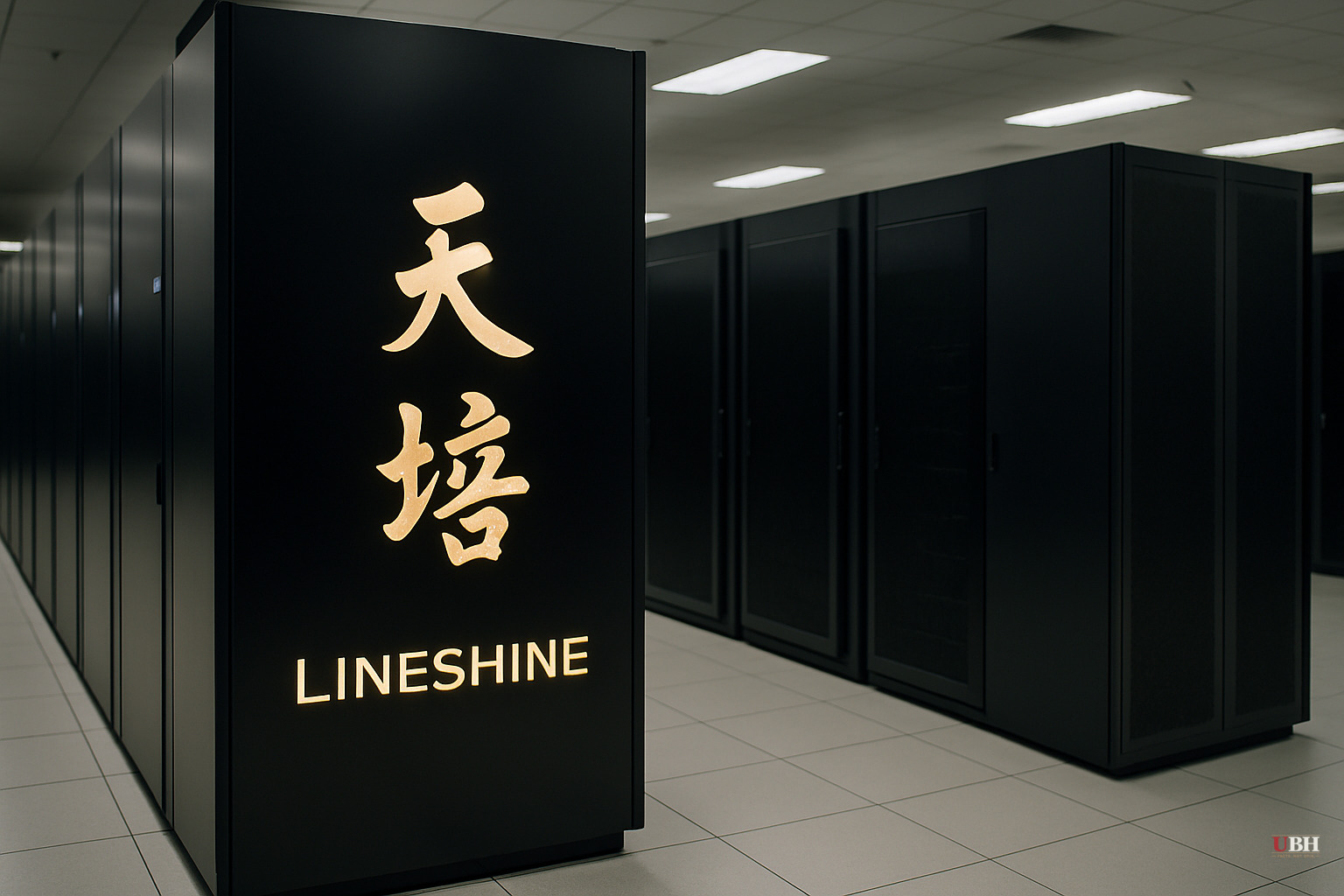
Since this outlet's prior reporting on China's technology ambitions across AI, clean energy, and space, the hardware competition has now produced a concrete, measurable result: China holds the world's fastest supercomputer as of the current TOP500 ranking cycle.
What LineShine Is
LineShine is installed at the National Supercomputing Center in Shenzhen. According to Wired, it delivers 2,198 exaflops of processing power, meaning it can execute more than 2 quintillion operations per second. That beats the previous top system, the U.S.-built El Capitan at Lawrence Livermore National Laboratory in California, by more than 20 percent. El Capitan had held the top spot since 2024.
The system draws approximately 42.2 megawatts of power. For context, that is substantial but not unusual for a machine of this scale.
The TOP500 ranking has tracked the world's most powerful supercomputers every six months since 1993, using standardized benchmarks for both theoretical speed and real-world performance. The list has historically been dominated by U.S.-developed systems. China's return to the top ends roughly a decade out of first place.
The Architecture Is the Actual News
LineShine's performance numbers are significant. Its architecture is the bigger story.
Most cutting-edge supercomputers, including El Capitan, rely heavily on graphics processing units. GPUs are the workhorses of modern high-performance and AI computing, and Nvidia has dominated that market. The U.S. government spent years restricting Nvidia's most advanced chips from reaching China precisely because of their military and scientific computing applications.
LineShine uses no GPUs at all. It runs entirely on CPUs, the LX2 processor built on China's domestic LingKun platform. According to Wired, the system is composed of roughly 45,000 LX2 processors, each with 304 cores running at a clock speed of 1.55 GHz. Nodes are connected via a proprietary high-speed network called LingQi. The operating system is Kylin OS, a Linux-based platform widely used across China's government and scientific infrastructure.
Every component, from silicon to software, is Chinese-made. This demonstrates how China pursued an alternative route rather than relying on components the U.S. sought to restrict.
What This Says About the Export Control Strategy
Washington's approach under both the Trump and Biden administrations was to cut China off from advanced semiconductors, betting that without access to leading-edge chips, China's computing ambitions would stall. The logic was sound in theory: modern supercomputing has been almost synonymous with GPU clusters, and the U.S. controlled the most advanced GPU supply chain.
LineShine shows China pursued a different route rather than waiting. Instead of trying to smuggle or work around Nvidia restrictions, Chinese engineers built a CPU-based architecture capable of reaching world-record performance. CPU-based supercomputing at this scale is genuinely harder to pull off than GPU clustering, which is why the field largely moved away from it.
The strongest counterargument deserves weight: raw benchmark performance on the TOP500 list does not automatically translate to AI training capability or weapons system superiority. El Capitan was optimized for nuclear stockpile stewardship and complex physics simulations. It is possible, even likely, that LineShine's CPU-only architecture performs differently on AI workloads compared to GPU-heavy systems. The benchmarks measure what they measure, and military or AI utility is a separate question.
That distinction is important. It should be stated clearly. It does not, however, settle the underlying question. A country that can build the world's fastest supercomputer from scratch, using none of the components its adversary tried to deny it, has demonstrated a domestic semiconductor and systems engineering capability that did not publicly exist at this level before. The export controls did not stop this machine from being built. Whether they slowed it down, by how much, and at what cost to China remains genuinely unknown.
The Competitive Position Right Now
The United States no longer holds the top position in the TOP500 ranking. That is a measurable, documented fact, not a projection.
The U.S. is not standing still. El Capitan remains an extraordinarily capable system, and U.S. labs continue development on next-generation machines. But the assumption that America's lead in supercomputing was structurally secure, underwritten by chip export controls, now has a specific, named counterexample sitting in Shenzhen drawing 42.2 megawatts.
The unresolved question that matters most: whether the LX2 processor's 304-core architecture scales effectively for AI and defense workloads, or whether LineShine's record is specific to the benchmarks that measured it. That answer will shape how U.S. policymakers and defense planners assess the actual gap, not just the headline ranking.
Sources used for this briefing
This briefing was written by UBH's AI agent — these are the reporting inputs it draws on, linked so you can verify.


