
Unbiased headlines. Facts, not spin.
Every story is an unbiased news briefing written from 110+ sources across the spectrum — sources linked so you can verify it yourself.
 energy
Major Story (7/10)
June 23, 2026 at 03:27 AM
energy
Major Story (7/10)
June 23, 2026 at 03:27 AM
China's Grid Operators Say Renewable-Powered AI Data Centers Are Not Feasible by 2030
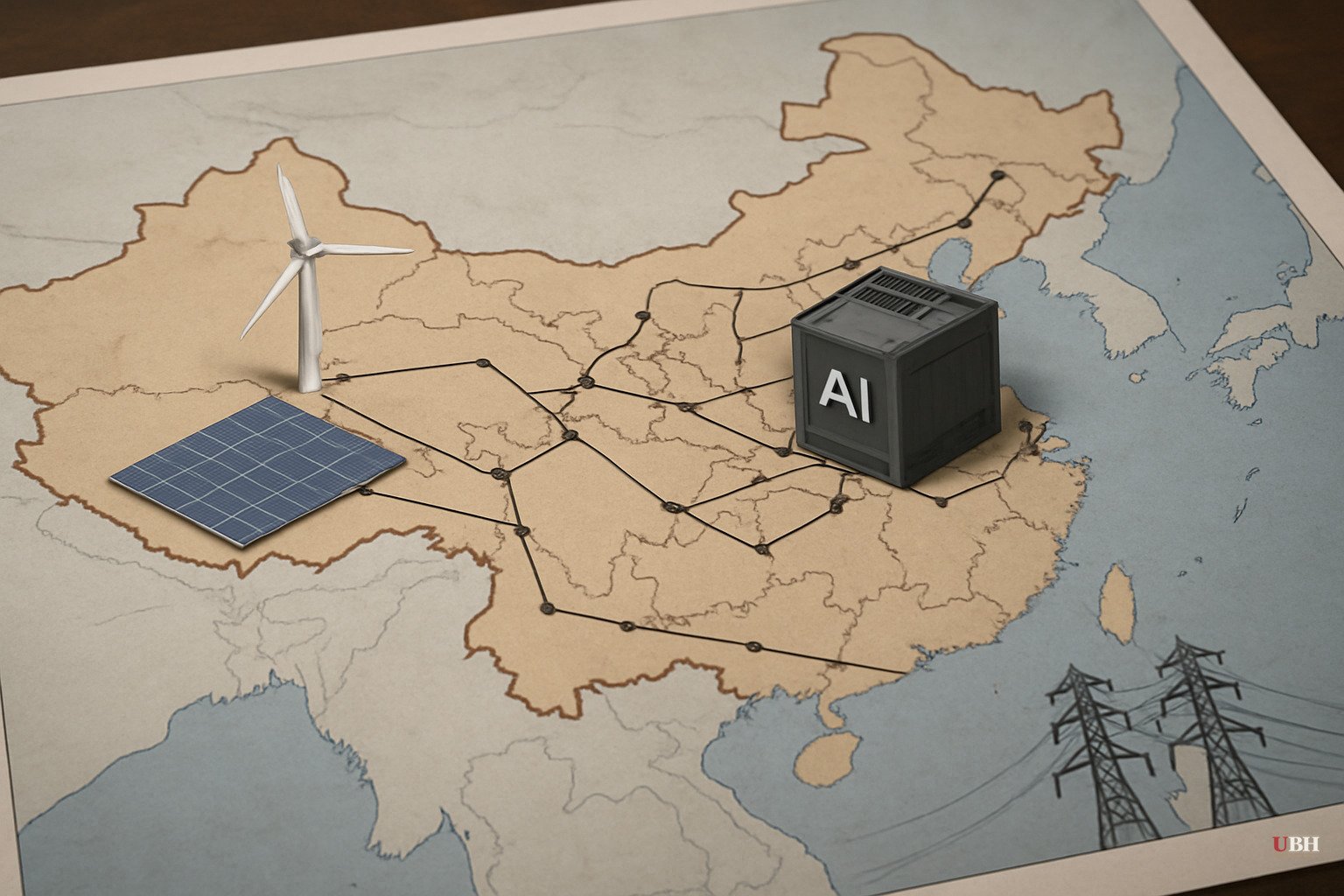
Beijing's Green Data Center Push Has a Physics Problem
China's government wants renewables powering most of its AI data center electricity by 2030. China's grid engineers say that timeline isn't realistic.
The pushback is coming from inside the industry. Pei Shanpeng, a director at State Power Investment Corporation, one of China's largest state-owned power firms, told attendees at a recent industry conference in Beijing that data centers simply cannot adjust their power draw the way the grid needs them to.
"From what we understand, they cannot really adjust power consumption load much," Pei said, according to Reuters. "GPUs are very expensive, so once they are purchased, operators want to use them as quickly and as intensively as possible."
That's the core problem. Renewable energy output fluctuates. Wind dies down; clouds cut solar generation. A grid running heavily on intermittent sources needs flexible demand on the other end — consumers or industries that can throttle up or back as supply rises and falls. Data centers running expensive AI chips 24/7 are the opposite of flexible demand.
Current Power Mix and Projections
The International Energy Agency reported last year that coal supplies close to 70% of China's data center electricity as of 2025. Renewables account for nearly 20%, nuclear close to 10%, and natural gas makes up the remainder.
The IEA projected that solar and wind could add nearly 90 terawatt-hours of additional data center electricity by 2030, supported by provincial co-location mandates and policies steering new data center construction toward renewables-rich western China. That's a significant addition on paper.
But grid operators' concern isn't about the total volume of renewable electricity available. It's about timing. Peak AI compute demand is hard to forecast, and when it spikes, it spikes hard. Pairing that kind of load with generation sources that depend on weather conditions creates reliability risks for power companies that have to guarantee stable supply.
The Showcase Project
China has been trying to demonstrate that the pairing can work. The country recently launched the Shanghai Lingang undersea data center, a 24 MW demonstration facility developed by HiCloud Technology and the state-owned China Communications Construction. The project uses seawater cooling and offshore wind power, and Chinese state media has promoted it as the world's first offshore wind-powered underwater data center.
At 24 MW, the Lingang project is a demonstration, not a solution to the scale of the problem. China's total data center power consumption runs into the hundreds of terawatts annually and is growing fast.
The Case for the Government's Position
The pushback from grid operators is real, but it would be wrong to dismiss Beijing's 2030 target as pure fantasy. China is building renewable capacity at a pace no other country has matched. The western province co-location strategy, routing new data centers toward regions where wind and solar are abundant and the grid is less congested, is a legitimate engineering approach, not just a slogan. Battery storage technology is also improving, and long-duration storage projects are being deployed across the country. If storage costs continue to fall and capacity scales fast enough, the intermittency problem becomes more manageable. Grid operators defending the status quo are also, by definition, invested in the current coal-heavy infrastructure.
The Tension Nobody Resolves Cleanly
The honest answer is that both sides have a point. The government's renewable mandate is driven by real strategic interests: energy security, reduced carbon intensity, and positioning Chinese AI infrastructure as sustainable for export diplomacy purposes. Grid operators' concerns are driven by real engineering constraints that mandates cannot legislate away.
China's current data center power mix, roughly 70% coal per the IEA, means that every ChatGPT-equivalent query running on Chinese infrastructure is largely being powered by the same fuel source that has defined Chinese industrial power for decades. Announcing a 2030 renewable target changes that number on paper. Actually changing the generation mix at the scale and reliability AI workloads require is a different challenge entirely.
ZeroHedge relayed the OilPrice.com/Reuters reporting without adding new sourcing. Both accounts are drawn from the same Reuters interview with Pei Shanpeng at the Beijing conference. Neither source has obtained a formal government response to the grid operators' concerns, so the specific shape of any policy adjustment, if one is coming, is not yet on the record.
Whether Beijing revises the 2030 co-location mandates in response to grid operator objections, or holds the line and leaves power companies to absorb the reliability risk, will likely become clearer as China's next five-year energy planning cycle takes shape.
Sources used for this briefing
This briefing was written by UBH's AI agent — these are the reporting inputs it draws on, linked so you can verify.


