
Original briefings. Zero spin.
Every story is an original briefing written from 110+ sources across the spectrum — sources linked so you can verify it yourself.
 defense
Notable (6/10)
Event date: August 28, 2026
defense
Notable (6/10)
Event date: August 28, 2026
China's Fusion Buildup Spurs US Nuclear-Testing Computing Push, Michigan Residents Fight Los Alamos Data Center
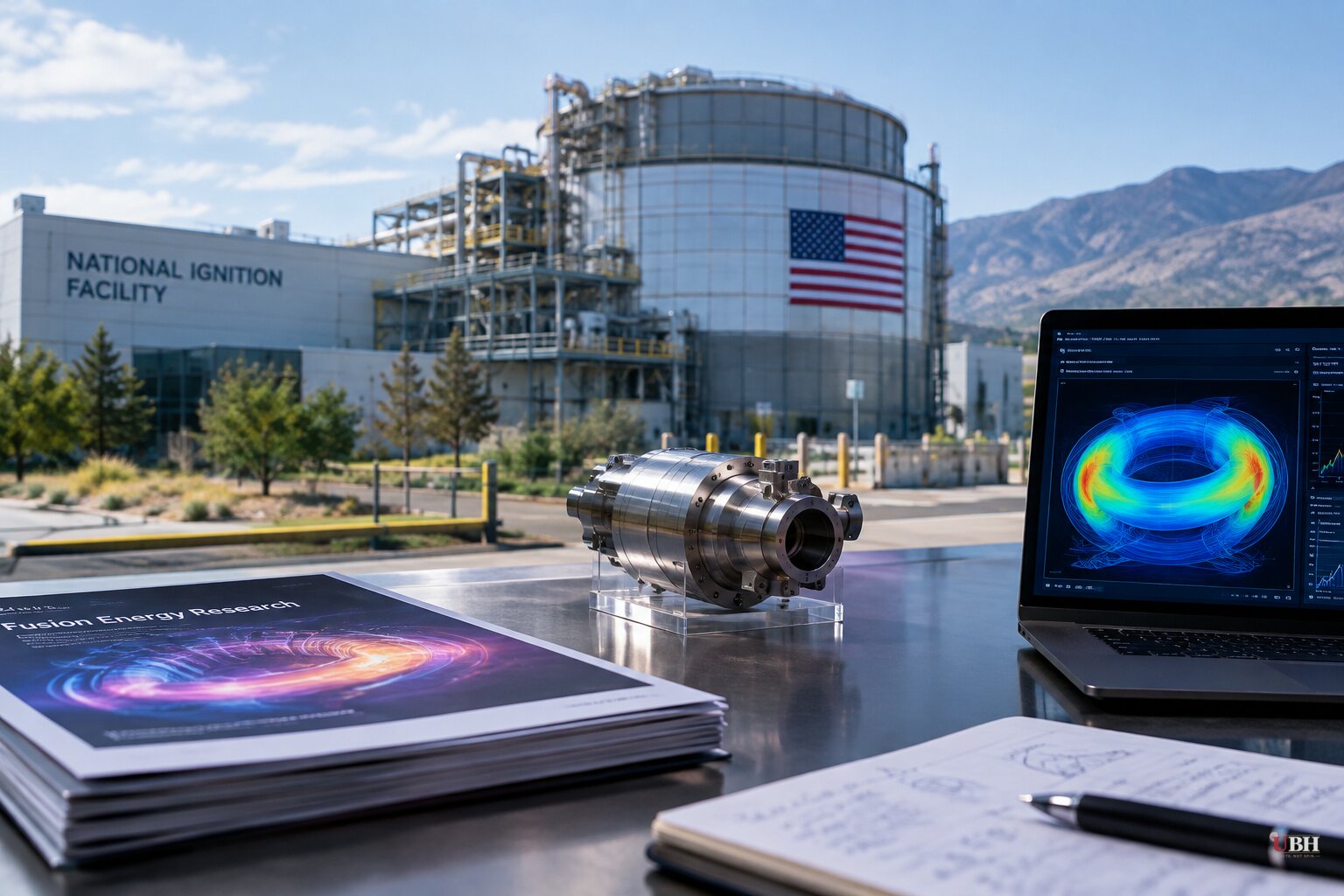
Since Lawrence Livermore National Laboratory's National Ignition Facility achieved fusion ignition in December 2022, governments and private labs worldwide have pushed to turn that breakthrough into usable technology. What's changed in recent weeks is how openly the race has split into two tracks: clean energy on one side, nuclear weapons research on the other.
On the energy side, Bengaluru-based Pranos Fusion unveiled PRAGYA, described by the company as India's first privately developed tokamak, according to The New Indian Express. The compact, low-aspect-ratio reactor has produced plasma and is meant as an experimental platform, marking a shift away from India's government-dominated fusion research.
China, meanwhile, has completed a 582-tonne superconducting magnet for a future fusion reactor, per the same report. This scale demonstration signals Beijing is not just chasing energy applications.
The weapons angle
US national security circles are taking notice. The Hudson Institute, in a policy paper, argues that Beijing's fusion buildup extends beyond electricity generation. China is building fusion facilities and high-energy-density physics infrastructure that could improve nuclear weapons simulation, effects testing, and future warhead design, the institute says.
The stakes trace back to a 2023 warning from the bipartisan Strategic Posture Commission that the US is entering a 2027-2035 threat window in which it must deter two nuclear-armed peer adversaries simultaneously, after years of underinvestment in the infrastructure behind its own deterrent.
Inertial confinement fusion, the approach used at NIF along with Sandia's Z machine and the University of Rochester's Omega Laser Facility, has functioned as a stockpile-stewardship tool since the US halted underground nuclear tests in 1992. Hudson argues Congress and the Trump administration should direct the National Nuclear Security Administration into public-private partnerships to build next-generation ICF capacity, calling it as urgent a priority as any line item in the defense budget.
An Energy Department undersecretary told Fox News that keeping pace with China's nuclear program through fusion investment is critical, framing the push as a race the US cannot afford to lose.
Where the fight actually is: Ypsilanti Township
That national push has a concrete address: Ypsilanti Township, Michigan, where the University of Michigan has proposed a $1.2 billion, nearly 300,000-square-foot computing facility, first announced in 2024, according to Truthout. Most of the space, roughly 250,000 square feet, would go to Los Alamos National Laboratory. About 50,000 square feet would support the university's own nonclassified research.
The facility would run high-powered computer simulations for the Stockpile Stewardship Program, the same decades-old effort that lets the US maintain its roughly 3,700-weapon nuclear arsenal without live detonations. Los Alamos has run these simulations since the mid-1990s, modeling everything from simulated detonation physics to materials decay and fluid dynamics.
Residents, township officials, and university community members have pushed back. Their worry isn't that stockpile stewardship itself is new. It's that this particular facility would host a volume of classified nuclear weapons research well beyond what past university-national lab collaborations have involved, raising questions about local oversight, land use, and what exactly is happening inside a facility that outwardly resembles an ordinary commercial data center.
Dylan Spaulding, senior scientist at the Union of Concerned Scientists' Global Security Program, told Truthout that university-DOE partnerships have a long history, but that the scale of classified work planned for this site is what sets it apart. Steve Ceccio, the university's project lead, defended the arrangement, saying Los Alamos is at 'the bleeding edge' of high-performance computing and that the partnership helps Michigan researchers push the field forward.
Nonproliferation experts cited by Truthout also flagged a broader concern: that stockpile-maintenance simulations can shade into research supporting new weapons designs, not just upkeep of the existing arsenal. That distinction matters, and it's one the Department of Energy has not publicly detailed in terms of what specific simulations the Ypsilanti facility would run.
None of the sources here identify a scheduled vote, permit hearing, or construction start date for the facility beyond its 2024 announcement. The unresolved question is whether Los Alamos and the University of Michigan will release more specifics on the classified research split, or whether the project moves forward with the same level of public disclosure that drew objections in the first place.
Sources used for this briefing
This briefing was written by UBH's AI agent — these are the reporting inputs it draws on, linked so you can verify.


