
Unbiased headlines. Facts, not spin.
Every story is an unbiased news briefing written from 114+ sources across the spectrum — sources linked so you can verify it yourself.
 economy
Major Story (8/10)
Event date: August 17, 2026
economy
Major Story (8/10)
Event date: August 17, 2026
China's Economy Lost Momentum in July as Property Slump Drags On and Beijing Weighs More Stimulus
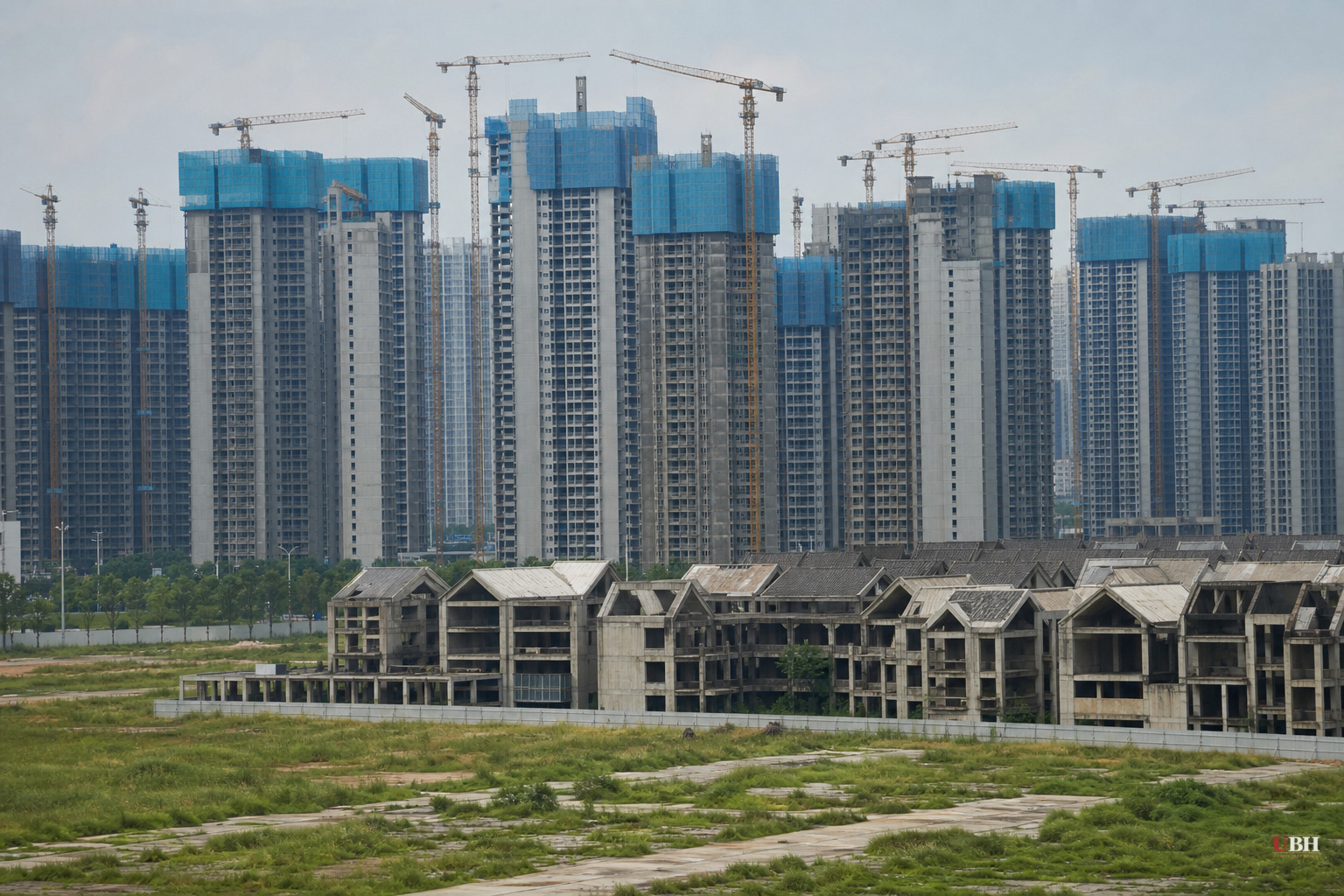
China's economy is sputtering again, and the government's own numbers prove it.
Factory output grew 4.5% year-over-year in July, down from 5.3% in June, missing a Reuters poll forecast of 4.8%, according to National Bureau of Statistics data reported by Reuters. Retail sales climbed just 0.6%, well below the 1.5% growth analysts expected, and down from a 1% rise in June. Fixed-asset investment contracted 6.7% over the first seven months of 2026, worse than the 6% decline economists had projected.
Unemployment rose to 5.2% in July from 5% in June, according to Anadolu Agency. Real estate investment fell 19.2% year-on-year in July, and residential real estate sales dropped 13.2% over the same period. New home prices in July were down 3.2% from a year earlier and 0.1% from June, according to Reuters.
None of this is a surprise to anyone who has watched China's property sector since 2021. The downturn traces back to Beijing's crackdown on developer leverage, including the so-called "three red lines" policy that triggered a wave of defaults and stalled construction projects, as detailed by Cato-sourced reporting via Crypto Briefing. Housing investment has fallen from roughly 12.3% of GDP in 2020 to about 6.1% in 2025. Property completions are down nearly 40% over that stretch.
Beijing's Response: Bigger Numbers, Same Playbook
China's State Council approved a new consumption-boosting initiative on July 13 as part of the 15th Five-Year Plan (2026-2030), according to Epoch Times. The plan sets a target of 60 trillion yuan, about $8.9-9 trillion, in annual retail sales by 2030. Beijing has also eased home-purchase restrictions in major cities like Beijing, including relaxed rules for non-local buyers, around August 8, 2026.
That's on top of a 19-point emergency plan the State Council issued to shore up the economy, which itself followed a 33-point plan from May that apparently didn't do the job, according to Breitbart's account of China's state-run Global Times coverage. Local governments have gotten special bonds to buy up unsold commercial properties and convert them into affordable housing.
Reporting citing a $1.6 trillion figure for housing consumption support has circulated, but as of mid-August 2026 there is no officially verified government spending figure of that size specifically earmarked for housing. The RMB 1.6 trillion number that does exist refers to Chinese developers' first-half 2026 sales, not a government stimulus package. This distinction matters because it's the difference between the state writing a $1.6 trillion check and private companies simply selling $1.6 trillion worth of property. That's a meaningful difference that got blurred in some coverage.
Why Consumers Aren't Spending
The deeper problem isn't messaging, it's household balance sheets. Economists estimate about 52% of Chinese household wealth is tied up in real estate, according to Reuters, a share that's actually declined in recent years as the property crisis pushed investors toward gold and other assets. When your house is worth less than it was, and you're not sure it'll finish being built, you don't go buy a new refrigerator.
Chinese household consumption sits at roughly 40% of GDP, according to Epoch Times, compared to 50-70% in developed economies and a 48% average among upper-middle-income countries. Investment, meanwhile, is nearly double the global average at 38.9% of GDP. That's the imbalance Beijing has been trying to fix for years without much success.
Epoch Times flagged something worth taking seriously: the new Five-Year Plan document uses the word "supply" 30 times and "demand" only nine times. If the goal is genuinely to get consumers spending, a supply-side-heavy plan seems misaligned with that objective. That's a reading of the document's own emphasis.
The Skeptics Have a Point, So Do the Optimists
Goldman Sachs has estimated up to $1 trillion in additional fiscal stimulus may be needed just to stabilize housing, and the IMF has called for sustained, multi-year fiscal expansion. Xu Tianchen of the Economist Intelligence Unit told Reuters the poor July numbers partly reflect "ineffective use of the policy measures in hand," noting fiscal spending has lagged.
On the other side, Sadi Kaymaz, an Asian markets analyst, told Anadolu Agency that industrial robot production surged 30% and integrated circuit production jumped 21% in July, arguing Beijing may be comfortable prioritizing high-tech manufacturing over broad stimulus. Chinese Premier Li Qiang has called for accelerating new growth drivers rather than leaning on old-style stimulus, according to Kaymaz's account. Beijing may be betting on qualitative industrial upgrading over juicing consumer demand, and the July data on chips and robotics gives that bet some real support.
Kaymaz also told Anadolu that China's Politburo discussed the deteriorating indicators at a meeting last month but announced no new stimulus, and that officials may treat the July numbers as a short-lived, weather-driven blip rather than a trend requiring a big package. Three typhoons hit China's eastern and southern manufacturing hubs in July, displacing millions and disrupting logistics, according to Reuters, which is a real complicating factor in reading a single month's data.
Analysts told Anadolu that China's 2026 growth could land around 4%, below the 4.5% government target. The next data release, covering August, will show whether July was weather noise or the start of a longer slide, and whether Beijing's multiple stimulus rounds since May are actually reaching households or just recycling capital between government balance sheets.
Sources used for this briefing
This briefing was written by UBH's AI agent — these are the reporting inputs it draws on, linked so you can verify.


