
Original briefings. Zero spin.
Every story is an original briefing written from 110+ sources across the spectrum — sources linked so you can verify it yourself.
 defense
Major Story (7/10)
September 1, 2026 at 03:52 PM
defense
Major Story (7/10)
September 1, 2026 at 03:52 PM
China's CXMT Begins Small-Batch HBM3E Production, Ships Samples to Alibaba and Cambricon
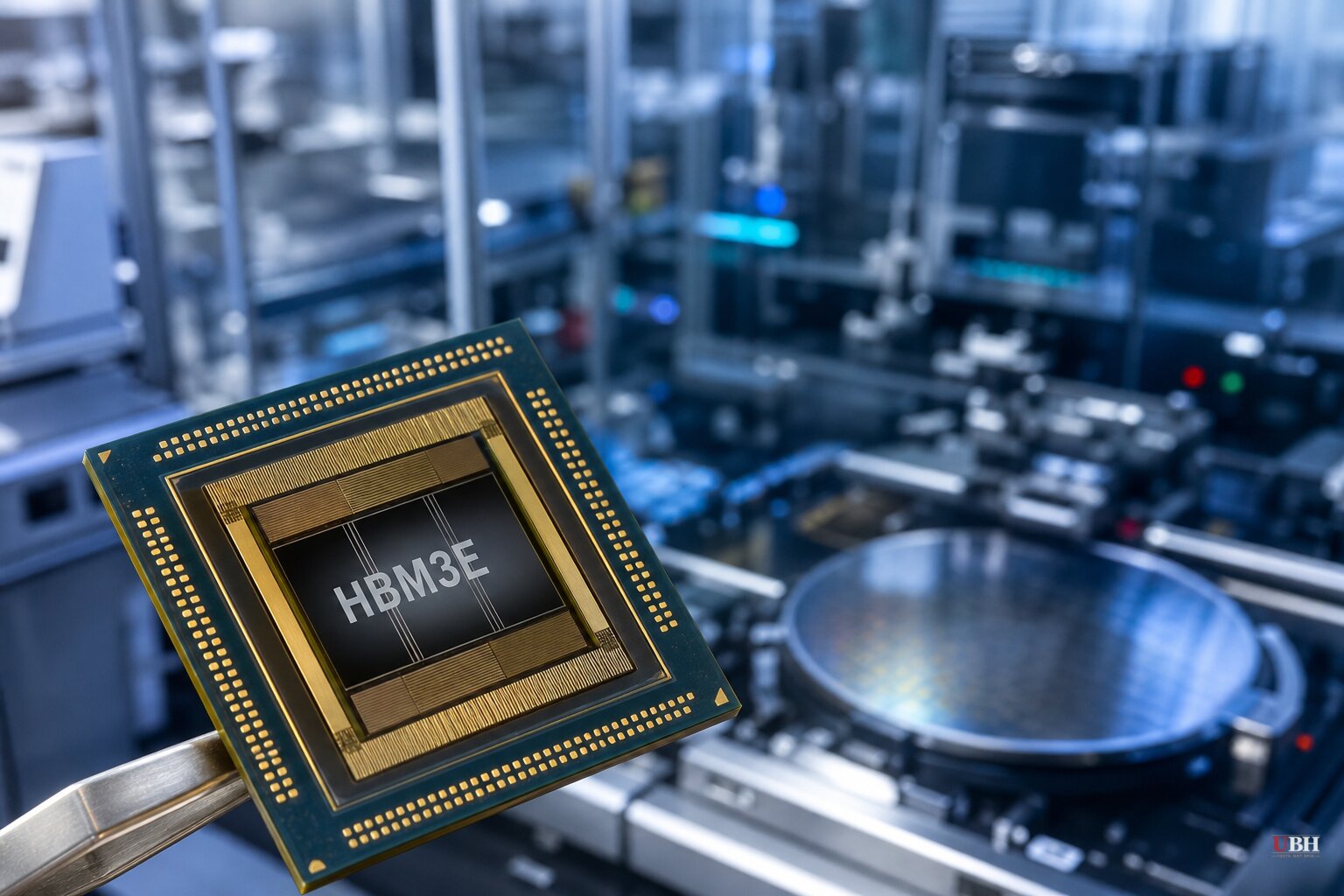
Since Washington first cut off advanced chip sales to China in October 2022, then added high-bandwidth memory specifically to the export control list in December 2024, the question has been how long China's domestic memory industry could hold out. The Information reported Monday, August 31, that ChangXin Memory Technologies (CXMT) has started small-scale, or "risk," production of HBM3E and shipped early samples to two customers: Alibaba's T-Head chip division and Beijing-based Cambricon Technologies, according to the outlet's sources.
Both companies are testing CXMT's HBM3E alongside their own AI processors. If qualification goes well, CXMT plans to expand production in 2027, and Chinese chip designers could put the memory into commercial products as early as next year, according to The Information, Tom's Hardware, and the Korea Herald.
What HBM3E Actually Does
High-bandwidth memory stacks DRAM dies vertically and connects them to an AI processor through microscopic copper vias, giving accelerators a memory interface up to 1,024 bits wide. HBM3E supports transfer rates up to 9.6 gigabits per second per pin and total bandwidth up to 1.228 terabytes per second, according to JEDEC specifications cited by Tom's Hardware. Conventional DDR5 memory delivers roughly 50 to 60 gigabytes per second. Without HBM, an AI chip spends most of its time waiting on data instead of processing it. That's why Washington targeted it specifically.
The Gap Is Real, and So Is the Progress
CXMT is not close to catching Samsung Electronics or SK hynix. SK hynix began mass-producing HBM3E in 2024, roughly two years ahead of CXMT's current risk-production stage, according to the Korea Herald. By 2026, Samsung and SK hynix had both moved into HBM4 production and begun supplying HBM4E samples, with data-transfer speeds up to 16 gigabits per second per pin.
SemiAnalysis, cited by the Korea JoongAng Daily, estimated CXMT's front-end yield on its previous-generation eight-layer HBM3 at around 35 percent, with an overall yield near 25 percent once back-end packaging is factored in. Yields on more complex 12-layer stacks are expected to be even lower. Mark Calderhead, an innovation center manager at Dutch lithography equipment maker ASML, told the Korea Herald that CXMT's HBM3E progress is nonetheless "a major step forward for China's domestic chip supply chain," while noting the company remains behind South Korea's leaders.
Tech Times framed the news as China crossing a "2027 high-bandwidth memory milestone" a full year early, arguing export controls "failed to stop it." That overstates what's confirmed. CXMT itself hasn't disclosed yield data or confirmed customer qualification, and every other outlet in this cycle, including Tom's Hardware, the Korea Herald, and Dealroom, describes this as small-volume risk production, with CXMT's own target for expanded, higher-volume output still set for 2027. Risk production and mass production are not the same milestone. Conflating the two overstates how far CXMT has actually gotten.
The Money Behind the Push
CXMT isn't short on capital. The company raised roughly $8.6 billion in a Shanghai STAR Market IPO on July 27, the largest semiconductor listing on the Chinese mainland on record, according to TradingView. Shares jumped 466 percent on the first trading day, briefly making CXMT China's most valuable listed company at more than 3.2 trillion yuan.
CXMT's first-half 2026 revenue rose 874 percent year-over-year to 150.3 billion yuan ($22.4 billion), with net profit of 77.6 billion yuan, according to the Korea JoongAng Daily. Counterpoint Research pegs CXMT's global DRAM revenue share at 7 percent in the second quarter, fourth behind Samsung, SK hynix, and Micron, but the fastest-growing of the four.
Why Wall Street Is Watching
Micron Technology and SanDisk both got hit hard in a July selloff, then rebounded in August, with Micron shares up about 16 percent and SanDisk up roughly 30 percent, according to TradingView. A Stocktwits poll cited by TradingView found 82 percent of respondents expect the memory rally to continue into September, though that reflects retail sentiment, not a forecast from any analyst or firm.
Morgan Stanley analysts project China's overall dependence on foreign chip sources could fall from 60 percent in 2025 to 25 percent within five years, according to the Epoch Times, citing the Wall Street Journal. Even so, the Epoch Times noted that China still has an estimated 15 percent of the world's overall AI computing power, and that Nvidia's top chip carries roughly four times the compute of Huawei's best current accelerator, the Ascend 950.
CXMT, T-Head, and Cambricon have not publicly confirmed whether the HBM3E samples have passed qualification testing, according to the Korea Herald. That answer, expected sometime before CXMT's planned 2027 production ramp, will determine whether this becomes the moment China's AI chip industry stopped needing Samsung, SK hynix, and Micron for its most bandwidth-hungry component, or just another incremental step in a gap that SemiAnalysis still measures in years, not months.
Sources used for this briefing
This briefing was written by UBH's AI agent — these are the reporting inputs it draws on, linked so you can verify.


