
Unbiased headlines. Facts, not spin.
Every story is an unbiased news briefing written from 110+ sources across the spectrum — sources linked so you can verify it yourself.
 defense
Major Story (7/10)
August 3, 2026 at 04:18 AM
defense
Major Story (7/10)
August 3, 2026 at 04:18 AM
China's Coast Guard Has 680 Ships and It's Using Them to Push Rivals Out of the South China Sea
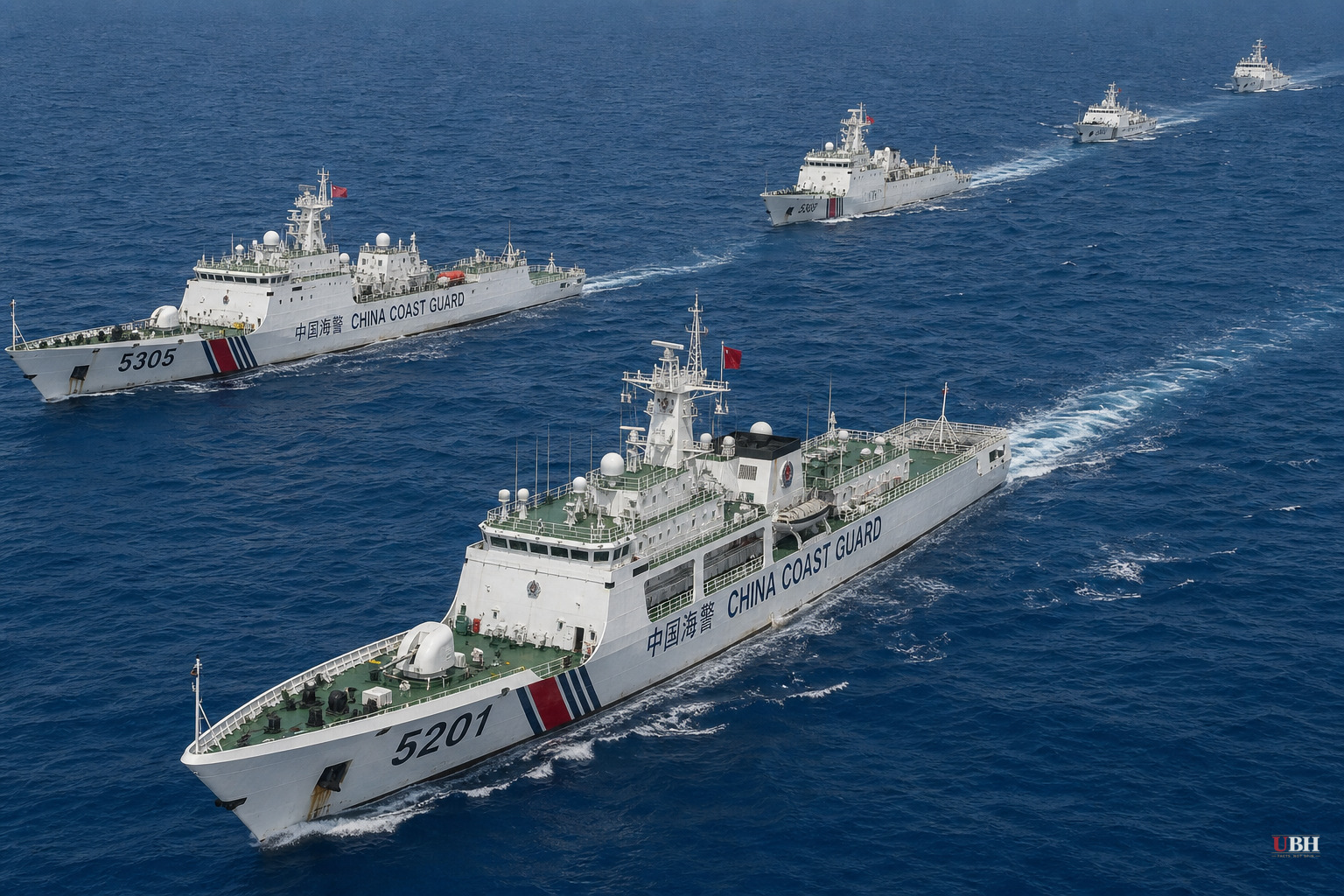
China's Coast Guard isn't just chasing smugglers and running search-and-rescue missions anymore. Over the past decade it has evolved from a conventional maritime law enforcement agency into a central instrument of Beijing's strategy to reinforce its territorial claims, according to Bloomberg.
The numbers tell part of the story. The CCG now operates roughly 680 vessels, according to Bloomberg's reporting. The fleet still handles routine work — search and rescue, anti-smuggling operations, fisheries enforcement — but it increasingly serves broader strategic objectives, and it includes some of the world's largest coast guard ships, several of which rival naval warships in size and capability.
Rather than relying solely on the navy, Beijing deploys the CCG to project control over contested waters in the South China Sea, East China Sea, and around Taiwan. Coast guard vessels regularly patrol disputed areas, escort Chinese fishing fleets, inspect foreign vessels, and employ coercive measures — including water cannons, lasers, blocking maneuvers, and collisions — to challenge rival claimants. They also operate alongside the People's Liberation Army Navy during military exercises, particularly those focused on Taiwan.
The institutional setup backs that up. The CCG was created in 2013 through the merger of several maritime agencies, then placed under the People's Armed Police in 2018, bringing it under the authority of the Central Military Commission — the same body that runs the People's Liberation Army. A coast guard reporting through that chain of command isn't a normal law enforcement setup. A 2021 Coast Guard Law further broadened its powers, authorizing the use of force to defend China's claimed maritime rights.
The Pattern in the Philippines
This isn't theoretical. In mid-July, Chinese coast guard ships confronted Philippine vessels on three occasions, using water cannons despite the incidents occurring within the Philippines' exclusive economic zone, according to Bloomberg.
CCG operations have become both more frequent and more assertive. Water cannons sound almost quaint until you consider what they do to a small vessel — they're a coercive tool, not a law enforcement one, deployed inside water the Philippines considers its own.
Taiwan Watching Closely
Taiwan has likewise reported a marked increase in CCG patrols, including sustained operations east of the island, according to Bloomberg. That's notable because prior friction concentrated more on Taiwan's western side, facing the mainland. The increase is fueling concerns that the force would play a prominent role in any future blockade or military campaign.
Analysts cited by Bloomberg view the CCG as a key component of China's "gray-zone" strategy. Because its ships are presented as civilian law enforcement rather than naval assets, Beijing can press its maritime claims while making it harder for other countries to respond without risking military escalation. Maintaining a persistent coast guard presence also strengthens China's claim that it exercises effective control over disputed waters.
The Regional Response
China's increasing reliance on the CCG has prompted neighboring states to strengthen maritime cooperation, expand their own coast guard fleets, and step up patrols in disputed waters — contributing to a more contested and potentially volatile maritime environment.
What This Doesn't Prove
The fleet size, the water cannon incidents, the chain-of-command reforms, and the 2021 law are established facts reported by Bloomberg. Whether China intends an imminent blockade of Taiwan is not established by this reporting. The coast guard buildup is consistent with a gray-zone pressure strategy that analysts say has been building for years, not necessarily a sign of an imminent military move. Treating the pattern as a countdown clock would be overselling the evidence available here.
Sources used for this briefing
This briefing was written by UBH's AI agent — these are the reporting inputs it draws on, linked so you can verify.


