
Unbiased headlines. Facts, not spin.
Every story is an unbiased news briefing written from 110+ sources across the spectrum — sources linked so you can verify it yourself.
 energy
Major Story (7/10)
July 30, 2026 at 05:20 PM
energy
Major Story (7/10)
July 30, 2026 at 05:20 PM
China's Coal-Fired Power Dips Below 50% of Its Electricity Mix for the First Time
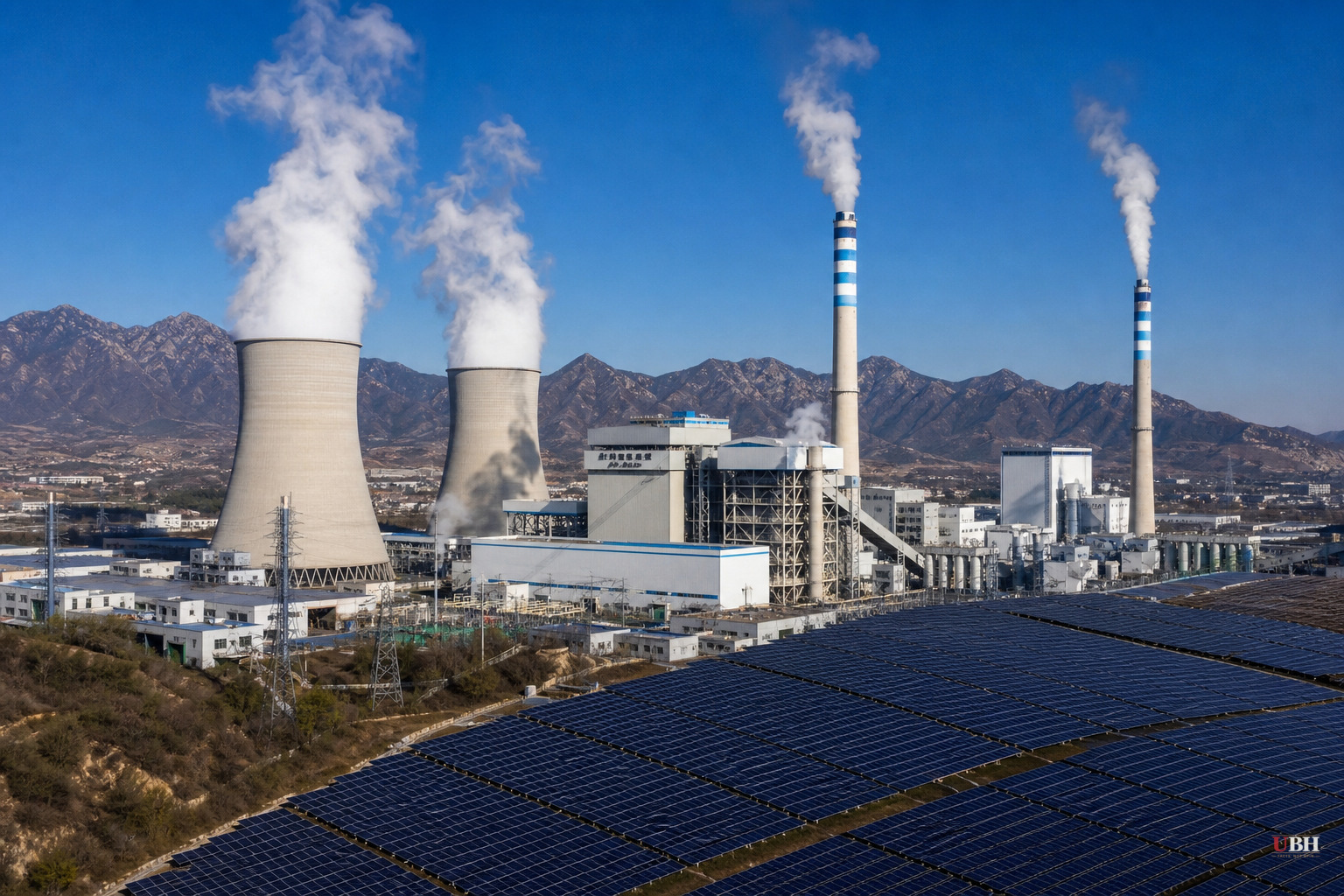
China's National Energy Administration announced Thursday that coal-fired power made up 49.7% of the country's electricity generation from January through June 2026, the first time that figure has fallen below 50%, according to Bloomberg and Anadolu Agency.
Coal-fired plants still generated 2.5 trillion kilowatt-hours in the first half of the year, according to the NEA. Total electricity demand keeps climbing, driven by high-tech manufacturing, EV charging, and data centers, per Bloomberg's reporting. Coal's share fell because everything else grew faster, not because Beijing burned less of it.
The numbers
Renewables supplied 41.2% of China's total electricity generation in the first half, according to Anadolu, citing NEA data. Wind and solar alone accounted for nearly a quarter of total output, Bloomberg reported. Combined wind and solar installed capacity hit 1.95 billion kilowatts by the end of June, up 16.8% from a year earlier, the NEA said.
Electricity generated from renewables rose about 9% year-on-year to nearly 2 trillion kilowatt-hours over the six months, according to Anadolu's report on the NEA data. Xing Yiteng, deputy director-general of the NEA's Department of Development and Planning, called it "a phased achievement resulting from the long-term replacement of fossil-fuel generation by non-fossil energy," per Bloomberg.
The catch: the grid can't keep up
China's grid is increasingly forcing renewable projects to curtail output because it can't absorb everything wind and solar farms are capable of producing.
Solar utilization fell to 91.4% in the first half, down from 94.3% a year earlier, according to Pan Huimin, deputy director of the NEA's renewable energy department, as reported by Bloomberg. Wind slipped to 90.9% from 93.5%. China is building clean power faster than it can wire it into the system, and some of that generation capacity is going to waste.
Beijing is throwing money at the bottleneck. Grid infrastructure spending rose 14% in the first half from a year earlier, and investment in energy storage jumped 74%, Bloomberg reported. Battery systems averaged 1,195 hours of operation in 2025, nearly double the 2023 level, according to the same NEA briefing.
Why coal isn't going anywhere soon
China remains the world's largest greenhouse gas emitter and burns more coal than the rest of the planet combined, according to Bloomberg. It's also the world's biggest producer of renewable energy. Both developments coexist, and this contradiction is central to understanding the actual transition underway.
Beijing has pledged to peak carbon dioxide emissions before 2030 and hit carbon neutrality before 2060, according to Anadolu. Crossing the 50% coal threshold gives Chinese officials a data point to point to. But absolute coal generation is still rising. If demand keeps growing at the current pace, coal's share could fall even as China burns more of it in tonnage terms, year after year.
There's a reasonable skeptic's case worth stating plainly. China has a track record of using symbolic thresholds for propaganda value while making incremental, not transformational, changes. A statistic like "coal fell below 50%" sounds like a green transition milestone, but it coexists with rising coal-fired output in absolute terms and a state grid too brittle to use the clean power already built. Anyone treating this as proof China is decarbonizing on pace with its stated 2030 emissions-peak goal is getting ahead of the data.
At the same time, the scale of China's renewable buildout is real and measurable. Combined wind and solar capacity climbing to 1.95 billion kilowatts, up 16.8% year-on-year, and a 74% jump in battery storage investment, is not propaganda. It's capital expenditure that shows up in NEA filings and independent reporting.
None of the three outlets covering this story disputed the NEA's underlying figures. Bloomberg and Anadolu both flagged the curtailment problem and rising coal tonnage as counterweights to the milestone framing. OilPrice.com's aggregation didn't add independent analysis beyond the headline figure.
The open question is whether China's grid investment can outpace its renewable buildout fast enough to stop wasting solar and wind capacity, and whether coal's absolute output starts falling, not just its share, before 2030.
Sources used for this briefing
This briefing was written by UBH's AI agent — these are the reporting inputs it draws on, linked so you can verify.


