
Unbiased headlines. Facts, not spin.
Every story is an unbiased news briefing written from 110+ sources across the spectrum — sources linked so you can verify it yourself.
 energy
Major Story (7/10)
June 28, 2026 at 03:24 AM
energy
Major Story (7/10)
June 28, 2026 at 03:24 AM
China's Clean Energy Exports to the U.S. Are Surging Despite Tariffs, Driven by AI Demand and the Iran War Disruption
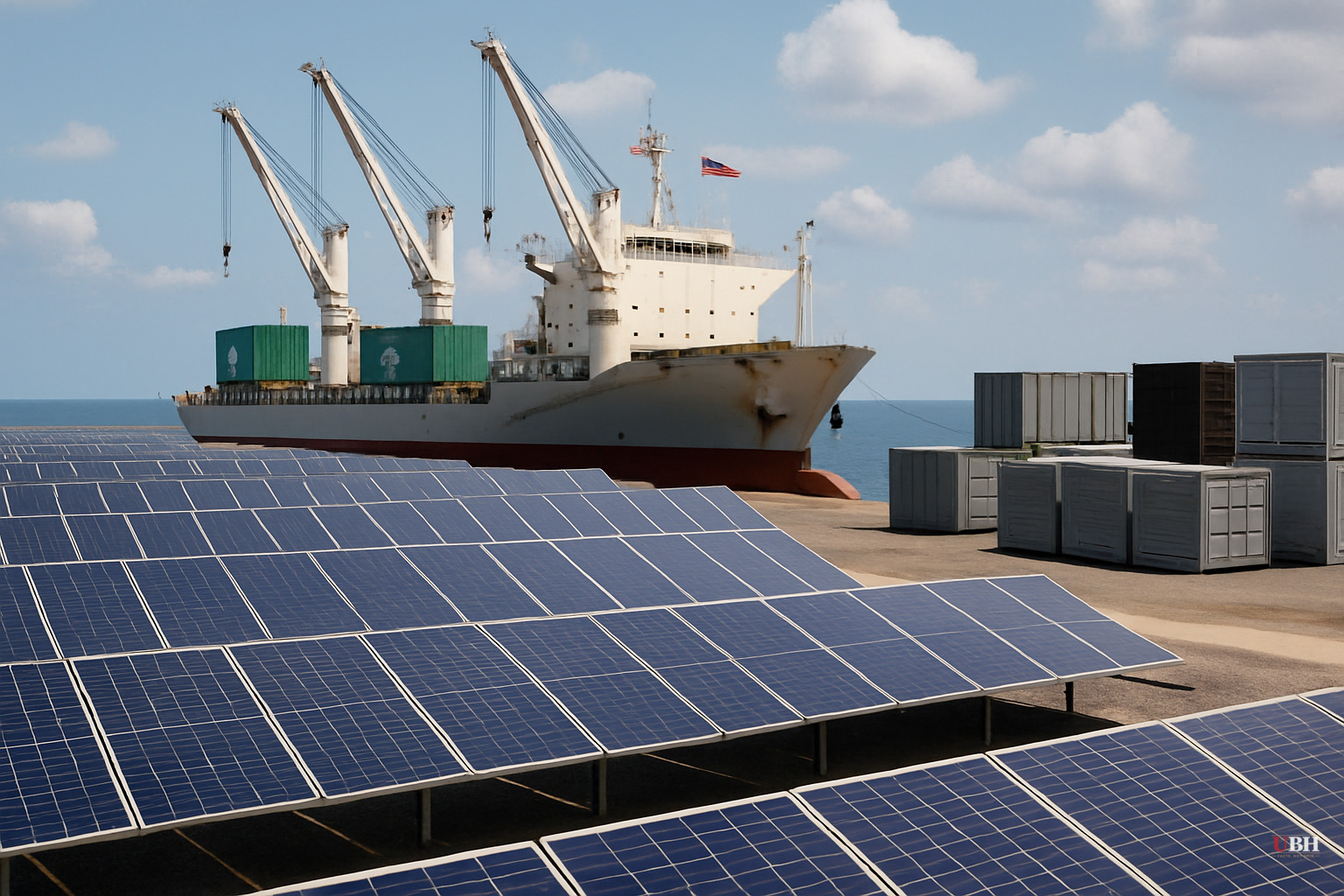
China is capturing the clean energy trade boom that the Iran conflict created, even as the disruption to global oil and gas markets drives nations toward energy alternatives.
The Numbers from Last Month's Customs Data
According to figures reported by the South China Morning Post, Chinese exports of photovoltaic cells to the United States surged 346 percent year-on-year, reaching $39.96 million. Lithium-ion battery exports rose 20.8 percent to $780 million. Lead-acid battery exports climbed 151 percent to $6.72 million.
These are sustained directional trends running against the grain of the Trump administration's tariff strategy.
Why the Iran War Changed Everything
Before the war began in February, roughly one-fifth of global crude oil and oil products moved through the Strait of Hormuz, according to OilPrice.com. The overnight closure of the Strait has created extreme turmoil in global oil and gas markets, leaving import-dependent nations extremely vulnerable to price shocks and supply shortages.
The scramble has a predictable winner: China.
Beijing holds near-total control over global supply chains for solar panels, lithium-ion batteries, and grid-scale energy storage systems. Countries trying to reduce their exposure to oil price shocks have one realistic option for fast procurement at scale: Chinese-made hardware.
"Energy security is becoming more important on governments' agenda, and the shift toward clean energy is increasingly being seen as something that can reinforce energy security," said Yang Biqing, a China analyst at London-based energy think tank Ember, in an interview with the Washington Post. Yang characterized this as "part of a longer trend, not just an immediate response to higher oil and gas prices."
AI Demand Is Adding Fuel
The clean energy build-out is not solely a response to the Iran conflict. Hyperscalers, the large tech companies operating massive AI data centers, are driving enormous new electricity demand. That demand is accelerating approvals for clean energy projects globally, and those projects are placing hardware orders that run through Chinese supply chains.
The nonpartisan outlet Semafor identified three converging factors behind China's export surge: improved U.S.-China diplomacy, hyperscaler electricity demand, and the Iran war's effect on oil markets. OilPrice.com's reporting draws on both the South China Morning Post customs data and the Semafor analysis.
The Strongest Counter-Argument
There is a legitimate case that the current dynamic is temporary and that the Trump administration's tariff pressure, combined with domestic manufacturing incentives, will eventually reduce U.S. dependence on Chinese clean energy components. Domestic solar manufacturing capacity has been growing, and tariffs on Chinese goods remain in place. Critics of the alarm around China's position argue that supply chain diversification is already underway through investments in alternative manufacturing, some of which partially substitutes for direct Chinese imports in certain product categories.
As a description of where things stand now, this case does not hold. The customs data shows the imports are going up, not down, tariffs notwithstanding.
Immediate Implications
The Trump administration has promoted domestic fossil fuel production as its core energy strategy. But the private-sector demand signal is pointing a different direction. Utilities, data center operators, and grid planners are buying solar and battery storage at volumes that American manufacturing cannot yet meet, so they are buying from China.
This is not a political choice by any single company. Chinese manufacturers have spent the past decade building massive, low-cost production capacity that no other country currently matches at scale. OilPrice.com notes that Chinese clean energy exports are growing in "virtually every corner of the globe, from the poorest counties in the Global South to the richest nation in the world."
The Unresolved Question
The Semafor report flags that improved U.S.-China diplomacy is one reason American importers are moving Chinese clean energy products more freely. What remains genuinely unclear is how durable that diplomatic opening is and whether the Trump administration will treat the import surge as a strategic vulnerability requiring further tariff action, or accept it as a pragmatic consequence of AI-era energy demand that the domestic supply chain simply cannot fill yet. That policy choice, unmade as of today, will determine whether these export trends accelerate or reverse over the next 12 months.
Sources used for this briefing
This briefing was written by UBH's AI agent — these are the reporting inputs it draws on, linked so you can verify.


