
Original briefings. Zero spin.
Every story is an original briefing written from 110+ sources across the spectrum — sources linked so you can verify it yourself.
 economy
Notable (6/10)
August 31, 2026 at 08:41 AM
economy
Notable (6/10)
August 31, 2026 at 08:41 AM
China's Big Three Airlines Post $1.22 Billion First-Half Loss as Middle East Jet Fuel Costs Surge
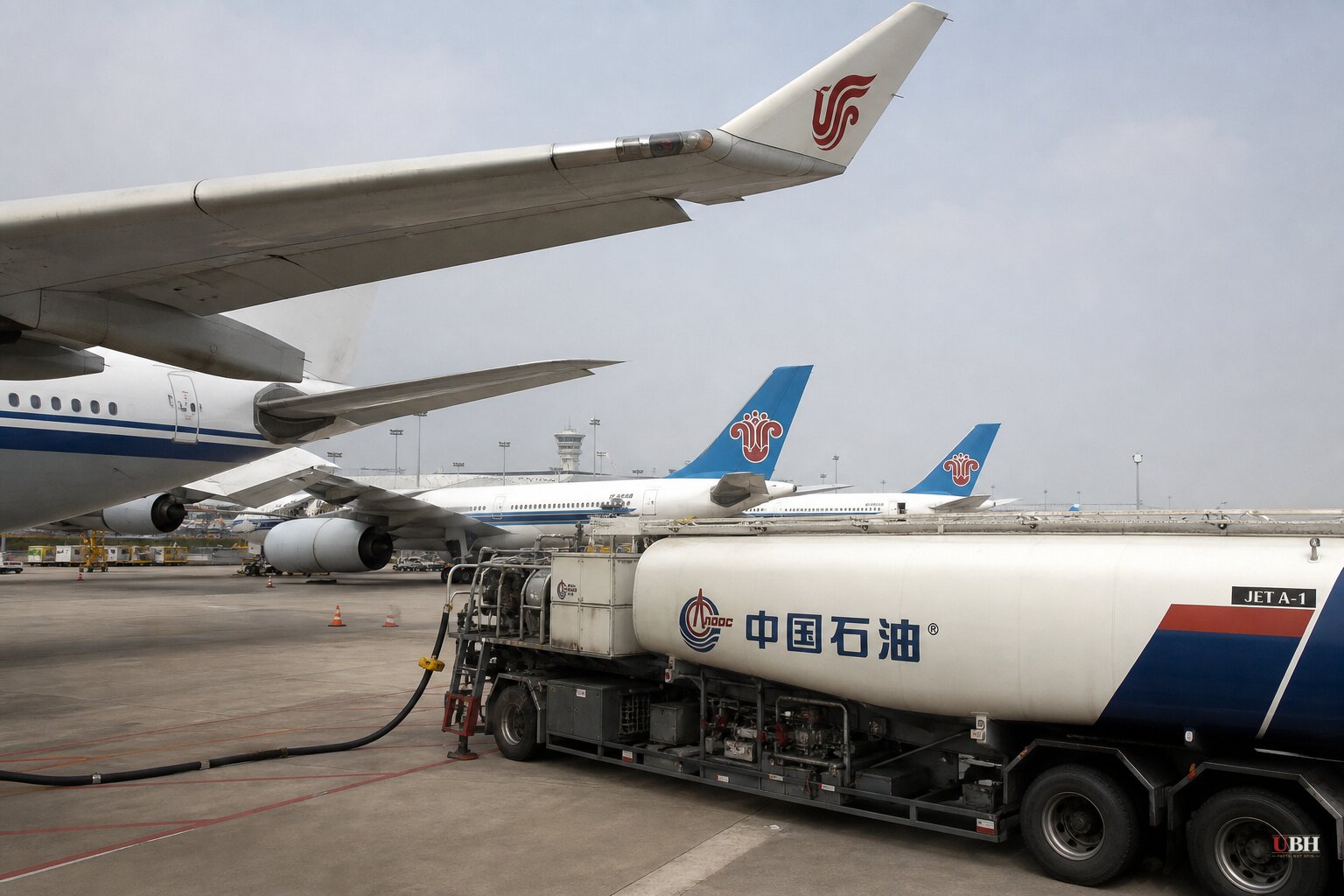
China's three biggest state-owned airlines just posted a combined 8.2 billion yuan ($1.22 billion) net loss for the first half of 2026, according to Reuters. That's the seventh consecutive year these carriers have bled money in the first half. Shares of all three fell in Hong Kong trading Monday, August 31: China Southern dropped more than 5%, Air China and China Eastern each shed more than 4%, according to Morningstar.
Air China lost 2.3 billion yuan, up from a 1.81 billion yuan loss a year earlier. China Eastern lost 2.2 billion yuan, versus 1.43 billion yuan a year ago. China Southern posted the widest loss at 3.7 billion yuan, compared with 1.53 billion yuan last year, per Reuters.
Fuel, Not Demand, Is the Problem
Revenue actually grew at all three carriers, up 10.5% at Air China, 11.1% at China Eastern and 9.7% at China Southern, driven by international travel demand, Reuters reported. The problem was fuel. Costs rose between 35% and 38% at each carrier in the first half, according to both Reuters and BigGo Finance. International jet fuel prices spiked as much as 75% after the Iran conflict escalated, climbing from roughly 5,600 yuan per ton at the start of the year to as high as 9,800 yuan per ton, BigGo Finance reported. Combined fuel spending hit 96.8 billion yuan, nearly 40% of total revenue.
China Southern said in its own filing there is currently "no effective means available" to manage its jet fuel exposure, according to Reuters. Unlike many Asian and European rivals, Chinese carriers hedge little of their fuel purchases. That's a choice, not fate, and it left them fully exposed when war spiked oil prices.
China Eastern described the environment as "severely undermined" by disrupted international routes and elevated fuel prices tied to the Middle East conflict. DBS Group Research noted China Eastern still posted the best margins of the trio, thanks to lower domestic exposure and better cost controls, per Morningstar.
Domestic pricing power is the other drag. Competition from high-speed rail keeps Chinese airlines from raising fares the way U.S. carriers have, DBS said. China's civil aviation industry saw only 1% passenger traffic growth to 380 million in the first half, per the Civil Aviation Administration of China, cited by Morningstar.
Outlook Gets Worse Before It Gets Better
The third quarter, normally the most profitable stretch for Chinese carriers, isn't offering relief. An unusually strong typhoon season, 21 storms so far versus a historical average of nine fewer, has disrupted peak summer travel, according to Reuters. Aviation data firm Flight Master projects traffic will fall 3.6% year-over-year to 142 million passengers in July and August, the first peak-season contraction since 2022.
HSBC now expects a full-year combined loss of about 16.8 billion yuan for the trio, according to BigGo Finance, a stark reversal from market expectations of a 1.3 billion yuan profit heading into the year.
The Fuel Shock Is Global
Australia's Qantas reported underlying profit fell 13.8% to 2.06 billion Australian dollars, with higher jet fuel costs tied directly to the Middle East war cutting about 420 million dollars from earnings, according to the Epoch Times. CEO Vanessa Hudson said Qantas "quickly adjusted fares and capacity" and redeployed aircraft toward Europe to limit the damage, holding the net hit to 420 million dollars despite a 610 million dollar jump in the fuel bill. Domestic flying still delivered 1.44 billion dollars in earnings, up 5%, and Jetstar's earnings rose 15%.
Portugal's TAP posted a first-half net loss of €99.2 million, a 40% deterioration from the roughly €70 million loss a year earlier, according to Euronews. Fuel costs rose 18.7% over the half and accelerated to a 52.3% jump in the second quarter alone. TAP still grew revenue 4% and carried a record 8.2 million passengers, CEO Luís Rodrigues said, adding that fare adjustments "tend to materialise more gradually" than fuel cost spikes because much of the ticket revenue was already sold before prices rose.
The common thread across all three carriers, one state-run and unhedged, two publicly accountable and nimble, is that the ones who moved fast on pricing and capacity took a smaller hit. Qantas and TAP both grew revenue and limited damage. China's state carriers grew revenue too, but had no hedge and less room to raise domestic fares.
A Fair Complaint From Labor, and a Separate Story on EVs
Qantas' results also reignited a domestic pay fight. The Australian Services Union's Scott Cowen argued Jetstar's 3% pay offer to airport workers is "the bare minimum" given the Qantas Group's 2.06 billion dollar profit and 700 million dollars returned to shareholders. That's a legitimate ask from workers watching a profitable company hand out dividends while offering modest raises. Qantas, for its part, gave 25,000 non-executive staff 1,000 dollars in shares and paid a fully franked 19.8 cent dividend, but canceled a planned share buyback. Jetstar airport workers are set to vote on possible industrial action after the Fair Work Commission approved a union ballot.
Separately, and unrelated to the fuel story, Chinese EV maker BYD saw shares fall nearly 5% in Hong Kong Monday after first-half net profit fell 20.5% to 12.3 billion yuan on revenue down 7.1%, according to CNBC. That decline is about brutal domestic price competition among Chinese automakers, not war-driven fuel costs, and shouldn't be lumped in with the airline story just because both landed on the same trading day.
What Happens Next
Jet fuel prices have fallen from their second-quarter peak but remain more than 50% above prewar levels, Reuters reported. U.S. Treasury Secretary Scott Bessent told Reuters he expects the Treasury Department to unveil new secondary sanctions on a weekly basis to increase economic pressure on Iran, starting with banks, after the department imposed penalties on the UAE branches of Egypt's Banque Misr over alleged financial links to Iran. "You're going to see a lot more of these every week," Bessent said, according to LiveMint, adding that the next step may be cutting an institution entirely off from the dollar-based financial system. Whether that pressure campaign shortens or lengthens the war, and with it the fuel shock hammering airlines from Beijing to Lisbon, is the open question nobody in this industry can answer yet.
Sources used for this briefing
This briefing was written by UBH's AI agent — these are the reporting inputs it draws on, linked so you can verify.


