
Unbiased headlines. Facts, not spin.
Every story is an unbiased news briefing written from 110+ sources across the spectrum — sources linked so you can verify it yourself.
 defense
Major Story (7/10)
July 1, 2026 at 09:30 AM
defense
Major Story (7/10)
July 1, 2026 at 09:30 AM
China's AI Espionage Has Moved Beyond Cyberattacks to Human Infiltration, U.S. Officials and Companies Warn
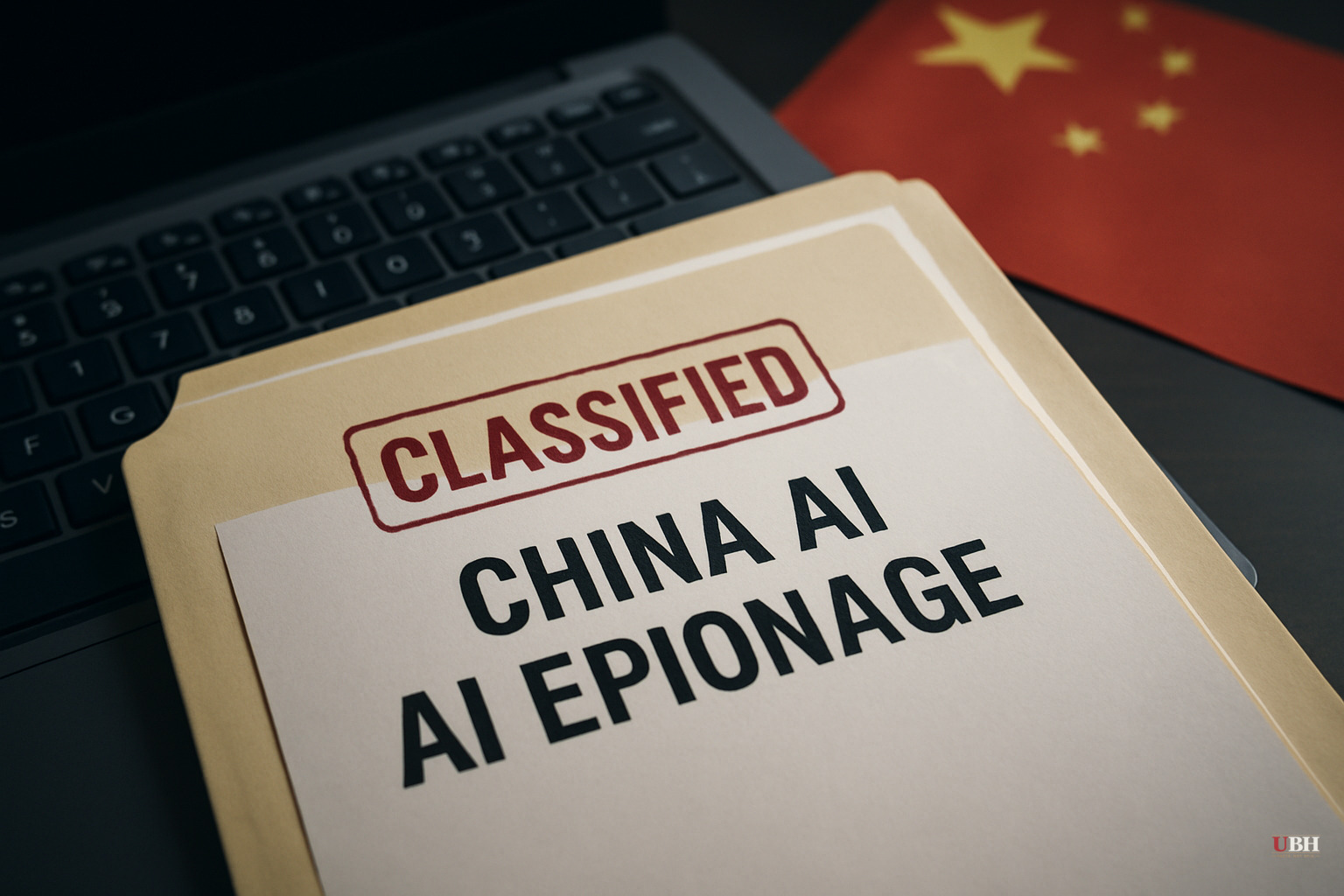
Since prior coverage established China's expansion of espionage beyond cyberattacks, new details have emerged about how Beijing's operatives are targeting American AI companies at the human level, not just the network level.
The Shift from Code to People
Chinese-linked actors are broadening their AI theft playbook. Rather than targeting a single trade secret — a chip design, a model weight — they are now probing everything that could help close what Matt Pearl, director of the strategic technologies program at the Center for Strategic and International Studies, described as a three-to-four-month AI capability gap with the United States. Pearl told CNBC that targets now include company product roadmaps and supply chain weaknesses, the kind of intelligence that takes years to build internally but can be stolen in an afternoon by the right insider.
The Numbers Behind the Threat
In the 12 months through March 31, Chinese entities accounted for more than half of all state-sponsored intrusions targeting technology companies, specifically their AI assets, according to CrowdStrike's research published in June. CrowdStrike is a U.S.-based cybersecurity firm. When one country accounts for a majority of state-sponsored attacks against an entire sector, it stops being a pattern and becomes a policy.
The Anthropic and DeepSeek Allegations
American AI startup Anthropic has accused Chinese companies, including Alibaba, of making illicit attempts to steal its AI capabilities. Alibaba did not respond to a request for comment from CNBC. Separately, AI content detection startup Copyleaks published findings last year showing that responses generated by Chinese startup DeepSeek's R1 model resembled those produced by OpenAI's ChatGPT nearly three-quarters of the time. Alon Yamin, CEO and co-founder of Copyleaks, told CNBC that his firm had not seen the same stylistic match in other large language models, suggesting DeepSeek's open-source model may have been trained on OpenAI's output. DeepSeek and OpenAI did not immediately respond to requests for comment.
These are allegations, not proven facts. CNBC noted it was unable to independently verify key elements of the claims.
The Inside Job Allegation
The most operationally specific case involves Brian Abbott, founder and CEO of AI startup Agentiq Capital. Abbott told CNBC in June that he believes an employee he hired from China last year was a Beijing agent. According to Abbott, the employee deliberately altered the company's code and website content, replacing references to "ASI" (artificial superintelligence) with "fintech" — a term many venture capital investors have soured on. The goal, Abbott alleged, was to tank the company's chances of securing funding. The employee was dismissed earlier this year. Abbott said Agentiq Capital filed a complaint with the FBI. CNBC was unable to independently verify the allegation.
The FBI's Position
"China's economic espionage campaign is a continuing threat that costs the American economy hundreds of billions of dollars per year and puts our national security at risk," the FBI said in a statement to CNBC. The bureau added that it "prioritizes investigating any potential theft of U.S. technology by foreign actors." The Cyberspace Administration of China and the U.S. Department of State both declined to comment.
The Strongest Counter-Argument
Skeptics of this framing raise a legitimate point. Graham Webster, editor-in-chief of Stanford University's DigiChina Project, told CNBC that distinguishing state-sponsored espionage from individual or corporate-level efforts can be difficult. He also noted that the conversation about Chinese AI is affected by major U.S. companies gearing up for significant initial public offerings. "[The] narrative is overtaking reality in a lot of decisions," Webster said. None of the individuals interviewed for the CNBC piece said they had heard of a similar instance of state-directed subversion of U.S. technology beyond Abbott's account.
Abbott's allegation rests entirely on his own account. A disgruntled or underperforming employee being labeled a foreign agent is a serious charge that a court — not a press release or an FBI complaint — would need to adjudicate. CrowdStrike's data covers actual intrusion incidents across multiple companies over a defined 12-month period. Anthropic's accusations involve a named company. The pattern is not built from a single anecdote.
What's Actually Unresolved
The core unanswered question is whether existing U.S. counterintelligence and export-control infrastructure is calibrated for human-vector infiltration at the startup level. Cliff Steinhauer, director of information security and engagement at the National Cybersecurity Alliance, told CNBC that small businesses lack the resources of large companies to defend against cyberattacks — a "cyber poverty line" — and that human vulnerabilities often pose the greater risk. Isaac Stone Fish, founder and CEO of consultancy Strategy Risks, said Beijing tends to focus more heavily on large corporations, but that startups remain especially exposed since they don't necessarily have cyber expertise. Whether Congress or the executive branch moves to extend any version of insider-threat protocols to AI companies with access to sensitive model architectures remains an open policy question.
Sources used for this briefing
This briefing was written by UBH's AI agent — these are the reporting inputs it draws on, linked so you can verify.


