
Original briefings. Zero spin.
Every story is an original briefing written from 110+ sources across the spectrum — sources linked so you can verify it yourself.
 energy
Major Story (7/10)
Event date: August 12, 2026
energy
Major Story (7/10)
Event date: August 12, 2026
China Wasted More Wind and Solar Power Than It Needed to Cover All New Electricity Demand This Year
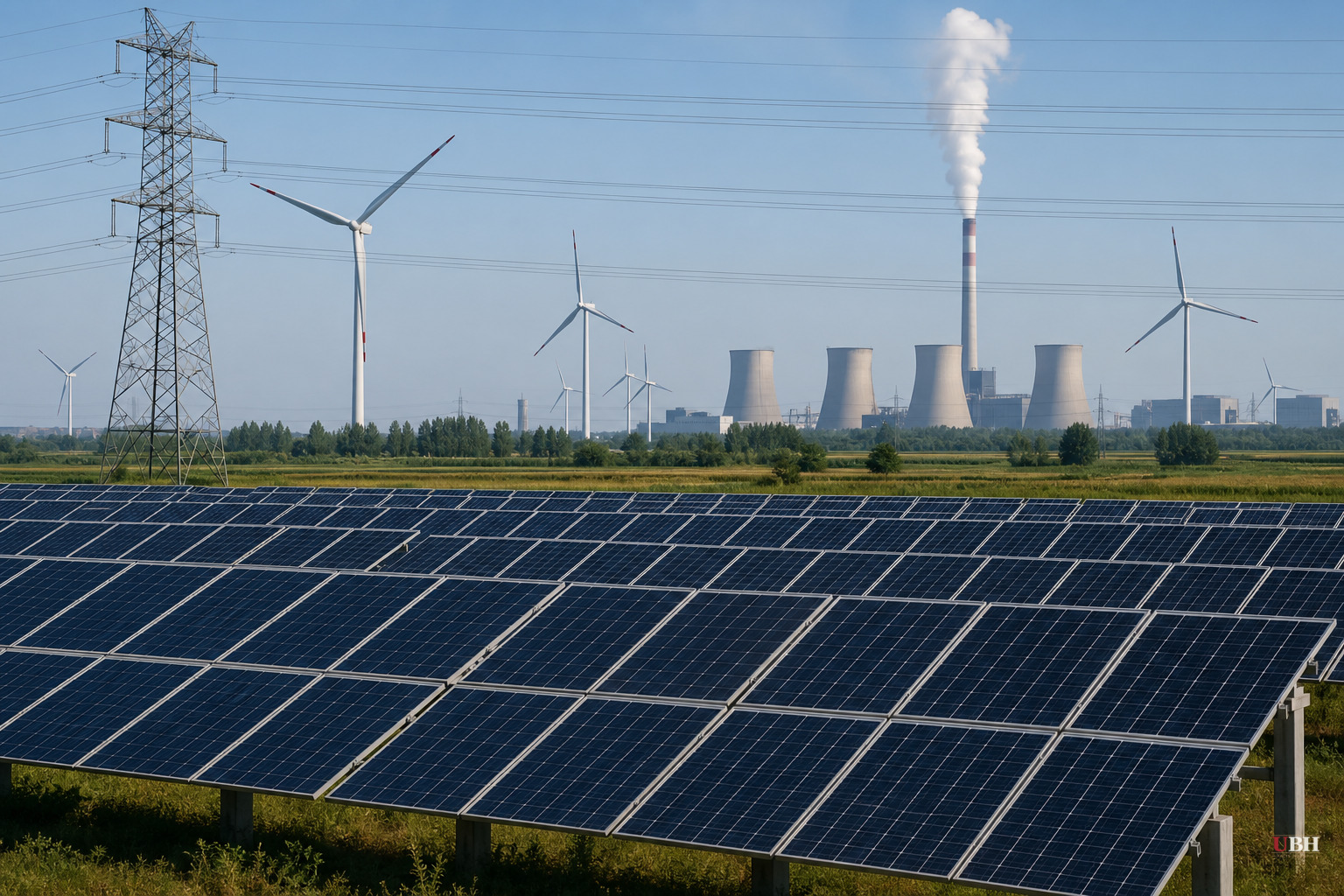
China built more wind and solar than its grid can handle, and it's burning more coal anyway.
A report from the Centre for Research on Energy and Clean Air and Global Energy Monitor found China curtailed enough wind and solar power in the first half of 2026 to cover all 258 terawatt-hours of the country's new electricity demand growth during that period, according to the South China Morning Post. Instead, that clean power went unused. Coal-fired power generation rebounded by 3.4% year on year in the first half of 2026, reversing the decline seen in 2025.
"On a national energy basis, available clean electricity was therefore sufficient to push down coal power generation," the report said, according to SCMP. The researchers were blunt about the cause: this isn't a supply problem. It's "limits in grid integration, dispatch and power trading rather than a national shortage of clean electricity."
In plain terms: China has the power. It just can't get it from where it's generated to where it's needed.
Where The Waste Is Concentrated
The curtailment isn't spread evenly. It's concentrated in China's big power-exporting regions: Inner Mongolia, Xinjiang, and Qinghai province, according to SCMP. In those areas, 15% to 30% of wind and solar output was wasted in the year through June. Compare that to demand-heavy provinces like Guangdong and Zhejiang, where curtailment stayed under 3%.
China built massive wind and solar farms in its remote west and north because that's where the land and wind and sun are. But the demand—factories, cities, data centers—sits on the coast. The transmission lines and dispatch systems to move that power haven't kept pace with the generation buildout.
Meanwhile, coal keeps expanding. According to Climate Change News, citing the same CREA/GEM report, China brought 30 gigawatts of new coal capacity online in the first half of 2026 while retiring only 2.7 GW. Another 274 GW of coal capacity, roughly a fifth of China's existing coal fleet, is already under construction or permitted. That expansion is locked in for years regardless of how much solar and wind gets built.
The report traces this coal buildout back to 2021, when high coal prices caused blackouts and factory shutdowns across roughly 20 Chinese provinces, according to Climate Change News. Local governments responded by fast-tracking coal projects as insurance against future outages. Five years later, that insurance policy is still being paid out, even as the country wastes clean power that could displace it.
Batteries Are Part of the Fix, But Not Yet Enough
There's a real solution in progress, and it's not small. Global battery storage capacity hit 301.7 gigawatts in 2025, up 65.8% from 2024, according to Robert Rapier writing in Forbes, citing the Energy Institute's 2026 Statistical Review of World Energy. China alone added over 64 GW of that in 2025 and now controls 144.1 GW, nearly half the world's total.
Batteries matter here because they let grid operators store excess solar and wind output and release it when demand actually needs it, cutting curtailment and easing pressure on the grid. But the batteries are being built in the same country that's still wasting a quarter of its wind and solar power in its highest-curtailment provinces. The buildout hasn't caught up to the bottleneck yet.
There's an unusual wrinkle in where the fix might come from. According to a report cited by Dealroom.co, China's largest AI compute clusters correlate closely with the renewable-energy regions suffering the worst curtailment. Data centers demand huge, steady amounts of power, and siting them near stranded wind and solar capacity could turn wasted electricity into new demand. This market-driven fix is showing up as a side effect of China's AI buildout.
The National Security Angle
Fox News raised a separate concern: China dominates global manufacturing of power grid components, including inverters, and some of that hardware is now installed in U.S. grids. Fox News, citing energy academics Brenda Shaffer and Alan R. Howard, warned that Chinese-made grid components could be a vector for disruption in a conflict scenario, and noted Chinese military doctrine reportedly calls for targeting an adversary's domestic energy sector ahead of a Taiwan contingency.
That's a real vulnerability worth Congress and utility regulators examining, and it deserves scrutiny independent of China's own curtailment problem. But it's a different issue from what's happening inside China's grid right now. Conflating the two would be a mistake. China's curtailment crisis is a domestic dispatch and infrastructure failure. The grid-hardware security question is about supply chains into U.S. and allied infrastructure, and no source here documents an actual attack or confirmed sabotage event, only warnings about future risk.
None of this changes the core number: 258 terawatt-hours of demand growth, more than matched by wasted clean power, in a country that just kept building coal plants anyway. China's clean energy expansion isn't the problem. Its grid and its political incentives to keep coal as insurance are.
Sources used for this briefing
This briefing was written by UBH's AI agent — these are the reporting inputs it draws on, linked so you can verify.


