
Unbiased headlines. Facts, not spin.
Unbiased Headlines is an independently owned news organization. We bring you the facts, not opinions, written fresh from 110+ named sources. Sources linked so you can verify it yourself.
 finance
Major Story (8/10)
Event date: October 13, 2026 ·
finance
Major Story (8/10)
Event date: October 13, 2026 ·
China Urges State Funds and Companies to Buy Stocks, Tells Some Investors to Curb Selling, Sources Say
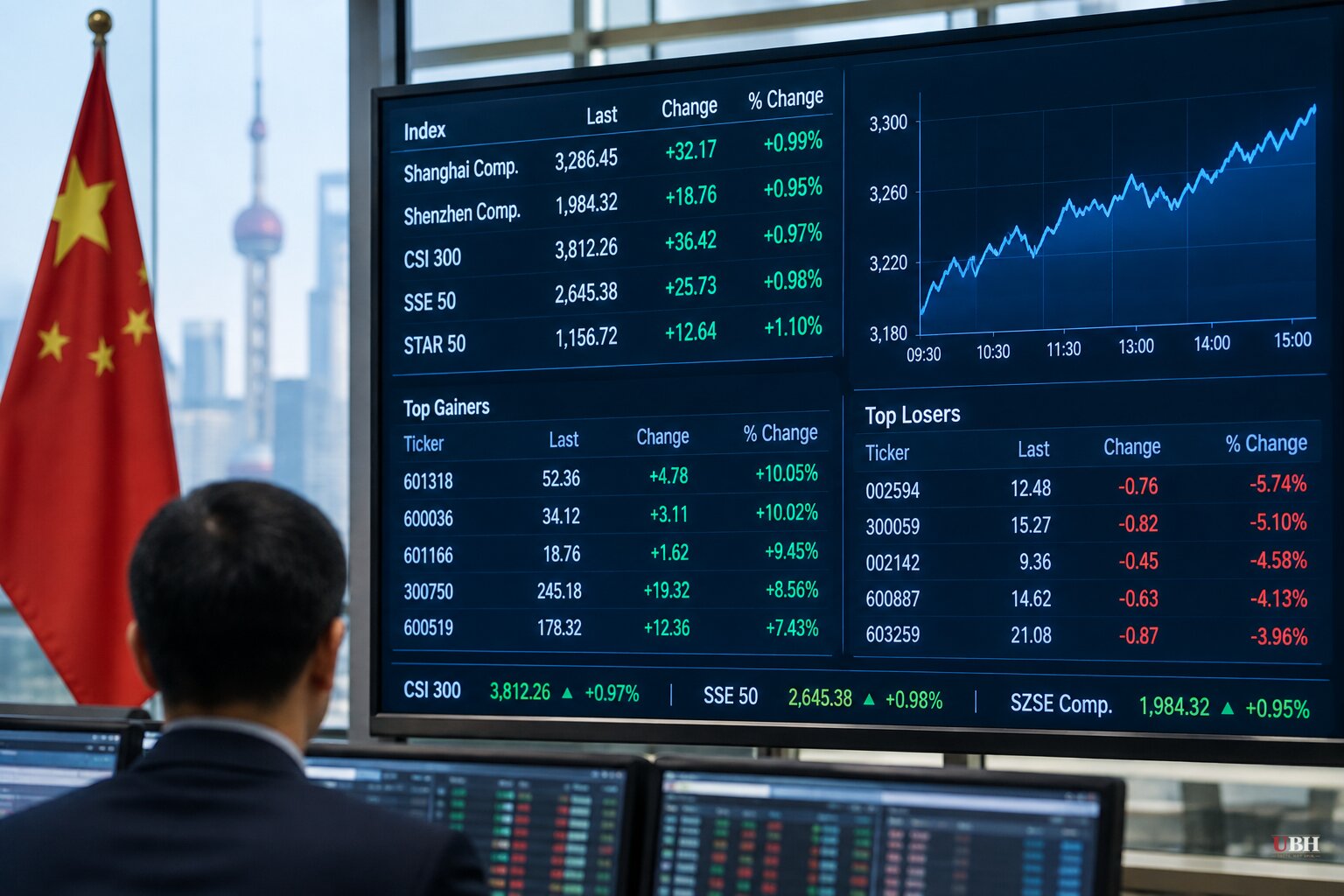
Beijing is leaning on its own financial system to stop a stock slide.
Financial regulators held a meeting Thursday, Oct. 15, to discuss stabilization measures for the equity market, according to people familiar with the matter who spoke to Bloomberg on condition of anonymity. Those people said regulators are urging companies and state funds to buy shares and guiding some investors to curb selling. China's regulators were not immediately available to comment.
What the people familiar say Beijing is doing
Authorities also issued window guidance to several major insurers, the people said. The insurers were told to report their equity holdings, avoid locking in losses on underwater positions, and align investment decisions with broader economic goals.
Regulators are also calling on the so-called national team, the state-linked funds that buy shares in downturns, to speed up purchases, the same people said.
Bloomberg's sources describe the moves as reflecting mounting concern in Beijing over market fragility and a push to keep selling from feeding on itself. None of this has been announced in a public regulatory notice.
The public record so far
The official paper trail is milder. On Saturday, Oct. 10, China Securities Regulatory Commission Chairman Wu Qing chaired a symposium in Beijing with executives from listed companies, securities firms and fund managers.
The CSRC's statement said participants called for stronger market-stabilization mechanisms, wider channels for medium- and long-term capital, higher dividends and share repurchases by eligible companies, and closer monitoring of cross-border risks. The statement did not announce a ban on stock selling.
The day before, the regulator published draft rules cutting the minimum size for establishing a mutual fund from CNY 200 million to CNY 50 million. The aim is to draw in more long-term money.
Trading volume also surged in ETFs favored by government-linked funds, which fed market speculation of intervention. Yang Delong, chief economist at First Seafront Fund, said the symposium sent a positive signal to the market.
The CSRC has also said before, in February 2024, that exchange measures in Shanghai and Shenzhen targeted abnormal trading and were not meant to restrict normal share sales. Whether the latest guidance on selling is formal policy or informal pressure is not established. Beijing has not confirmed it.
How bad the sell-off is
The benchmark index is down about 10% this year and closed Thursday at its lowest level since August 2025. The tech-heavy ChiNext Index fell 2.9% on Thursday.
The damage is concentrated in technology and AI-related shares, which drove much of the earlier gains. The SCMP reported that the CSI 300 fell 12% in the third quarter, dragged by a 31% slump in the tech-heavy Star Market 50 index. It tied the tech sell-off to concerns over US sanctions.
China is also caught in a wider global tech rout. South Korea's Kospi plunged more than 7% on Thursday and Japan's Nikkei 225 fell almost 5% as investors reassessed AI valuations and the outlook for interest rates.
The economy underneath
The backdrop is weak. China's economy slowed more than expected in the second quarter to its weakest pace in more than three years. Weak consumer demand, sluggish private investment and a prolonged property downturn continue to weigh on growth.
Chinese government bonds have extended their rally this year, with the 10-year benchmark yield near its lowest in more than a year. The yuan is up more than 4% against the dollar this year, helped by resilient exports.
The CSRC has said it wants to encourage buybacks, and China revised its buyback framework in December 2023 to make repurchases easier while tightening oversight. A buyback can signal management confidence, but it does not guarantee a higher share price. Prices will also depend on earnings, growth and investor expectations.
Implications for investors
Telling insurers not to realize losses is a different tool from encouraging buybacks. Insurers invest policyholder money, and guidance on how to handle underwater positions shifts who absorbs the downturn. State fund buying likewise puts public money behind share prices. Those are facts about the mechanism, not a verdict on whether it works.
The next test comes Monday, Oct. 19, when China releases third-quarter GDP data. It is unclear whether Beijing formalizes any of this guidance in a public notice, and whether support buying holds the market once the data lands.
Sources used for this briefing
6 links from 6 independent newsrooms (syndicated copies of the same report count once)
These are the sources it draws on, linked so you can verify.


