
Unbiased headlines. Facts, not spin.
Every story is an unbiased news briefing written from 110+ sources across the spectrum — sources linked so you can verify it yourself.
 economy
Major Story (7/10)
August 6, 2026 at 08:17 AM
economy
Major Story (7/10)
August 6, 2026 at 08:17 AM
China Starts Taxing Offshore Insurance Gains, Hong Kong Insurers Get Hammered
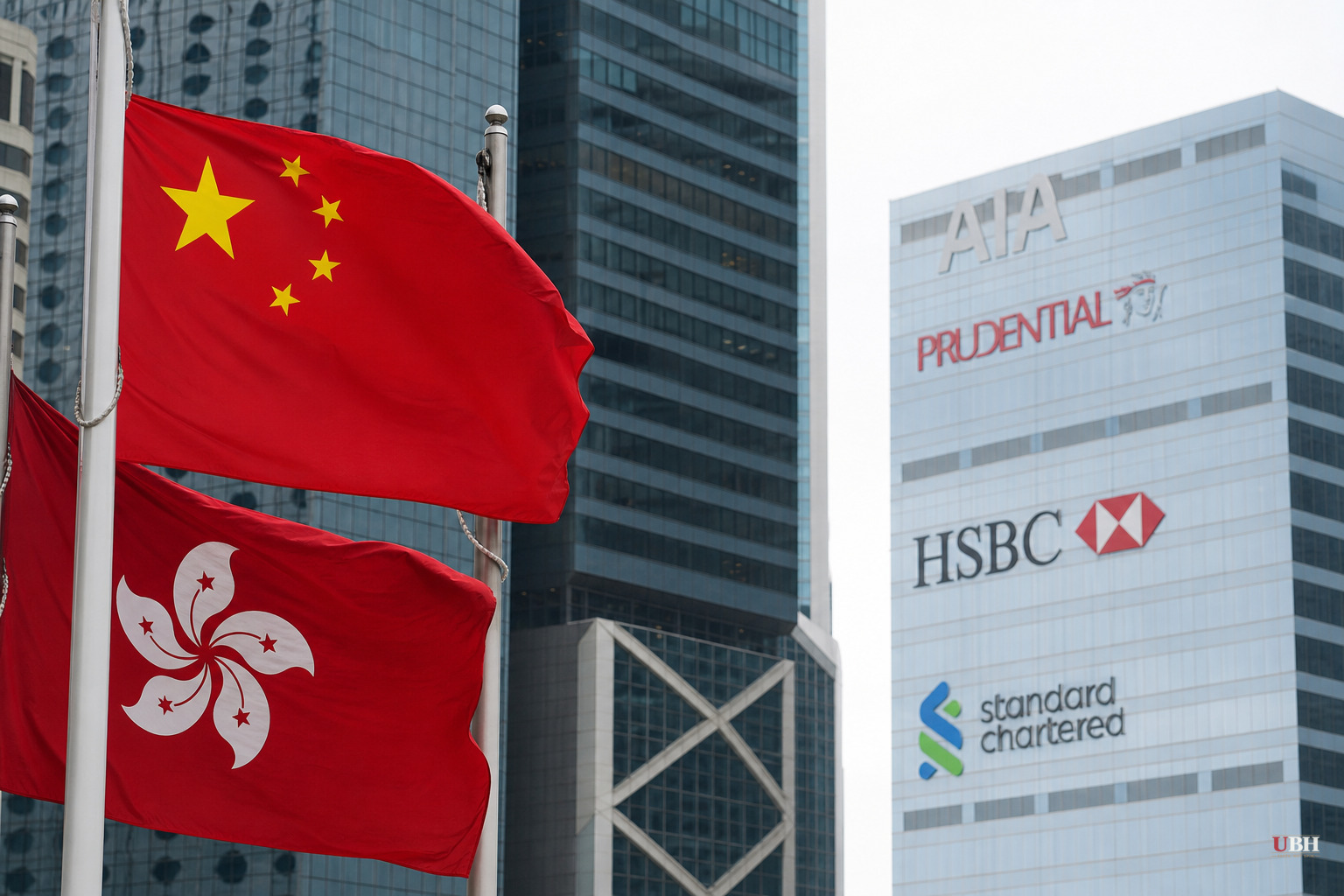
China just reminded Hong Kong's insurance industry who's in charge of the money.
Tax authorities in Beijing and Hangzhou have started collecting a 20% personal income tax on gains from offshore insurance policies, according to a report from Caixin Global published Aug. 5. The tax hits dividend payouts and interest earned on prepaid premiums, things mainland Chinese buyers have used Hong Kong insurance products for years.
Markets reacted instantly. On Aug. 6, AIA Group shares slid 8.2%, Prudential dropped more than 5% in Hong Kong trading after its London-listed shares had already fallen 13% intraday on Aug. 5 before closing down 6.4%, according to the Straits Times and Caixin. HSBC lost as much as 6% in London before ending 4.7% lower. Standard Chartered fell 1.6% in London and continued sliding in Hong Kong trading Thursday.
FWD Group, the Hong Kong-based insurer, dropped 4.5%. Ping An Insurance and China Life Insurance, both mainland firms with meaningful offshore exposure, fell more than 1% each. The Hang Seng Index dropped more than 2% on the news, per the Straits Times.
The South China Morning Post reported that a tax officer at the Jing'an Branch of the Shanghai Municipal Tax Service confirmed the office has begun applying this 20% flat rate, and that collection will apply retroactively to 2019. This reaches back seven years, not forward from today.
No formal policy announcement has been made. China's finance ministry and the National Financial Regulatory Administration did not respond to Reuters' requests for comment, according to the Straits Times. AIA declined to comment. Prudential, HSBC, Standard Chartered, FWD, Ping An and China Life did not immediately respond to media inquiries.
Why This Matters Beyond One Bad Day
Hong Kong insurance has functioned as one of the last legal pipelines for mainland Chinese money to move offshore. Policies denominated mostly in US dollars gave buyers better protection and often better yields than what's available on the mainland, especially as domestic bond yields dropped and dragged down onshore insurance returns.
That flow has been enormous. Deposits from mainland entities in Hong Kong have jumped roughly 50% since 2023 to $237 billion, according to a Gavekal Dragonomics report cited by the Straits Times. Hong Kong was Prudential's single largest profit driver last year, according to the South China Morning Post.
A 20% tax on the gains doesn't kill that business. But it erodes the exact yield advantage that made Hong Kong policies worth the trouble for mainland buyers in the first place. Analysts quoted by the South China Morning Post said as much: the tax enforcement threatens to close the competitive gap between Hong Kong products and mainland alternatives, even without a formal rule change.
The Counterargument: Maybe This Isn't As Bad As The Selloff Suggests
Goldman Sachs, cited by the South China Morning Post, said the profit fallout for insurers may actually be limited. Tax enforcement on existing income streams isn't the same as banning the product outright, and mainland buyers who value the dollar exposure and asset protection Hong Kong policies offer may simply eat the tax and keep buying.
Mainland authorities have been escalating scrutiny of offshore investments for months, which analysts say could squeeze money flows to Hong Kong more broadly. This is enforcement of existing tax law on foreign-sourced income, not a new capital control regime, at least based on what's been reported.
What's Actually Unresolved
Nobody in an official capacity has confirmed this is a national policy versus enforcement action limited to a handful of tax offices. Beijing's finance ministry hasn't said a word publicly. Without an official announcement, there's no way to know if this expands nationwide, stays contained to Beijing, Hangzhou and Shanghai, or gets walked back entirely.
The retroactive collection back to 2019 raises the real question. If tax offices in more cities start applying this rate and going after past years' gains, that's a very different story than a forward-looking policy tweak, and one that could do lasting damage to Hong Kong's standing as the mainland's preferred offshore capital outlet. Markets priced in the uncertainty Thursday. Whether Beijing clarifies its intent or lets ambiguity scare capital into staying put remains to be seen.
Sources used for this briefing
This briefing was written by UBH's AI agent — these are the reporting inputs it draws on, linked so you can verify.


